GHK-Cu is a naturally occurring copper-peptide complex, found in 1973, that signals your body to repair damaged tissue by activating fibroblasts, stimulating collagen production, and modulating thousands of genes toward regeneration while reducing inflammation. You’ll find the strongest evidence for skin benefits—improved elasticity, wrinkle reduction, and faster healing after procedures—when using topical formulations at 0.05%–3% concentrations, whereas oral and injectable routes carry greater risks with limited added proven benefit. Side effects are typically mild and localized, though you should avoid GHK-Cu entirely if you have copper-handling disorders, active infections, or are pregnant. What follows unpacks the mechanisms, evidence gaps, and practical considerations you’ll need to use this peptide wisely.
TLDR
- GHK-Cu modulates over 4,000 genes toward tissue repair and anti-inflammatory pathways.
- Topical application stimulates collagen synthesis, improves skin texture, and supports hair follicle health.
- Common side effects include mild, short-lived redness or stinging at application sites.
- Systemic safety data remains incomplete; copper accumulation poses risks with non-topical use.
- Quality sourcing requires ≥98.5% purity, verified COAs, and proper copper-peptide complex integrity.
What GHK-Cu Is: The Repair-Signaling Peptide Explained
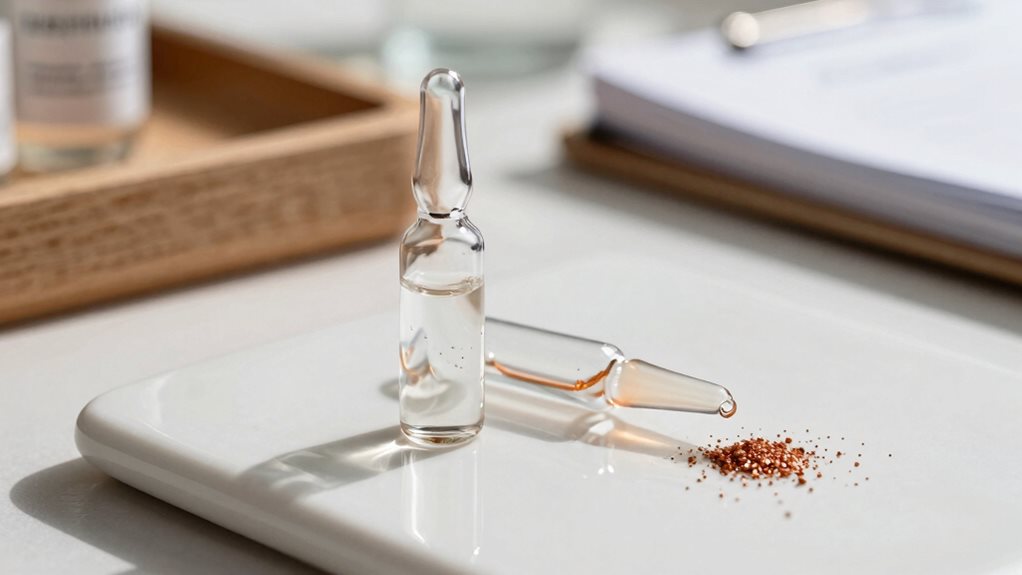
What exactly is GHK-Cu, and why does it matter for your understanding of how the body repairs itself? GHK-Cu is a naturally occurring copper complex your body produces, formed when the tripeptide glycyl-histidyl-lysine binds tightly to copper(II) ions. Found in 1973 by Dr. Loren Pickart, this small signaling molecule circulates in your plasma, saliva, and urine, acting as a feedback signal that activates wound healing, reduces inflammation, and drives tissue remodeling after injury. Additionally, research highlights its role as a repair-signaling peptide that coordinates multiple tissue-restoration processes across the body a known copper-dependent signaling mechanism.
How GHK-Cu Works: Genes, Fibroblasts, and Copper
GHK-Cu exerts its repair effects through three interconnected mechanisms that reshape how your cells respond to damage. First, it modulates over 4,000 genes, shifting expression toward tissue repair and away from inflammation. Second, it activates fibroblasts to produce collagen and glycosaminoglycans while balancing matrix metalloproteinases. Third, it delivers copper safely to enzymes like lysyl oxidase, supporting cross-linking without cytotoxicity. Copper delivery to enzymes like lysyl oxidase is enhanced by copper transport and helps ensure proper cross-linking without cytotoxicity.
Wound Healing: What Research Actually Shows
The evidence surrounding GHK-Cu’s effects on wound healing reveals a pattern of promising experimental findings that have yet to fully translate into established clinical practice.
However, emerging mechanistic data also suggest potential modulation of NFκB signaling and cytokine profiles that may underlie these effects. Pro-inflammatory cytokines are known to be reduced in some studies, aligning with broader anti-inflammatory actions observed in preclinical models.
GHK-Cu Skin Benefits: Collagen, Elasticity, and Wrinkles
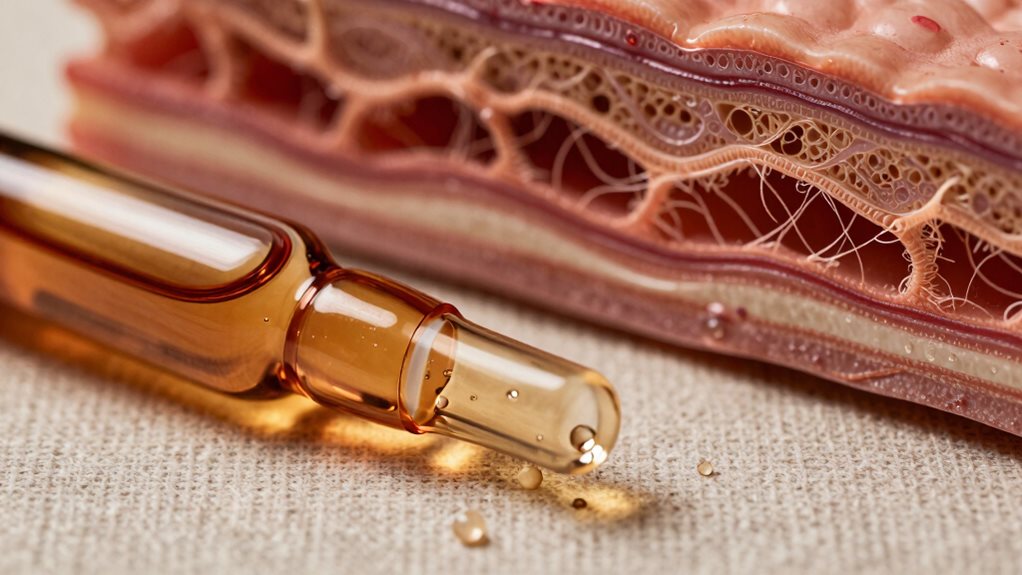
These effects are supported by studies that note collagen synthesis increases, contributing to measurable changes in skin structure over time.
Inflammation, Oxidative Stress, and Systemic Effects
Beyond the visible changes you notice in aging skin, your body’s internal environment faces persistent challenges from inflammatory signals and oxidative damage that accelerate deterioration across multiple tissues. GHK-Cu helps you combat this by reducing inflammatory cytokines like TNF-α, IL-6, and IL-1β while activating antioxidant defenses through Nrf2 and superoxide dismutase, protecting your cells from the inside out. Selank effects also contribute to modulating inflammatory responses and supporting neuroprotective pathways, which can help maintain systemic balance during aging.
GHK-Cu for Hair, Bone, and Nerves: Where the Evidence Stands
You’re likely wondering whether GHK-Cu can deliver on its popular claims for hair restoration, bone repair, and nerve regeneration, and the honest answer is that the evidence varies considerably across these three areas.
While you’ll find intriguing preclinical data and small human studies suggesting benefits for hair growth and follicle health, the research on bone and nerve applications remains largely experimental, with promising mechanisms but limited clinical validation.
As you evaluate these claims, you’ll need to distinguish between well-documented biological effects—such as collagen upregulation and tissue remodeling—and the harder-to-prove outcomes that matter most for your personal health decisions, including how cell signaling and wound healing processes relate to real-world expectations.
Hair Growth Potential
How exactly does a small copper-bound peptide influence something as complex as hair follicle biology? You’re looking at multiple mechanisms: GHK-Cu stimulates dermal papilla cell proliferation, which governs follicle activation, while upregulating VEGF to enhance perifollicular blood supply. It suppresses TGF-β1, a signal that drives follicles toward regression, and activates Wnt/β-catenin pathways central to regeneration.
Human trials show modest gains—roughly 52–71 extra hairs per cm² over six months—though evidence remains limited compared to established treatments like minoxidil.
Bone Repair Studies
The skeletal system’s capacity for self-repair finds an intriguing ally in GHK-Cu, a copper peptide that appears to orchestrate bone regeneration through multiple, well-documented mechanisms.
Preclinical studies show it enhances osteoblast activity, accelerates mineralization, and strengthens bone matrix through collagen upregulation.
Rat models demonstrate faster defect healing with improved density, though human clinical trials remain limited.
Nerve Regeneration Research
Beyond its recognized roles in skin and bone repair, GHK-Cu emerges as a compelling candidate for neural tissue regeneration, with research spanning peripheral nerve injury, central nervous system protection, and even hair follicle biology where nerve signaling plays a supporting role.
In cell culture, you’ll find GHK stimulates nerve outgrowth, while animal studies show accelerated regeneration, improved motor recovery, and increased myelinated fiber density through Schwann cell proliferation and enhanced axonal guidance.
However, human clinical data remains limited, so you should view these findings as mechanistically promising rather than therapeutically proven.
Who Benefits Most (and Who Should Skip GHK-Cu)
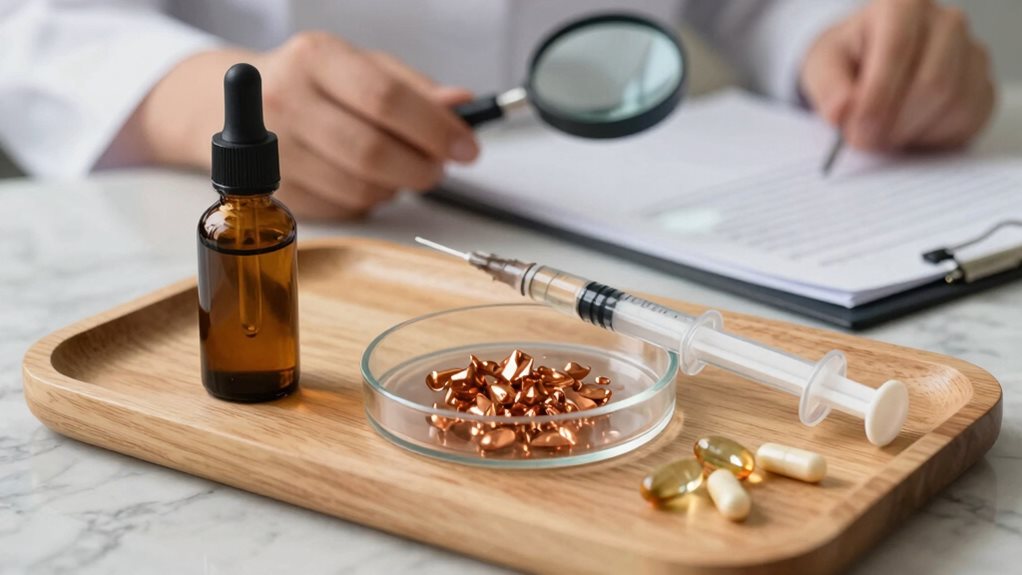
You’re probably wondering whether GHK-Cu fits your specific skin concerns, and the answer depends on your goals, your skin’s current condition, and any health factors that might make copper-containing products less suitable for you.
While many people—especially those with aging, thinning, or inflammation-prone skin—stand to gain meaningful improvements in firmness, texture, and barrier resilience, certain individuals, including those with copper-handling disorders like Wilson disease, known copper allergies, or active skin infections, should avoid this ingredient entirely or seek medical guidance first.
Understanding where you fall on this range helps you make an informed, confident choice about incorporating GHK-Cu into your routine. Copper metabolism considerations are important to assess before use.
Ideal Candidates
Who stands to gain the most from adding copper peptide to your routine? You’ll likely see meaningful benefits if you’re managing photoaged, collagen-deficient skin with visible texture changes or looseness, since GHK-Cu supports collagen synthesis and elasticity over 4–12 weeks of consistent use.
You’re also an ideal candidate if you’re recovering from laser resurfacing, microneedling, or chemical peels, as the peptide aids tissue repair and reduces inflammation.
Those with hair-thinning concerns focused on scalp health and follicle support, or individuals with sensitive, irritation-prone skin seeking gentler anti-aging alternatives, may find GHK-Cu particularly well-suited to their needs.
Who Should Avoid
While copper peptide offers meaningful benefits for many skin and scalp concerns, it isn’t universally appropriate, and knowing where the boundaries lie helps you use it safely and effectively.
You should avoid systemic GHK-Cu, especially injectable or nasal forms, due to limited safety data and copper load concerns.
Skip it entirely if you have Wilson’s disease, liver or kidney disease, hemochromatosis, copper allergy, or if you’re pregnant, breastfeeding, or under eighteen.
Discontinue use if you experience hives, swelling, or breathing difficulties.
Topical vs. Oral vs. Injectable: Which Delivery Method Works?
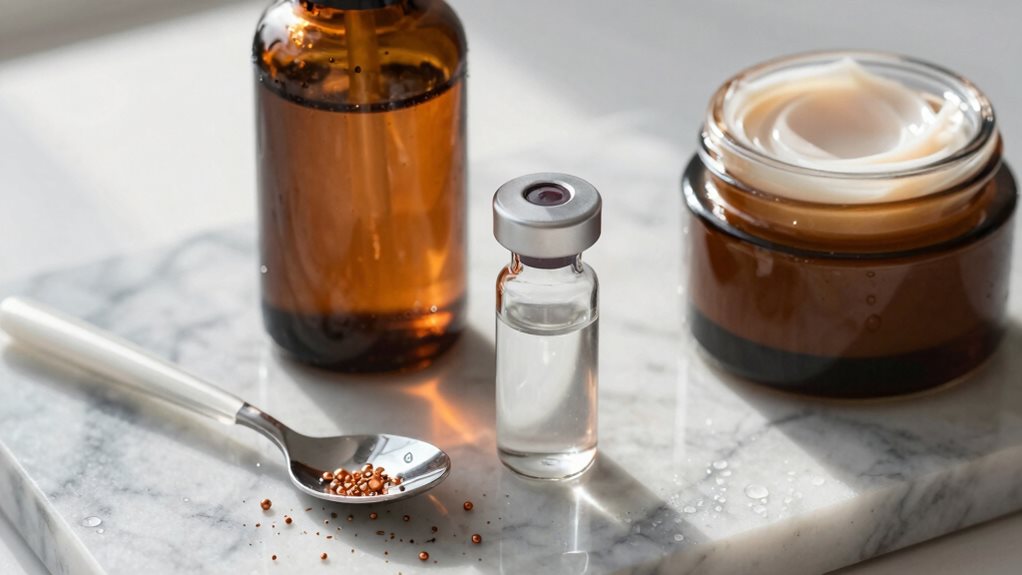
Topical GHK-Cu penetrates through hair follicles, transporting 0.05%–3% concentrations that improve hydration and texture within 2–4 weeks.
Oral administration fails catastrophically: digestive enzymes destroy the tripeptide-copper complex, dropping bioavailability to 0.5%–2% and requiring dangerous copper doses.
Injectable subcutaneous routes achieve 80–95% bioavailability, bypassing degradation entirely, though skin-specific data remains limited.
For dermatological goals, topical application preserves the intact complex needed for receptor binding, making it your most reliable, evidence-backed option.
TB-500 (Thymosin Beta-4) research notes that its roles include promoting wound healing and tissue repair, with safety considerations still under study and requiring careful scrutiny when extrapolating to humans. TB-500
GHK-Cu Safety: Side Effects, Copper Risks, and Unknowns
When you apply GHK-Cu to your skin, you’re using a delivery method with a relatively well-documented tolerance profile, since topical use has been studied more extensively than oral or injectable routes, and most users experience only mild, short-lived reactions like redness or stinging that typically resolve without discontinuing the product. Additionally, research on topical peptides like GHK-Cu has helped clarify that observed reactions are often localized to the application site rather than indicating systemic toxicity. However, you should recognize that significant gaps remain in our understanding of systemic safety, particularly regarding long-term effects beyond twelve weeks of continuous use, copper accumulation from repeated exposure, and how these risks might differ across various application methods or dosages. These limitations don’t necessarily indicate danger, but they do mean you’ll want to stay informed about emerging research, use products as directed, and consult a healthcare professional if you notice persistent or severe reactions that could signal sensitivity or an uncommon allergic response. Copper accumulation remains a potential concern with repeated exposure, underscoring the need for ongoing monitoring of systemic safety data.
Topical Tolerance Profile
How does GHK-Cu actually behave when you apply it to your skin? Most people experience mild, temporary reactions—redness, itching, stinging, or burning—especially during your first few applications or initial weeks of use. These symptoms typically resolve as your skin adjusts, or with reduced dosing. Irritation rates vary from under 2% to roughly 5–15%, and serious systemic toxicity hasn’t been documented with standard topical use.
Systemic Safety Gaps
While topical applications of GHK-Cu generally stay confined to your skin, any move toward systemic use—whether through injections, oral formulations, or other non-topical routes—opens questions that the current evidence base can’t fully answer.
You face unknown absorption patterns, unestablished dosing standards, and absent FDA approval for systemic indications.
Copper accumulation poses genuine risks, particularly if you’re managing liver conditions, Wilson’s disease, or pregnancy.
Buying GHK-Cu: Quality Checks and Red Flags
Why does the quality of GHK-Cu vary so dramatically between suppliers? You should demand a lot-specific COA with matching numbers, HPLC chromatograms, and copper assay by ICP-MS, while verifying synthesis dates and analyst signatures. Check for ≥98.5% purity, lavender-to-violet powder, and clear blue dissolution. Avoid vendors lacking ISO certifications, facility transparency, or impurity profiles for free GHK and oxidized byproducts.
GHK-Cu Reality Check: What to Believe and What to Skip
Once you’ve learned to spot quality GHK-Cu and avoid questionable suppliers, the next step is understanding what this peptide can realistically do for you, because even a perfectly synthesized batch won’t deliver benefits that don’t exist in the research. You can trust the skin repair evidence, including firmer, thicker skin and reduced fine lines, but you should dismiss the “4,000 gene reset” and longevity claims as unsupported speculation. Wound healing and collagen support are well-documented, yet systemic anti-aging, hair growth, and cognitive promises lack robust human data. Side effects remain mild for topical use, though long-term safety data is limited, so you’ll want to temper expectations and focus on the dermatological benefits with actual clinical backing. Recent studies also emphasize the importance of topical delivery and concentration for achieving measurable skin improvements and minimizing irritation delivery considerations.
Frequently Asked Questions
Can GHK-CU Replace Retinol in My Routine?
You can use GHK-Cu to replace retinol if your skin is sensitive or your priority is barrier repair and gentle firming, since it stimulates collagen without causing irritation, peeling, or sun sensitivity.
However, if your main concerns are fine lines, uneven texture, or pigmentation, retinol remains the stronger choice because it accelerates cell turnover more effectively.
For thorough results, consider combining both—GHK-Cu in the morning and retinol at night—rather than expecting a complete substitute.
Does GHK-CU Work With Vitamin C Serums?
Yes, you can use GHK-Cu with vitamin C serums, though you’ll want to separate them by time rather than layer them directly.
Apply your vitamin C in the morning and GHK-Cu at night, since L-ascorbic acid needs a low pH while copper peptides prefer neutral conditions.
If you must use both in one routine, wait 15–30 minutes between applications to protect each ingredient’s stability and effectiveness.
How Long Until I See Visible Skin Results?
You’ll notice smoother, more hydrated skin within 1–2 weeks, but visible anti-aging results—like softened fine lines and improved texture—typically emerge at 4–6 weeks.
The most significant changes, including firmer skin and reduced wrinkle depth, generally appear after 8–12 weeks of consistent daily use, with deeper structural improvements continuing through 3–6 months depending on your concentration, skin condition, and adherence to the regimen.
Can I Use GHK-CU During Pregnancy?
You should avoid using GHK-Cu during pregnancy unless your clinician specifically approves it, since no human safety studies exist for this life stage.
While topical copper peptides show a generally favorable profile in nonpregnant users, researchers haven’t evaluated fetal effects or breast milk transfer, so potential risks can’t be ruled out.
Most experts recommend pausing this active ingredient once pregnancy is confirmed, following the standard precautionary approach for cosmetic compounds lacking gestational safety data.
Is Prescription-Strength GHK-CU Available?
Yes, you can access prescription-strength GHK-Cu, though it isn’t FDA-approved as a drug for any specific medical condition. You’ll typically obtain these higher-concentration topical creams or serums through a licensed clinician, often via telehealth, who can refer you to a compounding pharmacy that prepares the formulation specifically for you.
This differs from over-the-counter cosmetic products, which contain lower concentrations and don’t require medical oversight.
And Finally
You’ve now investigated GHK-Cu’s mechanisms, benefits, and limitations across multiple delivery methods, and you can see that while copper peptides show genuine promise for skin repair and wound healing, the evidence remains strongest for topical applications rather than systemic use. You should approach injectable or oral forms cautiously, prioritize quality-assured products from reputable sources, and maintain realistic expectations, since GHK-Cu works gradually as a signaling modulator rather than providing dramatic overnight transformations.
References
- https://pmc.ncbi.nlm.nih.gov/articles/PMC6073405/
- https://pmc.ncbi.nlm.nih.gov/articles/PMC4508379/
- https://pmc.ncbi.nlm.nih.gov/articles/PMC8789089/
- https://www.frontiersin.org/journals/pharmacology/articles/10.3389/fphar.2025.1551843/full
- https://pmc.ncbi.nlm.nih.gov/articles/PMC3359723/
- https://www.eurekalert.org/news-releases/990464
- https://spartanpeptides.com/blog/ghk-cu-benefits-research-copper-peptide-mechanisms/
- https://peptidesciencethailand.com/research/ghk-cu
- https://peptideslabuk.com/what-are-the-benefits-of-taking-ghk-cu/
- https://www.peptidemark.com/peptides/ghk-cu