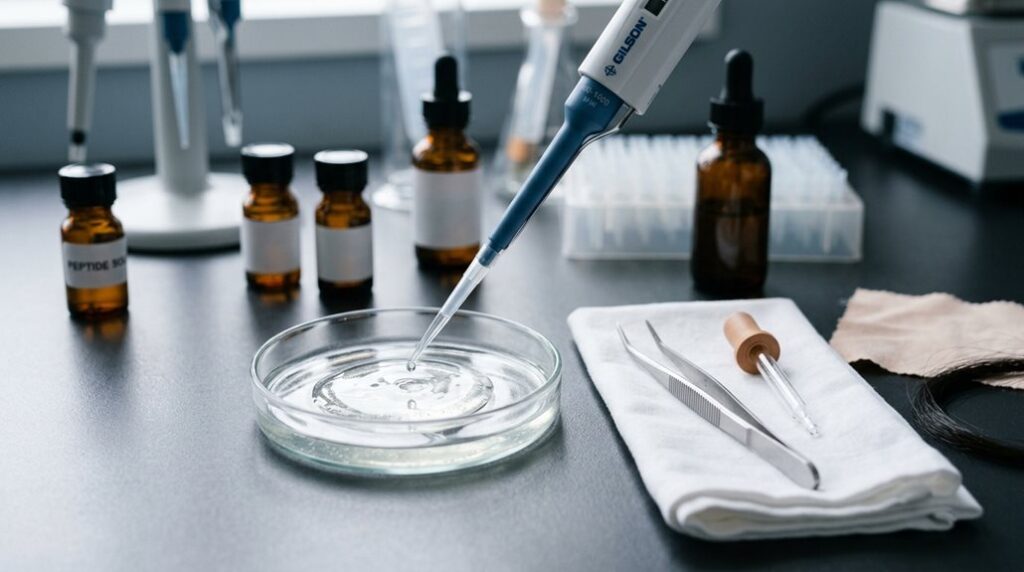
Longevity peptides are short amino acid chains that act as cellular messengers, binding to receptors and triggering repair processes within aging-related pathways, including telomere maintenance, mitochondrial function, and inflammation regulation. You’ll encounter categories like metabolic regulators, such as GLP-1 agonists with robust cardiovascular data, and immune-modulating peptides like thymosin alpha-1, which has FDA approval and extensive trial backing. While compounds such as Epitalon, GHK-Cu, and BPC-157 show promising mechanisms, human longevity evidence remains limited, and regulatory status varies considerably. You should prioritize prescription-grade products with verified quality, understand that biological age tests serve as monitoring tools rather than proof of efficacy, and approach research peptides with caution due to safety and purity concerns. If you explore the sections ahead, you’ll gain practical guidance on evaluating evidence, assessing regulatory standing, and discussing these options with qualified clinicians.
TLDR
- Longevity peptides are short amino acid chains that trigger cellular repair, regeneration, and balance within aging-related pathways.
- Clinically supported categories include metabolic regulators like GLP-1 agonists and immune-modulating peptides such as thymosin alpha-1.
- Specific peptides target distinct mechanisms: Epitalon for telomeres, SS-31 and MOTS-c for mitochondria, and GHK-Cu for tissue repair.
- Human longevity data remain limited; most evidence comes from disease-specific outcomes rather than proven lifespan extension trials.
- Regulatory status varies widely, with some peptides FDA-approved for specific uses while others lack standardized dosing and safety validation.
What Are Longevity Peptides and How Do They Work?

What exactly are longevity peptides, and why are they generating so much interest among researchers studying the biology of aging? They’re short amino acid chains that act as cellular messengers, binding to receptors and triggering repair, regeneration, and balance.
Unlike broad stimulants, they optimize specific aging-related pathways—telomere maintenance, mitochondrial function, and inflammation regulation—restoring signaling precision that naturally declines as you age. Growth hormone peptides
Which Longevity Peptides Have Real Clinical Evidence?
When you’re evaluating longevity peptides, you’ll want to distinguish between two categories that have garnered substantial clinical attention: metabolic regulators like GLP-1 agonists, which now carry robust cardiovascular and metabolic data, and immune-modulating peptides such as thymosin alpha-1, which has been tested in over 11,000 subjects across 30-plus trials for immune function. These represent your strongest starting points, though you should recognize that even here the evidence supports disease-specific outcomes—improved metabolic health or immune resilience—rather than proven lifespan extension. As you consider these options, you’ll benefit from understanding both what the trials actually measured and where the limitations lie. PT-141 (bremelanotide) provides a useful contrast, illustrating how a peptide can have targeted central nervous system effects with specific indications and safety considerations. Regulatory status informs what is approved versus exploratory, guiding how you interpret trial results and applicability to broader aging goals.
GLP-1 Agonists
Among the most discussed compounds in contemporary longevity research, GLP-1 receptor agonists stand apart precisely because their benefits are grounded in extensive clinical evidence rather than speculative promise.
You’ll find sturdy cardiovascular protection in patients with obesity or type 2 diabetes, including reduced major adverse events and roughly 11% lower all-cause mortality in high-risk populations.
Sustained weight loss, glycemic control, and emerging kidney and liver benefits support healthspan extension, though lifespan claims in healthy adults remain unproven.
Immune Peptides
Where exactly does immune modulation fit into the broader scenery of longevity science? You’ll find thymosin alpha-1 leads the pack, backed by extensive human trials for hepatitis, sepsis, and cancer—though its anti-aging claims remain unproven in healthy adults.
Brilacidin reaches phase II for infections, yet neither peptide delivers validated longevity benefits, despite their immunomodulatory promise.
Prescription Peptides vs. Research Peptides: What Changes?
When you consider using peptides for longevity purposes, you’ll encounter two distinct categories that differ fundamentally in their regulatory oversight and the reliability of their supporting data. Prescription peptides operate within a structured framework where FDA-approved manufacturing standards, medical supervision, and documented clinical trials establish both safety and efficacy, whereas research peptides carry a “for research purposes only” label that removes them from these human-use protections without guaranteeing equivalent quality.
This creates a significant evidence quality gap, because the clinical data supporting prescription formulations can’t be automatically applied to research-grade products, which may vary in purity, potency, and sterility due to inconsistent manufacturing oversight and lack of mandatory third-party verification. Continuous monitoring of receptor signaling and potential desensitization risks highlighted in Kisspeptin-10 studies further underscores the need for supervised use and rigorous trial data before any long-term, real-world application. KISS1R/GPR54 receptor
Regulatory Status Differences
How exactly does the same molecule end up governed by entirely different legal structures? You’re looking at the distinction between prescription and research peptides, where labeling and intended use—not the chemical itself—determine regulation. When you market a peptide for treating disease, it becomes a drug requiring FDA approval and clinical oversight. Sell it as a laboratory reagent with proper disclaimers, and you’ve entered a different regulatory space entirely.
Evidence Quality Gap
Why does the same chemical structure inspire such different levels of confidence?
You encounter a stark divide between prescription and research peptides, where regulated clinical trials, documented sourcing, and standardized manufacturing create dependable evidence, while animal studies, variable purity, and limited human data leave research-grade compounds with far weaker support for anti-aging claims you might consider.
Why GLP-1 Drugs Lead the Evidence Base
Among the various peptides discussed in longevity research, GLP-1 receptor agonists stand apart because they’ve earned their reputation through rigorous clinical testing rather than theoretical promise or anecdotal reports. In addition, these agents have demonstrated a durable effect on beta-cell function and metabolic pathways that extend beyond glucose control, contributing to broader cardiovascular and kidney outcomes. SURMOUNT trial data show measurable reductions in weight and improved metabolic parameters, reinforcing the strength of the cardiovascular and renal safety signals observed in large randomized studies.
Thymosin Alpha-1: An Immune Longevity Peptide With Approval
You’re now examining Thymosin Alpha-1, a peptide with a distinctive regulatory position that sets it apart from many longevity compounds you may encounter. While the FDA has granted this substance orphan drug status for specific conditions and classified it as a Category 2 bulk drug substance—which restricts its compounding for non-orphan uses in the United States—you’ll find it carries full pharmaceutical approval in over 35 countries worldwide, where it operates under names like Zadaxin and Thymalfasin for immune modulation in hepatitis, sepsis, and cancer adjuvant therapy. This international recognition, built upon more than 30 clinical trials involving over 11,000 subjects, positions Thymosin Alpha-1 as one of the few immune-focused longevity peptides with substantive human safety data and documented mechanisms, including T-cell differentiation enhancement and oxidative stress reduction, that researchers continue to investigate for applications in immunosenescence and age-related immune decline. immune modulation
Clinical Approval History
When you’re evaluating a peptide’s credibility for longevity or immune support, one of the most reliable indicators is its regulatory history, and thymosin alpha-1 stands out in this regard.
You’ll find it approved as thymalfasin in 35+ countries since the mid-1990s, with chronic hepatitis B as its clearest indication, though it’s been studied in cancer, viral infections, and immune disorders across decades of clinical use.
Immune System Modulation
How does your immune system maintain its balance as you age? Thymosin alpha-1 acts as an immunomodulator, not a simple stimulant, promoting T-cell maturation and supporting CD4+ and CD8+ cell differentiation. It activates innate and adaptive immunity through toll-like receptor signaling, helping restore immune homeostasis while reducing inflammation. With favorable safety and low toxicity, Tα1 offers a researched approach to immune longevity.
Longevity Research Evidence
Thymosin alpha-1 carries a research profile that extends well beyond theoretical immune support into documented clinical and regulatory standing, which positions it distinctly among peptides discussed for longevity applications.
You’ll find FDA-approved thymalfasin backed by evidence in COVID-19, where it restored T-cell counts and reduced mortality in severe cases.
Its promotion of dendritic cell maturation and balanced immune modulation addresses age-related immune decline without claiming direct lifespan extension.
Does Epitalon Actually Extend Human Lifespan?

A peptide with reported cellular signaling effects has yet to demonstrate human lifespan extension in robust trials regulatory and safety concerns.
Is Epitalon Safe to Use Given the Weak Evidence?
You’re considering epitalon, but you should know that the evidence supporting its safety remains notably thin, with most human data coming from small, older studies that lack the rigor of modern clinical trials. The FDA hasn’t approved this peptide for any use, which means you won’t find standardized dosing, quality-controlled manufacturing, or established protocols for monitoring adverse effects if you pursue it outside research settings. While published reports describe mostly mild, temporary side effects like injection-site reactions and headaches, the absence of serious documented harm doesn’t equate to proven safety—especially since long-term human data, independent replication, and critical safety information for vulnerable populations remain essentially missing from the scientific record. Additionally, the limited duration of most studies means we can’t fully assess potential cumulative risks over years of use, particularly for individuals with underlying health conditions. Safety data remains preliminary and insufficient for robust risk assessment.
Evidence Quality Concerns
When you’re evaluating whether Epitalon is safe to use, you’ll quickly uncover that the evidence base presents significant limitations that demand careful, critical examination rather than casual acceptance.
You won’t find long-term safety data in peer-reviewed human studies, nor will you discover pharmaceutical-grade versions approved for prescription use in the United States. The FDA specifically cites immunogenicity as a significant safety risk for compounding, meaning life-threatening immune responses could emerge from poorly manufactured peptide batches, while trial sizes remain too small to rule out rare adverse harms.
You’re facing a landscape where human evidence stays limited, mixed, and often methodologically weak, with no established medical indication, standardized dosing protocols, or rigorous proof of benefits despite promising lab and animal data. Most users experience few side effects short-term, yet long-term uncertainty persists until larger randomized controlled trials complete, leaving you without formal pharmacovigilance data to assess population-specific risks or stereoisomer-specific studies to confirm safety before mainstream adoption becomes appropriate.
Regulatory Status Issues
The limitations you’ve just examined don’t exist in a vacuum—they’re amplified by a regulatory milieu that leaves Epitalon in a precarious, ill-defined position across most of the developed world.
You won’t find FDA approval, EMA authorization, or Health Canada clearance for this peptide, and while Russia permits clinical use, that documentation comes from a single research group without independent validation.
The compound’s 2023 Category 2 bulk-substance classification, subsequent conflicting reclassifications, and pending 2026 PCAC review create uncertainty you can’t ignore, particularly since no Western Phase III trials or comprehensive safety data exist to support compounding or prescribing decisions you might consider.
Safety Profile Unknown
How safe is Epitalon, really?
You’re looking at limited human data, mostly from small Russian studies without proper controls, so long-term safety remains genuinely unknown.
Short-term use shows mild effects like injection-site reactions, headaches, and fatigue, but that doesn’t mean chronic use is safe.
No large Western trials exist, and pregnant women, children, and cancer patients lack any safety data.
You’re navigating uncharted territory with preliminary tolerability, not established safety.
GHK-Cu: A Longevity Peptide for Skin and Tissue Repair
GHK-Cu acts as a multi-functional signaling molecule, stimulating collagen, elastin, and tissue repair across skin, bone, and organs. It accelerates wound healing, reduces inflammation through NF-κB suppression, and enhances antioxidant defenses like SOD. Topical delivery supports barrier repair and hydration with a favorable safety profile when used appropriately.
What BPC-157 Research Shows About Gut Healing

Moving from skin regeneration to deeper tissue repair, you’ll find BPC-157 occupies a unique position in peptide research due to its notable affinity for gastrointestinal healing, a property first observed when investigators noted its protective effects against various ulcer-inducing agents in animal models.
The peptide’s capacity to enhance gastric ulcer healing has been consistently observed in rodent studies, with 40–60% reductions in ulcer area within one to two weeks, aligning with clinical observations in human ulcerative conditions. Keystone healing has emerged as a relevant concept in these findings, highlighting the role of BPC-157 in coordinating tissue repair processes.
Clinical evidence supports this pattern: a placebo-controlled trial in ulcerative colitis showed statistically significant decreases in Disease Activity Index, reduced stool frequency, and improved tissue histology, all without detectable plasma levels or increased adverse events.
The mechanisms involve increased VEGF expression for angiogenesis, modulation of nitric oxide signaling, activation of repair-associated growth factors, and upregulation of tight junction proteins that preserve intestinal barrier integrity.
Which Repair Peptides Lack Human Data?
When you’re evaluating repair peptides, it’s essential to distinguish between promising preclinical findings and actual human evidence, as several widely discussed compounds—including BPC-157, TB-500, CJC-1295/Ipamorelin, Epitalon, Semorelin, and LL-37—share a common limitation: their therapeutic claims rest primarily on animal studies, observational data, or theoretical mechanisms rather than robust, controlled human trials. no completed Phase III studies
How Longevity Peptides Target Cellular Aging
Longevity peptides operate through distinct molecular pathways that address the biological mechanisms driving cellular aging, allowing you to understand how these compounds might preserve function rather than simply masking symptoms. You’ll find they target telomere maintenance, mitochondrial performance, cellular senescence, and proteostasis—each representing a validated hallmark where decline accelerates aging. Epitalon supports telomerase activation, while SS-31 and MOTS-c enhance mitochondrial energy metabolism. Pep-14 demonstrates senotherapeutic effects by reducing senescence-associated signaling, and GHK-Cu promotes collagen restoration and tissue repair. These mechanisms don’t reverse aging but may delay functional deterioration through cellular preservation.
Can Biological Age Tests Measure Peptide Benefits?

Understanding how peptides influence cellular aging raises an obvious question: how would you know if they’re actually working? Biological age tests offer a partial answer, tracking changes in DNA methylation, blood markers, or protein levels over time, though they can’t isolate peptides as the sole cause without controlling for lifestyle factors. You’ll need repeated testing to spot meaningful trends, since single snapshots prove little.
Epigenetic clocks, the most established research tool, measure CpG methylation patterns strongly correlated with aging, while proteomic and blood-based panels may capture peptide effects on inflammation or metabolism that clocks miss. Current evidence remains promising yet limited—one 2023 study showed the senotherapeutic peptide Pep14 reduced skin biological age in human models, but human trials are scarce. Treat these tests as monitoring tools, not proof of anti-aging efficacy.
What Safety Risks Come With Injectable Peptides?
How exactly do you weigh the promise of peptide therapy against its potential harms? You face infection risks from non-sterile injection, with endotoxin contamination found in 8% of unauthorized products. You may encounter immune reactions, metabolic side effects, or serious complications like pancreatitis. Without FDA oversight, dosing errors and unknown long-term effects remain significant concerns you’ll need to carefully consider.
Why Peptide Hype Exceeds the Science
Why do so many people feel certain that peptides will slow aging when the science itself remains uncertain? You’re encountering a gap between promising animal studies and verified human results, where social media testimonials and marketing claims have outpaced clinical evidence. Most anti-aging peptides lack randomized controlled trials in people, leaving their real benefits unproven despite widespread enthusiasm.
How to Spot Legitimate Peptide Sources

Although the peptide market offers genuine products alongside questionable alternatives, you’ll need to develop a systematic approach to distinguish between them, particularly since regulatory oversight remains limited and quality varies dramatically across suppliers.
Request batch-specific COAs with lot numbers, verified through third-party labs using HPLC and mass spectrometry.
Confirm sterility and endotoxin testing for injectables.
Verify vendor legitimacy through physical addresses, registered business names, and transparent policies.
How to Discuss Peptide Options With Your Doctor
Once you’ve identified a trustworthy source for peptide products, your next step involves navigating a productive conversation with a qualified clinician, since medical guidance remains indispensable even when you’re approaching these therapies from a research-informed, longevity-focused perspective. State your goal clearly, then ask whether your clinician has several years of peptide experience and uses these compounds as complementary therapy rather than primary substitutes for standard care. Inquire about their peptide education background, since credible guidance should include post-graduate clinical training, courses, or ongoing medical education, and ask whether proposed products come from a clinical or state-licensed compounding pharmacy with human-use certification and analytical testing. Discuss evidence levels supporting any proposal, as strength varies widely from animal data to controlled trials, and ask whether your specific condition has documented support rather than relying on nonspecific longevity claims.
The Future of Longevity Peptide Research
Where exactly is longevity peptide research headed over the next decade, and how might you distinguish genuine scientific progress from speculative marketing?
You’ll likely see DNA methylation clocks become standard endpoints, allowing researchers to detect aging signals within 12–18 months rather than decades.
Focus on candidates with human data, like GLP-1 agonists and thymosin alpha-1, while recognizing that mitochondrial peptides and tissue repair agents remain promising but unvalidated.
Frequently Asked Questions
Can Peptides Reverse Existing Wrinkles?
You can reduce existing wrinkles with peptides, but you can’t fully reverse them to your pre-aging skin state. Clinical studies show you’ll typically see 20–45% improvement in wrinkle depth after 8–12 weeks of consistent use, with initial hydration and texture changes appearing within 2–4 weeks.
Peptides work structurally by stimulating collagen production and relaxing facial muscles, making them most effective for mild to moderate wrinkles rather than deep, established aging changes.
Do Oral Peptide Supplements Work Effectively?
Oral peptide supplements work selectively, not universally. You’ll find collagen peptides have the strongest evidence, improving skin hydration and elasticity after 8–12 weeks of consistent use. However, you shouldn’t expect dramatic anti-aging results, as benefits remain modest and specific to certain endpoints.
Many marketed claims for hair, nails, or broad rejuvenation lack robust clinical support.
You’re wise to view these supplements as potentially helpful adjuncts rather than transformative solutions, recognizing that long-term safety data remains limited for numerous commercial products.
What’s the Optimal Age to Start Peptide Therapy?
There isn’t a single optimal age, since your goals and health status matter more than a birthday.
You might consider starting in your late 20s or early 30s for preventive care, particularly as collagen production naturally slows, though many people begin in their 40s, 50s, or beyond when seeking restorative benefits.
Ultimately, you’ll want to start when specific symptoms, recovery needs, or wellness goals emerge, always under qualified medical supervision.
Can Peptides Replace Hormone Replacement Therapy?
You can’t fully replace hormone replacement therapy with peptides if you have true hormone deficiency, since peptides signal your body to produce more hormones rather than directly replacing what’s missing.
However, you may use peptides for optimization in low-normal states, fertility preservation, growth hormone stimulation, or recovery goals, and you can combine both approaches when cellular signaling and direct replacement are both needed.
How Long Do Peptide Effects Last After Stopping?
Peptide effects vary by type: GLP-1 weight loss fades over months with two-thirds regain possible within a year, growth hormone peptides recalibrate within 1–4 weeks, while healing peptides like BPC-157 and TB-500 can persist for months because repaired tissue doesn’t reverse.
Your maintenance habits, including diet and exercise, strongly influence how long benefits last after you stop.
And Finally
As you steer longevity peptides, you’ll find that evidence-based discernment protects both your health and your wallet. Prioritize compounds with regulatory approval or solid clinical data, consult qualified physicians before beginning any regimen, and maintain realistic expectations about anti-aging outcomes. The field holds genuine promise, but responsible progress requires patience, rigorous research, and professional guidance rather than enthusiasm alone. Your informed approach today shapes both your immediate safety and the legitimate future this science deserves.
References
- https://www.gethealthspan.com/research/article/peptides-for-longevity-evidence-guide
- https://peptidescienceinstitute.org/conditions/peptides-for-longevity/
- https://spartanpeptides.com/blog/best-peptides-anti-aging-research-2026/
- https://www.nature.com/articles/s41514-023-00109-1
- https://content.atria.org/article/peptides-for-longevity/
- https://pmc.ncbi.nlm.nih.gov/articles/PMC13095733/
- https://pmc.ncbi.nlm.nih.gov/articles/PMC11762834/
- https://premiummedicalcircle.com/en/artikel/anti-aging-peptides-effects-risks
- https://kellyemrick.com/wp-content/uploads/2026/01/Peptides-for-Healthy-Aging.pdf
- https://peptidelist.org/goals/longevity-and-anti-aging