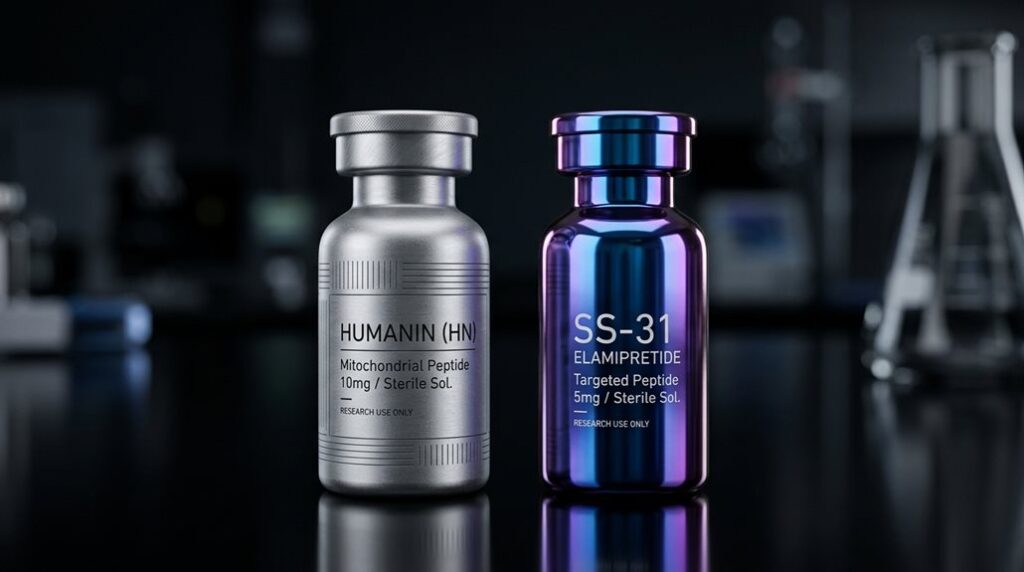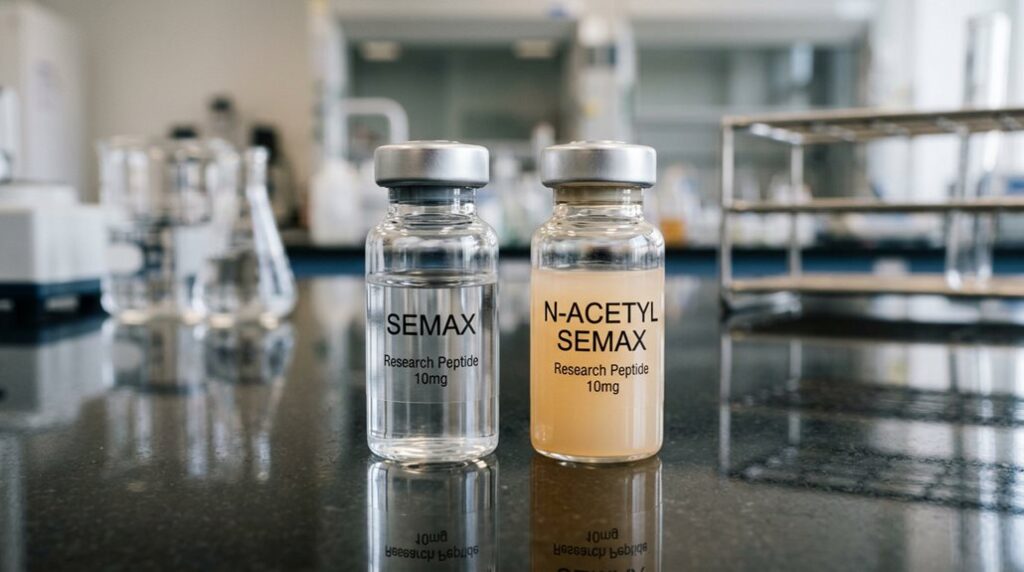
Brain peptides are short amino acid chains that enhance cognition by activating BDNF and TrkB receptors to strengthen synapses, rather than providing quick stimulation like caffeine or prescription stimulants. You’ll find the strongest human evidence behind Cerebrolysin for memory recovery in vascular dementia, while compounds like Semax show promise for attention and neuroplasticity, though many popular peptides lack rigorous clinical validation. Most peptides struggle to cross the blood-brain barrier, requiring specialized delivery methods such as intranasal administration or nanoparticle formulations to reach effective brain concentrations. When evaluating options, prioritize peptides with replicated, blinded human trials, disclosed funding sources, and regulatory transparency over preclinical hype. Your path to informed decisions about cognitive enhancement starts with understanding which mechanisms have survived scientific scrutiny.
TLDR
- Brain peptides modulate synaptic plasticity and memory through BDNF-TrkB signaling pathways.
- Unlike stimulants, peptides enhance long-term cognitive resilience rather than acute alertness.
- Cerebrolysin shows strongest clinical evidence; most peptides lack robust human trial data.
- Acute CRH sharpens learning, but chronic exposure damages synaptic plasticity and recall.
- BBB delivery challenges limit therapeutic translation despite promising preclinical mechanisms.
What Are Brain Peptides and Why Do They Matter for Cognition?

How exactly does your brain coordinate the countless signals that let you learn, remember, and adapt to new situations? Brain peptides—short amino acid chains acting as signaling molecules—play a critical role.
These neuropeptides modulate synaptic plasticity, influence memory formation, and regulate emotional processing across cognition-regulating regions. Understanding their function helps you grasp how neural communication supports higher-order thinking and adaptive behavior.
How Brain Peptides Differ From Nootropics and Stimulants
When you’re considering options to support your cognitive function, you’ll quickly notice that brain peptides, traditional nootropics, and stimulants occupy fundamentally different spaces in the terrain of cognitive enhancement, each operating through distinct mechanisms that produce notably different outcomes for your brain.
Stimulants force immediate alertness through broad neurotransmitter elevation, delivering a temporary performance push.
Nootropics target memory and learning through varied metabolic pathways, offering shorter-term mental support.
Peptides work more slowly, binding specific receptors to build structural capacity via neuroplasticity and neuroprotection.
You won’t feel peptides instantly, unlike stimulants, but they’re designed for long-term resilience rather than acute boosts.
Brain peptides can also modulate axonal growth factors and synaptic stability, contributing to sustained cognitive health over time neuroprotection.
Which Brain Peptides Show the Strongest Memory Effects?
Which Brain Peptides Show the Strongest Memory Effects?
Now that you understand how brain peptides operate through fundamentally different mechanisms than stimulants or traditional nootropics, you’re probably wondering which specific compounds deliver the most meaningful improvements for memory specifically.
You’ll find four peptides dominate this conversation, each with distinct evidence profiles. Cerebrolysin offers you the strongest clinical support for therapeutic memory recovery, supported by over 200 trials and meta-analytic data showing meaningful cognitive improvement in vascular dementia. Semax provides you the most validated option for broader cognitive enhancement, combining attention and memory benefits with human research backing. PRL-8-53 presents you with the most striking single study result—reported 200–300% word retention increases—but lacks replication. Dihexa shows you exceptional preclinical neuroplasticity potential, yet carries no human efficacy data whatsoever. link
What Human Evidence Actually Exists for Brain Peptides?

You should understand that human evidence for brain peptides remains quite limited, with most support coming from small clinical studies rather than large randomized trials. When you examine the data, you’ll find that peptides like TRH, IGF-1, and VIP show measurable cognitive outcomes—including improved memory, attention, and associative learning—particularly in situations such as exercise or specific dietary interventions. However, you must recognize that many promising findings come from preclinical or indirect evidence, so firm judgments about broad clinical efficacy are still premature. Longevity Peptides
Clinical Trial Results
The gap between laboratory promise and proven human benefit remains one of the most persistent challenges you’ll encounter when evaluating brain peptides for cognitive enhancement.
Cerebrolysin shows the strongest signal, with meta-analyzed trials demonstrating cognitive benefits in Alzheimer’s patients, while β-lactolin whey peptide improves visual memory in healthy older adults.
Most other peptides, including BPC-157, Dihexa, and P21, lack human cognitive evidence entirely.
Observed Cognitive Outcomes
Where does the actual human proof stand when you strip away the laboratory hype and marketing claims surrounding brain peptides? You’ll find it remains surprisingly thin, built mostly on indirect evidence and animal studies rather than sturdy human trials.
GLP-1 peptides like liraglutide show modest, secondary cognitive signals in Alzheimer’s, but primary trials for peptide T failed outright.
How to Spot Overhyped Peptide Research: A Preclinical Red Flag Checklist

Navigating the landscape of peptide research for cognitive enhancement requires a discerning eye, particularly when preclinical studies—those conducted in animals, cell cultures, or artificial assays—are presented as if they guarantee human benefits.
You should examine whether findings come from controlled, blinded human trials rather than uncontrolled observations or small samples.
Check for independent replication, disclosed conflicts of interest, and regulatory transparency before trusting any claim.
Peptides for Memory and Learning: IGF-1, VIP, and TRH
Among the peptides most frequently discussed for cognitive support, IGF-1 stands out for its sturdy mechanistic foundation in memory and learning research, even though direct human treatment trials remain scarce.
You’ll find robust observational evidence linking higher IGF-1 levels to better cognitive performance in older adults, with a notable meta-analysis of 1,981 participants showing a medium-to-large effect size of 0.6.
Preclinical studies demonstrate IGF-1’s critical role in hippocampal synaptic plasticity, long-term potentiation, and spatial memory formation through IGF-1 receptor activation.
However, you should recognize this peptide as a double-edged sword—while mechanistically promising, no clinical trials have yet tested IGF-1 treatment for cognitive enhancement directly, leaving its therapeutic potential for memory and learning incompletely validated.
IGF-1 receptor activation is a key mechanism underpinning its effects on hippocampal plasticity and memory processes, as observed in preclinical models.
Peptides for Stress Resilience: NPY, Vasopressin, and CRH
You’ll find that stress resilience depends heavily on how three key peptides interact within your brain’s stress response systems, where NPY serves as a protective buffer against anxiety, vasopressin amplifies stress signaling, and CRH creates difficult trade-offs between alertness and emotional stability. When you understand these mechanisms, you can better appreciate why some individuals maintain composure under pressure while others experience overwhelming distress. This section breaks down exactly how each peptide shapes your psychological and physiological responses to challenging situations. In research, semaglutide and similar GLP-1 receptor agonists are being explored for broader metabolic and cardiovascular benefits, underscoring how intertwined bodily systems can influence stress-related health outcomes cardiovascular safety considerations.
NPY Stress Buffering
How does your brain maintain composure when pressure mounts? Your neuropeptide Y, or NPY, functions as your primary internal anxiolytic, directly counteracting stress hormones like corticotropin-releasing factor to promote behavioral adaptation. When NPY levels rise in your amygdala and hippocampus, you’ll experience reduced anxiety and enhanced resilience against post-traumatic stress. Your NPY system essentially serves as a biological brake, toning down central nervous system overactivity by controlling pro-stress neurotransmitters such as norepinephrine.
Vasopressin Stress Response
While NPY works to calm your nervous system during stressful moments, your brain simultaneously deploys a counterbalancing system that amplifies alertness and prepares your body for action. Arginine vasopressin, or AVP, functions as your hypothalamic alarm signal, releasing alongside corticotropin-releasing factor to drive ACTH secretion and activate your HPA axis. You’ll find AVP intensifying anxiety-like responses and emotional reactivity through V1a and V1b receptors, making it central to stress amplification rather than resilience.
CRH Cognitive Trade-Offs
Where exactly does your brain draw the line between helpful alertness and harmful overload? With corticotropin-releasing hormone, that line is time.
Brief CRH exposure sharpens your hippocampus, priming learning and memory when you need quick adaptation, yet sustained activation—roughly an hour or more—erodes synaptic plasticity, dendritic spines, and recall.
You see a clear trade-off: acute CRH enhances, chronic CRH impairs.
Peptides That Impair Cognition: What Galanin Research Reveals

Galanin stands out among brain peptides as a consistent, well-documented modulator of cognitive function—and, particularly, one that research links primarily to impairment rather than enhancement. A growing body of preclinical data also notes that galanin’s effects on memory and attention may involve interactions with acetylcholine pathways in key memory-related regions. GABA-A modulation and related network-level changes can influence cognitive processes beyond isolated receptor actions, a pattern also reflected in broader selank research.
Emerging Brain Peptides: Substance P, Somatostatin, and New Targets
Ipamorelin, while primarily studied for its GH-modulating effects, has also been explored for its potential downstream influence on connective tissue recovery and bone matrix synthesis via the GH/IGF-1 axis, a perspective that complements the neuropeptide-focused discussion GH/IGF-1 axis.
How Brain Peptides Trigger BDNF and Neuroplasticity
Consider how brain peptides might reshape your neural design, and you’ll find that many of their cognitive effects converge on a single molecular cornerstone: brain-derived neurotrophic factor, or BDNF. When peptides like Semax or Selank activate your TrkB receptors, they trigger signaling cascades that strengthen synapses, support neuron survival, and enhance learning through long-term potentiation in your hippocampus. BDNF signaling provides a unifying mechanism across these effects, connecting peptide action to sustained neural plasticity.
Synaptic Function: Why This Mechanism Matters Most
Why does synaptic function stand at the center of everything your brain accomplishes? You’re witnessing the answer every moment: synapses transmit signals at microscopic speeds, integrate excitatory and inhibitory inputs into unified responses, and rewire through plasticity to encode your memories. Without this precise, directed communication, your thoughts, movements, and learning would collapse. Synaptic health determines whether your neural circuits perform efficiently or fail. GIP and GLP-1 mechanisms can influence metabolic signaling that intersects with brain function, underscoring how peripheral hormones may modulate synaptic activity and cognitive processes.
Why Most Brain Peptides Fail: The Blood-Brain Barrier Problem
You’ve seen how synaptic function powers every thought and memory, yet the most promising tools for influencing that function—brain peptides—rarely reach their targets. Your blood-brain barrier blocks most peptides due to their size, charge, and water solubility, while enzymes degrade them rapidly in blood. Even lipophilic exceptions face efflux pumps like P-glycoprotein that actively expel them. Only specific transporters enable limited passage, making successful delivery exceptional rather than expected. blood-brain barrier constrains delivery by restricting peptide transit, while transporter- or transporter-dependent mechanisms offer only narrow entry windows.
Three Ways Scientists Are Solving the Delivery Problem
Researchers are curious how promising peptides actually reach the brain when the blood-brain barrier blocks the path, so scientists have devised two complementary approaches that work together rather than selecting only one. First, they engineer peptides and their carriers to physically cross the barrier through receptor-targeted transport, where special ligands like transferrin or angiopep serve as molecular keys that open passage through endothelial cells, or via nanoparticle systems that shield and shuttle cargo across.
Second, they chemically modify the peptides themselves through PEG conjugation, glycosylation, or lipophilicity enhancement to improve stability against enzymes and extend circulation time, ensuring more of the therapeutic dose actually reaches its neural targets intact.
BBB-Crossing Strategies
How exactly do therapeutic peptides reach the brain when they’re blocked by one of biology’s most selective security systems?
Scientists have developed five main strategies: receptor-mediated transcytosis hijacks natural transport pathways like the insulin receptor, cell-penetrating peptides act as molecular shuttles, nanoparticles package drugs for targeted delivery, transient BBB disruption temporarily opens the barrier, and molecular optimization tunes lipophilicity for passive diffusion.
Stability Solutions
Where stability becomes the central concern, you’ll find that therapeutic peptides face a formidable challenge even after they’ve crossed biological barriers—their molecular design makes them vulnerable to degradation from the moment they enter solution. You can combat this through three integrated approaches: formulation control, where you’ll optimize pH and buffers while adding protective excipients like glycerol; chemical modification, which lets you substitute amino acids or employ cyclization to reduce protease susceptibility; and rigorous storage protocols, where you’ll rely on lyophilization at –80°C and frozen aliquots to eliminate damaging freeze-thaw cycles.
Can You Absorb Brain Peptides Orally? What Mouse Studies Show
Whether you’re exploring cognitive supplements or researching peptide-based therapies, you’ll likely encounter claims about oral brain peptide absorption that deserve careful scrutiny.
Mouse studies confirm that brain-active peptides can enter circulation and reach brain tissue, though efficiency remains modest—Tyr-Pro showed only 0.15% blood absorption, with nanoparticle formulations improving this to 2–3% and enhancing functional cognitive effects.
Food-Derived Brain Peptides: Do Collagen and Milk Proteins Work?
If you’re scanning supplement shelves or nutrition blogs for brain-boosting peptides, you’ve almost certainly encountered glowing claims about collagen and milk proteins. Milk-derived peptides show stronger evidence, with compounds like GTWY and NTPPLTQTPVVVPPFLQPE improving memory in animal studies and one human trial showing attention benefits.
Collagen lacks direct cognitive support—its brain claims remain unproven in current research, focusing instead on tissue repair elsewhere.
Designer Peptides for Age-Related Memory Loss: Early Results
How far can laboratory-engineered peptides go in reversing the memory decline that accompanies aging? Early animal studies suggest genuine promise: PHDP5 reduced tau pathology and restored learning in Alzheimer’s-like mice, while Dihexa outperformed donepezil in preclinical comparisons. R8-Aβ(25–35), delivered intranasally, lowered amyloid plaques and memory deficits.
Yet human trials remain inconsistent—NAP helped mild cognitive impairment but failed in progressive supranuclear palsy—so you’re seeing signals, not proven therapy.
Dosing, Stability, and Safety: Hard Truths About Peptide Therapy
You’ll quickly learn that peptide therapy demands far more precision than simply measuring out a dose, since the frequency of administration must align with a compound’s half-life—ranging from multiple daily injections for short-acting molecules to weekly regimens for longer-lasting ones—while stability concerns, including proper refrigeration, gentle handling without shaking, and avoidance of preloaded syringes, can compromise potency if neglected.
These practical challenges are compounded by safety considerations that extend beyond the peptide itself to encompass compound purity, accurate sourcing, and appropriate medical oversight, particularly given that unregulated products may carry risks of contamination or mislabeling.
Understanding these interconnected factors—dosing calculations, storage protocols, and vigilant monitoring for adverse effects—forms the essential foundation for anyone evaluating whether peptide therapy aligns with their cognitive health goals.
Dosing Challenges
The path to effective peptide therapy begins with a measured, methodical approach to dosing that prioritizes your safety and individual response over speed or convenience. You’ll typically start at 25–33% of your anticipated therapeutic dose, then increase by 25–50% every 3–7 days while monitoring tolerance.
Short-acting peptides demand twice-daily administration, and you’ll adjust for your body weight, age, and organ function rather than following fixed protocols.
Stability Concerns
Once you’ve established a workable dosing rhythm, you’re faced with another layer of complexity that can quietly undermine your entire protocol: the inherent fragility of peptide molecules themselves. These compounds degrade through chemical oxidation, physical aggregation, and enzymatic cleavage, with residues like methionine and cysteine particularly vulnerable.
You’ll need precise pH control, lyophilized storage at −20°C, and protection from light, moisture, and freeze-thaw cycles to preserve potency.
Comparing Peptide Approaches by Risk, Cost, and Evidence Quality
When you’re considering whether a brain peptide is worth pursuing, you’ll quickly realize that not all compounds carry the same balance of promise and peril, and this comparison demands scrutiny across three distinct dimensions: how much risk you’re accepting, what you’ll actually spend, and how solid the science really is beneath the marketing claims.
Cerebrolysin offers the deepest safety database yet carries serious adverse event potential and high costs.
Semax shows stronger cognitive evidence but lacks Western validation.
Dihexa’s extraordinary preclinical results mean nothing without human data, while its cancer theoretical risk remains unquantified.
Remember: true cost includes evidence quality, not just purchase price.
How to Choose a Brain Peptide Strategy: A Practical Framework
Before you commit to any brain peptide approach, you’ll need to clarify your specific cognitive goals—whether you’re targeting memory consolidation, neuroprotection, or executive function—since each objective demands different mechanistic considerations and validation standards.
Once you’ve defined these aims, you must critically assess the evidence quality behind your candidate peptides, weighing factors like study design rigor, sample sizes, and whether findings come from in vitro models, animal studies, or human clinical trials, as these tiers carry vastly different predictive value.
Finally, you’ll evaluate delivery methods by matching your peptide’s physicochemical properties—its size, polarity, and charge—to proven blood-brain barrier strategies, whether that’s receptor-mediated transcytosis, lipidation for passive diffusion, or nanoparticle encapsulation, ensuring your choice aligns with both scientific feasibility and your risk tolerance.
Define Cognitive Goals
Why do so many peptide protocols fail to deliver clear results? You haven’t defined your primary cognitive outcome before starting. Choose one goal—focus, memory, stress-related fog, or recovery—because clarity determines your starting protocol.
Match the symptom pattern: poor focus suggests Semax, anxiety-driven slowing suggests Selank, and recovery scenarios point toward neurotrophic options like Cerebrolysin or Dihexa.
Assess Evidence Quality
How do you separate genuine cognitive enhancement from expensive hope? You prioritize human randomized trials over animal studies, demanding response rates and effect sizes rather than mechanistic promises.
Check synthesis purity—below 98% can slash receptor binding by half—and insist on third-party mass spectrometry verification.
Let evidence quality, not marketing, guide your peptide strategy.
Evaluate Delivery Methods
Wherever your peptide needs to go—deep into a specific brain region or broadly across neural tissue—your delivery method determines whether it actually arrives. You must weigh invasiveness against precision. Choose ICV or CED injection when you need maximal, targeted exposure with minimal systemic effects, accepting that these procedures require surgical expertise.
Select intranasal delivery for patient-friendly, repeated dosing that bypasses the blood-brain barrier without penetration.
Opt for systemic administration paired with BBB-shuttles, receptor targeting, or nanocarriers when broader distribution suits your therapeutic goals, recognizing that transferrin receptor targeting and liposomal formulations can enhance brain entry.
Match your method to your priority: regional concentration, convenience, or widespread neural access.
Which Brain Peptides Might Reach Human Trials by 2030?
When you’re evaluating which brain peptides might actually reach human trials before the decade ends, you’ll want to distinguish between compounds with concrete development timelines and those that remain stuck in preclinical discussion.
HER-096, a CDNF-mimicking peptide, has the clearest near-term path, with company sources citing 2029–2030 as the earliest market possibility.
CAQK is advancing toward Phase I FDA authorization, while a University of Arizona vascular-dementia peptide prepares for human testing within three years.
ARG-007 already demonstrates that brain-disorder peptides can progress, having reached Phase II for stroke.
Brain shuttle technologies like G2B-002 may also enter trials as enabling platforms.
Frequently Asked Questions
Do Brain Peptides Work Better in Younger Brains?
You’ll find that brain peptides don’t universally work better in younger brains, though your biological age and baseline plasticity do shape how you respond.
Younger brains often show stronger enhancement effects because they maintain higher neurogenesis and synaptic flexibility, which peptides like BDNF-boosting compounds can amplify more readily.
However, you shouldn’t assume older brains fail to benefit; aged brains frequently respond meaningfully when peptides target depleted neurotrophic pathways, and clinical trials in elderly populations demonstrate measurable cognitive improvements.
Your individual brain health matters more than your calendar age.
Can Peptides Reverse Alzheimer’s Damage?
Currently, peptides cannot reverse Alzheimer’s damage in humans, though research shows promising results in animal models. You’ll find that certain peptides reduce amyloid plaques, tau pathology, and memory deficits in mice, but these findings haven’t translated into proven human therapies. Scientists are working to overcome challenges like blood-brain barrier penetration and metabolic stability, so while disease-modifying potential exists, reversing established dementia remains unachieved in patients.
Are Synthetic Peptides Safer Than Natural Ones?
You should understand that synthetic peptides aren’t automatically safer than natural ones, since safety depends far more on manufacturing quality and regulatory oversight than on origin alone. FDA-approved synthetic peptides made under GMP standards offer verified purity, consistency, and reduced contamination risk, while natural extracts can vary batch-to-batch.
However, unregulated synthetic products sold online pose serious dangers, including harmful contaminants and unknown long-term effects. Your safest path involves medical supervision and legitimate pharmacy sourcing, regardless of whether a peptide is synthetic or natural.
How Long Until Cognitive Benefits Appear?
You’ll notice subtle changes, like improved focus or mental clarity, within days to a week, though these are often mild and easy to miss.
Measurable cognitive benefits, including better processing speed and working memory, typically emerge after two to four weeks of consistent use.
For fuller memory improvements and peak effects, you’ll need to wait four to eight weeks, as structural brain changes take time to develop.
Do Peptides Interact With Common Medications?
Yes, peptides can interact with common medications you’re taking, though these effects vary widely depending on the specific combination. You’ll need to watch for pharmacodynamic interactions where peptides and drugs target overlapping systems—like dopaminergic or serotonergic pathways—which may produce synergistic, additive, or antagonistic effects.
Pharmacokinetic conflicts also occur when liver metabolism overlaps, or when peptides affect absorption, blood pressure, immune function, or clotting factors in ways that amplify or diminish your medications’ intended actions.
And Finally
You’ve explored brain peptides from mechanism to practical selection, and now you understand that these compounds occupy a unique space between conventional nootropics and experimental medicine, requiring you to weigh preclinical promise against human evidence gaps, stability challenges, and regulatory uncertainty. As research advances toward 2030, you’ll be equipped to evaluate emerging trials critically, avoiding hype while recognizing legitimate therapeutic potential. Your informed, cautious approach protects both your health and your resources.
References
- https://pmc.ncbi.nlm.nih.gov/articles/PMC7464334/
- https://pmc.ncbi.nlm.nih.gov/articles/PMC11983169/
- https://pubmed.ncbi.nlm.nih.gov/29030286/
- https://academic.oup.com/ijfst/article/54/6/1949/7805373
- https://pubmed.ncbi.nlm.nih.gov/9315449/
- https://pubmed.ncbi.nlm.nih.gov/41240853/?fc=20220207205451&ff=20251124011413&v=2.18.0.post22+67771e2
- https://pmc.ncbi.nlm.nih.gov/articles/PMC7606924/
- https://pubs.acs.org/doi/10.1021/acsomega.4c10849
- https://pmc.ncbi.nlm.nih.gov/articles/PMC11396983/
- https://www.sciencedirect.com/science/article/abs/pii/S0196978121000796