Growth hormone peptides stimulate your pituitary gland to release natural, pulsatile growth hormone rather than replacing it directly like synthetic HGH, which preserves your body’s feedback control while offering metabolic and body composition benefits. You’ll encounter two main classes: GHRH analogs like CJC-1295 that provide sustained, physiology-mimicking amplification, and GHRPs like ipamorelin that trigger sharper, ghrelin-driven pulses with faster onset. Research supports modest lean-mass gains in clinical populations, though evidence for trained individuals remains limited, and long-term safety data—particularly regarding cancer risk and cardiovascular outcomes—are largely unavailable. Your most reliable starting point is FDA-approved tesamorelin under medical supervision, while unregulated research peptides carry uncertain quality and unknown chronic risks that warrant considerable caution. Continue exploring to understand which protocols align with your specific goals, how combinations enhance synergy, and what critical questions remain unanswered in the scientific literature.
TLDR
- GH peptides stimulate natural pulsatile release rather than replacing growth hormone directly.
- Ipamorelin and CJC-1295 are preferred stacks for synergistic, physiology-mimicking GH secretion.
- Evidence for muscle growth in healthy individuals remains limited and inconclusive.
- Peptides generally carry lower risks than recombinant HGH but lack long-term safety data.
- Monthly costs range $50–$400, significantly cheaper than pharmaceutical HGH alternatives.
What Are Growth Hormone Peptides?
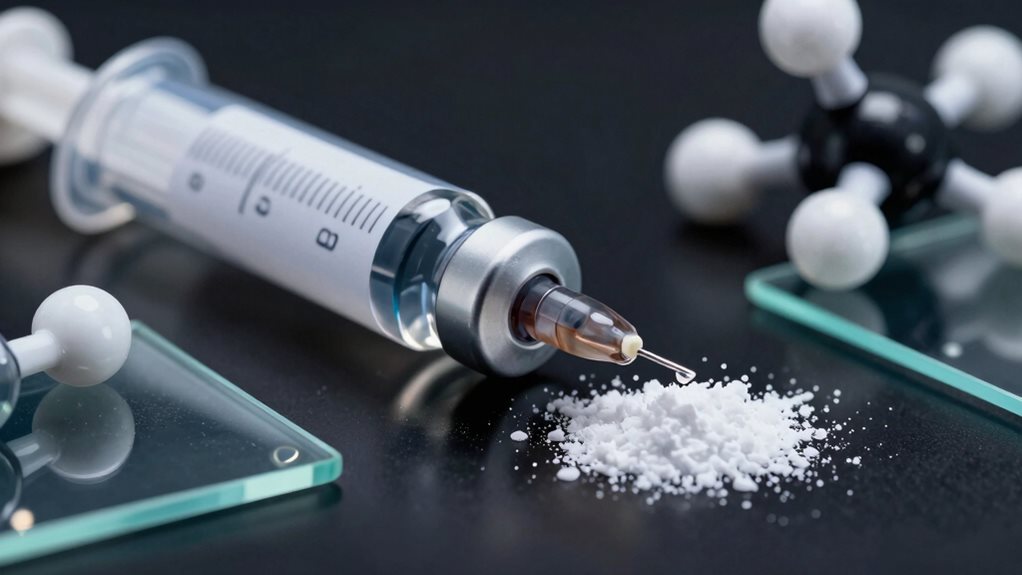
Growth hormone peptides represent a distinct category of synthetic compounds designed to stimulate your body’s own production of growth hormone rather than replacing it with an externally administered hormone.
Ipamorelin is a synthetic pentapeptide that stimulates pulsatile growth hormone release, mimicking ghrelin to trigger short, natural pulses of GH from the pituitary. receptor selectivity This selective targeting aims to spare cortisol and prolactin while engaging GH pathways for a cleaner signaling profile.
GHRPs vs. GHRH: Which Class Fits Your Goals?
When you’re deciding between GHRPs and GHRH analogs, you’ll need to weigh how each class operates at the molecular level against what you’re actually trying to achieve, since these peptides trigger growth hormone release through entirely separate receptor systems—GHRH binding to its dedicated receptors on somatotrophs versus GHRPs activating the ghrelin receptor GHS-R1a—which means your choice directly shapes both the timing and quality of the hormonal response you’ll experience.
Your clinical goals matter enormously here: if you’re seeking to restore natural, pulsatile rhythms that mirror endogenous patterns for anti-aging or deficiency correction, GHRH analogs like CJC-1295 offer a more physiologically grounded approach, whereas GHRPs such as GHRP-2 or Ipamorelin may suit you better when rapid onset, sustained elevation, or metabolic effects like appetite modulation and body composition change take priority.
Understanding these mechanism differences isn’t merely academic—it empowers you to align your protocol with evidence-based applications, whether that means selecting Tesamorelin for lipodystrophy management under medical supervision or exploring combined GHRP-GHRH protocols that leverage the former’s ability to antagonize somatostatin and the latter’s capacity to amplify pulse magnitude for enhanced therapeutic outcomes.
A1: The distinct receptor targets create different release patterns, with GHRH analogs aiming for natural pulsatility and GHRPs contributing to a broader or amplified response. receptor targets play a central role in shaping both timing and magnitude of GH secretion.
Mechanism Differences
How do you decide between two fundamentally different ways of stimulating growth hormone release when both promise similar outcomes? You examine their distinct receptor targets and signaling pathways. GHRH binds the GHRH receptor, activating cAMP-PKA cascades for sustained amplification, while GHRPs engage the ghrelin receptor (GHS-R1a) via PI-PKC signaling to initiate sharper pulses, sometimes suppressing somatostatin restraint.
Clinical Applications
Where exactly do you turn when your clinical objective demands growth hormone modulation rather than replacement?
GHRH analogs restore natural pulsatility, making them ideal when you need physiology-mimicking patterns, while GHRPs serve as potent secretagogues for wasting, sarcopenia, and lean-mass goals.
Your choice hinges on whether you prioritize endogenous rhythm replication or direct, appetite-enhancing stimulation with body-composition endpoints.
Which Peptides Have the Most Research Behind Them?
Why does research credibility matter so much when you’re evaluating growth hormone peptides? You’re looking for compounds with verified safety profiles and measurable outcomes, not speculation. Additionally, peer-reviewed studies supporting long-term safety data and dose-response relationships enhance confidence in clinical applicability. clinical data
Which Peptide Protocol Should You Choose?
When you’re standing at the crossroads of peptide selection, the sheer number of protocols can feel overwhelming, yet your decision becomes far more manageable once you’ve aligned your specific goals with the compounds that actually match them. Prioritize muscle gain with CJC-1295 plus Ipamorelin, choose Tesamorelin for visceral fat reduction, or select GHRP-6 when appetite stimulation supports your bulking phase. Start single-compound cycles lasting two to four weeks before advancing to stacked protocols, and always match timing—fasted, pre-bed—to your intended outcome. Recovery-focused objectives warrant BPC-157 or TB-500 additions rather than primary GH secretagogues, while Sermorelin offers established long-term safety for conservative approaches. For those aiming to optimize endogenous growth hormone production, the timing and selection of a protocol can influence both efficacy and safety growth hormone strategies.
Which Peptides Work Best Together?
When you’re considering how to combine growth hormone peptides, you’ll want to understand which pairings create genuine synergy through complementary mechanisms rather than simple redundancy.
The most widely supported approach combines a GHRH analog—which provides sustained baseline stimulation—with a GHRP that delivers pulsatile bursts, since these two pathways can amplify each other’s effects when timed appropriately.
In practice, this means evaluating stacks like CJC-1295 with ipamorelin against evidence-based alternatives such as tesamorelin, while keeping in mind that even popular combinations often lack direct clinical trial validation for their specific pairing.
synergy mechanism of combining GHRH and GHRP is supported by the goal of achieving both steady baseline and pulsatile stimulation.
Synergistic Combinations
How do you know which peptide combinations actually amplify results rather than simply adding cost? You’ll find the strongest evidence for synergy when you pair a GHRH analog, like CJC-1295 without DAC or sermorelin, with a GHRP-class peptide, such as ipamorelin or GHRP-2. This combination activates two distinct receptor pathways—GHRH-R and the ghrelin receptor—producing supra-additive growth hormone release that research documents as 2–3 times higher than single agents alone.
Avoid pairing two GHRH analogs together, since they compete for the same receptor without added benefit.
Stacking Protocols
The most evidence-backed approach to peptide stacking pairs a GHRH analog—such as CJC-1295 without DAC or sermorelin—with a GHRP-class compound like ipamorelin or GHRP-2, a combination that activates two distinct receptor pathways rather than competing for the same target. Research indicates this pairing produces 2–3 times higher growth hormone output than either peptide alone, with some protocols reporting substantially greater pulses. You’ll want to administer both compounds simultaneously or within 5–10 minutes, typically using roughly equal doses by weight—commonly 100 mcg of each—ideally before sleep or on an empty stomach to align with natural GH rhythms. Avoid combining two GHRH analogs, as they share the same receptor without additive benefit, and monitor IGF-1, glucose, and other markers to ensure safe, effective results.
What Do Studies Confirm About Muscle and Fat?
Despite widespread marketing claims, you might be surprised to learn that published human research on growth hormone peptides and actual muscle growth remains remarkably sparse, with no randomized controlled trials as of early 2026 demonstrating meaningful increases in muscle mass, strength, or improved body composition in any population, including trained athletes and bodybuilders.
You’ll find that recombinant human growth hormone increases lean body mass without improving strength, while MK-677 adds merely 1.1 kg fat-free mass in older adults over twelve months without strength gains.
Evidence for bodybuilding peptides stops at pharmacokinetic studies and acute growth hormone responses, not long-term hypertrophy.
Fat loss data exist, though results remain population-specific and modest, typically 1–2 kg lean mass changes in sarcopenia trials, not healthy lifters. Respective population outcomes
Can Peptides Protect Your Heart, Brain, and Gut?
When you’re weighing the potential benefits of growth hormone peptides, you’ll naturally wonder whether these compounds might shield your organs beyond their metabolic effects, and emerging research does suggest that several peptides—particularly those operating along the gut-brain axis—carry protective properties for the heart, nervous system, and gastrointestinal tract, though the depth of evidence varies considerably across these three domains.
GLP-1 activates ATP-sensitive potassium channels on coronary pericytes, dilating capillaries and protecting cardiac tissue after ischemia, while brain-gut peptides like GLP-1, PACAP, nesfatin-1, and ghrelin demonstrate neuroprotective effects through anti-inflammatory and antioxidant mechanisms.
BPC-157 combines cytoprotection with vascular and wound-healing benefits for both neural and gastrointestinal tissues, and peptides supporting gut barrier function may indirectly influence brain signaling through microbiota-gut-brain pathways, though clinical translation remains preliminary.
TB-500’s actin-regulation mechanisms and its preclinical evidence for tendon and tissue repair offer a framework for understanding how cytoskeletal dynamics can influence healing in musculoskeletal contexts. cytoskeletal dynamics
How Safe Are Peptides Compared to HGH?
Beyond organ-specific protections, you’re likely weighing how growth hormone peptides stack up against recombinant human growth hormone (HGH) when it comes to overall safety, and this comparison matters because the two approaches operate through fundamentally different mechanisms that shape their risk profiles in important ways.
Peptides stimulate your pituitary’s natural pulsatile release, preserving feedback control, while HGH bypasses this entirely, suppressing endogenous production and carrying higher risks of fluid retention, joint pain, insulin resistance, and acromegalic changes.
You’ll generally encounter milder effects with peptides—think increased appetite, flushing, modest glucose shifts—though hyperglycemia remains a shared concern, and long-term peptide safety data remain limited despite fewer reported adverse events. Regulatory status and quality concerns
Peptide Cost vs. HGH: What Trade-Offs Matter?
You’re evaluating peptide protocols against pharmaceutical HGH, and the numbers alone rarely tell the full story—monthly costs differ dramatically, but the real question is which investment aligns with your specific goals, timeline, and how your body responds to stimulation versus direct replacement. A peptide stack might deliver seventy to eighty percent of HGH’s outcomes at a fraction of the price, yet severe deficiency or pediatric growth disorders clearly justify the higher expense of recombinant hormone when insurance or medical necessity removes cost barriers. Over months and years, you’ll need to balance sticker price against hidden factors: feedback suppression with HGH, the compounding logistics of multi-peptide regimens, and whether your protocol sustains natural pulsatile rhythms or overrides them entirely. Value of strategy can influence how you interpret short- and long-term outcomes, especially when considering individualized responses and medical guidance.
Price Comparison Analysis
How much you’re ultimately willing to spend on growth optimization depends largely on whether you’re seeking pharmaceutical-grade hormone replacement or a more accessible, stimulation-based approach, and this distinction creates one of the most significant cost divides in modern anti-aging and performance medicine.
Peptide protocols typically run $50–$400 monthly, while pharmaceutical HGH costs $800–$3,000+.
Over six months, you’ll spend roughly $900–$2,100 on peptides versus $4,800–$18,000 on HGH, meaning peptides offer 70–95% savings for comparable treatment windows.
Efficacy Value Balance
When you’re weighing the cost of growth hormone optimization, the real question isn’t which option is cheaper—it’s whether you’re paying for direct hormone replacement or for your body’s own production machinery to do the work. Exogenous HGH delivers intensity, but peptides like CJC-1295 and ipamorelin offer 5–15× better value per IU-equivalent output for recovery and body-composition goals. You’ll spend $100–$350 monthly versus $800–$3,000, provided your needs don’t require full replacement physiology. Tesamorelin, however, breaks this pattern, priced comparably to HGH. Match the tool to your outcome: modest optimization favors peptides; maximum intensity justifies HGH’s premium.
Long-Term Investment Factors
The gap between peptides and pharmaceutical HGH widens dramatically once you look past the first month’s receipt, because what feels manageable in week one compounds into entirely different financial commitments over quarters and years.
You’ll spend roughly $900–$2,100 for six months of peptides versus $4,800–$18,000 for HGH, and annual totals can reach $30,000–$60,000 for growth hormone therapy.
While HGH occasionally secures insurance coverage for documented deficiency, you’ll typically pay out-of-pocket for peptides, which remains economical despite lacking reimbursement.
Factor in monitoring, labs, and sourcing reliability when calculating true long-term investment, not merely vial prices.
Why Aren’t Peptides Used for Childhood Growth?
Why, you might wonder, would physicians hesitate to prescribe growth-stimulating peptides for children who struggle to reach their expected height, especially when these compounds appear promising in adult research? The answer lies in evidence, safety, and regulatory standards that protect developing bodies. Recombinant human growth hormone remains the established treatment because it delivers proven catch-up growth of 8–10 cm annually, with over 90% of treated children achieving normal adult height. Peptide alternatives like CJC-1295 and ipamorelin lack pediatric trials confirming final height benefits, and their long-term effects on growth plates, puberty timing, and metabolism remain unknown. Regulatory bodies have approved recombinant growth hormone for eight pediatric conditions, yet no growth hormone–releasing peptides carry FDA approval for routine childhood use. Physicians prioritize direct hormone replacement over experimental compounds because the benefit-risk balance for peptides remains unfavorable, with potential adverse effects including skin irritation, fatigue, and theoretical risks of reduced final height from premature growth plate closure. Pediatric growth evidence supports cautious use and underscores the need for rigorous pediatric trials before extending such therapies to children.
Which Peptides Are Legal or Research-Only?
You’ve seen why physicians remain cautious with growth-stimulating compounds in children, yet that same caution shapes the legal terrain you’ll encounter as an adult seeking these therapies.
FDA-approved peptides like semaglutide and tesamorelin require prescriptions, while sermorelin may be compounded legally.
Research-only compounds such as BPC-157, TB-500, and GHRP-6 lack approval for human use, and gray-area peptides like CJC-1295 carry enforcement risks.
What Long-Term Risks Haven’t Been Studied?

How far does the evidence really stretch when you start asking what might go wrong years from now? You’re looking at a landscape where no growth hormone secretagogue trial has exceeded two years, leaving critical questions about cancer risk, cardiovascular outcomes, and metabolic disease entirely unanswered. IGF-1 elevation raises theoretical concerns that remain untested, while immune reactions, tissue remodeling, and chronic inflammation lack durable human data. Short-term studies capture immediate effects, but they can’t reveal whether insulin resistance progresses to diabetes or if growth-promoting signals alter organ size over decades. For most research peptides, controlled trials don’t exist at all, making any long-term risk estimate impossible from current evidence.
Key Takeaways: Starting Your Peptide Research
Three foundational principles should guide your approach to growth hormone peptide research from the very beginning. First, recognize that these synthetic compounds stimulate your pituitary’s natural output rather than replacing hormone directly, which preserves pulsatile secretion patterns but introduces mechanistic complexity you must understand.
Second, acknowledge the substantial evidence gap between promising preclinical findings and confirmed human benefits, particularly for performance or physique enhancement in trained individuals.
Third, prioritize safety awareness, since long-term risks remain uncertain and unsupervised use carries documented dangers including blood sugar abnormalities, cardiovascular strain, and hormonal disruption.
Focus your initial inquiry on FDA-approved options like Tesamorelin, maintain skepticism toward marketed claims lacking robust trial support, and consult qualified healthcare professionals before considering any protocol.
Frequently Asked Questions
Can Peptides Improve Sleep Quality and Recovery?
Yes, peptides can improve your sleep quality and recovery when used appropriately. DSIP reduces your sleep latency by 15–20 minutes and increases slow-wave sleep by 10–15%, while growth hormone peptides like CJC-1295 and ipamorelin amplify natural GH release during deep sleep phases. You’ll experience faster sleep onset, extended restorative periods, and improved tissue repair without sedation or dependency risks associated with traditional sleep aids.
Do GHRPS Affect Insulin Sensitivity Long-Term?
Yes, long-term GHRP use can reduce your insulin sensitivity, though this effect varies by compound, dose, and your individual metabolic health. Growth hormone signaling naturally opposes insulin action in peripheral tissues, and sustained exposure—especially at higher doses or with pre-existing obesity or insulin resistance—may worsen glucose tolerance and raise fasting insulin over time. However, not all studies show this effect, and short-term use sometimes preserves insulin sensitivity.
How Quickly Do Peptide Results Typically Appear?
You’ll notice initial effects—appetite changes, subtle energy shifts, or improved sleep—within days to two weeks, though most peptides require patience.
Measurable improvements in skin, recovery, or body composition typically emerge between two and eight weeks, while stronger visible outcomes develop around six to twelve weeks.
For full, peak benefits, especially with growth hormone-related or collagen-supporting peptides, you’ll need three to six months of consistent use.
Can Women Use Growth Hormone Peptides Safely?
You can use growth hormone peptides safely only under medical supervision with proper screening, as safety depends on the specific peptide, your dose, and individual health factors.
While short-term studies show few serious adverse events, long-term data remain limited, and you should avoid these compounds entirely if you’re pregnant, breastfeeding, or have hormone-sensitive cancer risk, diabetes, or uncontrolled cardiovascular conditions.
Should Peptides Be Cycled or Used Continuously?
You should cycle growth hormone secretagogues, like CJC-1295 or ipamorelin, using patterns such as 8–12 weeks on followed by 4–6 weeks off, since continuous use risks receptor desensitization and diminishing returns.
However, you’ll use GLP-1 agonists, including semaglutide, continuously per their labels, as stopping leads to weight regain.
Healing peptides, such as BPC-157, are goal-based—you’ll discontinue once recovery completes, not cycle indefinitely.
And Finally
You’ve explored the mechanisms, comparisons, and protocols that define growth hormone peptide research, and you’re now equipped to evaluate which compounds align with your specific investigative goals while recognizing the regulatory boundaries and knowledge gaps that persist in this field. As you move forward, prioritize peer-reviewed sources, consult qualified researchers, and remember that peptide science continues evolving—your informed, cautious approach will serve you better than haste ever could.
References
- https://pmc.ncbi.nlm.nih.gov/articles/PMC5392015/
- https://apexlaboratory.org/ghrp-2-vs-ghrp-6-vs-hexarelin/
- https://www.realpeptides.co/best-peptides-growth-hormone-research-guide/
- https://www.youtube.com/watch?v=86ySIfaM3mc
- https://pmc.ncbi.nlm.nih.gov/articles/PMC8300367/
- https://www.pepty.app/blog/comprehensive-guide-growth-hormone-peptides
- https://polarispeptides.com/ghrh-ghrps-key-differences-explained-through-peptides-like-tesamorelin-ipamorelin-cjc-1295-and-bpc-157/
- https://lifeendo.com/blog/is-hgh-a-peptide-the-truth-about-hgh-vs-growth-hormone-peptides-for-kids
- https://contemporaryhealthcenter.com/bio-identical-hormone-replacement-therapy/growth-hormone-stimulating-peptide-therapy/
- https://livvnatural.com/traditional-hgh-vs-peptides/