Weight loss peptides like semaglutide, tirzepatide, and liraglutide mimic your body’s natural gut hormones to curb appetite, slow stomach emptying, and stabilize blood sugar, but you’ll find tirzepatide most effective at 20–22% weight loss versus semaglutide’s ~15% and liraglutide’s 5–8%. These FDA-approved options require consistent dosing alongside a 500-calorie daily deficit and regular exercise to preserve muscle, while compounded versions carry quality risks you should avoid. Stopping treatment typically causes significant regain within a year, so long-term planning with a licensed prescriber matters. Insurance coverage varies widely, with brand names costing $900–$1,350 monthly without it, though compounded alternatives run $150–$500 if sourced safely through licensed pharmacies. The details below will equip you to choose wisely, manage side effects, and build sustainable habits.
TLDR
- GLP-1 agonists like semaglutide suppress appetite and delay gastric emptying to enable sustainable weight loss.
- Tirzepatide, a dual GLP-1/GIP agonist, achieves greater weight loss (~20–22%) than semaglutide (~15%).
- Retatrutide, a triple agonist in Phase 3 trials, demonstrated up to 24.2% weight reduction but remains unapproved.
- Gradual dose titration, hydration, and smaller meals help manage common gastrointestinal side effects.
- Compounded or grey-market peptides carry significant purity and safety risks; licensed pharmacy sourcing is essential.
How Weight Loss Peptides Actually Work
How exactly do these compounds reshape your body’s relationship with food?
GLP-1 receptor agonists mimic natural gut hormones released after eating, increasing satiety while reducing appetite and food cravings. They delay gastric emptying, so fullness lasts longer, and they stimulate insulin release to stabilize blood glucose.
This chemical signaling—paired with continued adherence and lifestyle changes—gradually lowers calorie intake and improves metabolic markers over weeks to months, producing sustainable weight loss rather than offering a shortcut.
Best Weight Loss Peptide: Tirzepatide vs. Semaglutide
When you’re weighing your options between today’s leading weight-loss peptides, you’re essentially choosing between two powerful but pharmacologically distinct approaches: semaglutide, a GLP-1 receptor agonist that mimics a single gut hormone, and tirzepatide, a newer dual GIP/GLP-1 receptor agonist that activates two complementary pathways simultaneously. A notable distinction is that tirzepatide engages both incretin hormones to promote greater weight loss in studies actin dynamics and tissue repair pathways can influence recovery of metabolic tissues. Research consistently favors tirzepatide for superior weight loss, though both carry comparable gastrointestinal side effects.
Weight Loss Results: What Each Peptide Delivers
Wherever you’re on your weight-loss journey, understanding the actual results each peptide delivers helps you set realistic expectations and choose the right tool for your goals. Tirzepatide typically produces 20–22% weight loss, semaglutide delivers roughly 15%, and liraglutide achieves 5–8% over comparable timeframes. In addition, consistent dosing and lifestyle adherence are key to sustaining these gains therapeutic efficacy over the 52–72 weeks window.
The 3 FDA-Approved Peptides Compared
The terrain of FDA-approved weight-loss peptides offers three distinct pharmacological tools—semaglutide, tirzepatide, and liraglutide—each representing a different generation of GLP-1-based therapy with varying mechanisms, efficacy profiles, and practical considerations you’ll want to weigh carefully. Tirzepatide, a dual GIP/GLP-1 agonist, delivers the strongest results at 15–22% body-weight loss, while semaglutide achieves 8–19%, and liraglutide reaches 5–8%. You’ll need a prescription and lifestyle changes for all three. Regulatory status
How GLP-1, GIP, and Glucagon Control Appetite
You’ll now dive into how three key gut-derived hormones—GLP-1, GIP, and glucagon—coordinate appetite regulation through distinct yet complementary pathways, beginning with their shared identity as incretins that respond to food intake and extend through their divergent effects on satiety, energy expenditure, and metabolic control.
While GLP-1 stands out as the most potent appetite suppressor through direct brain signaling and slowed gastric emptying, GIP contributes more subtly to nutrient handling and context-dependent satiety, and glucagon operates primarily through catabolic, thermogenic mechanisms rather than classic hunger reduction.
Understanding these differences prepares you to grasp why peptide combinations, particularly triple agonists targeting all three pathways, represent an evolving frontier in weight management science. incretin biology
Incretin Hormone Basics
Why do some meals leave you satisfied for hours while others trigger rapid hunger? The answer lies in incretin hormones, chemical messengers your gut releases when you eat. GIP and GLP-1, released from K-cells and L-cells respectively, signal your pancreas to secrete insulin only when blood sugar rises, protecting you from dangerous lows while coordinating metabolism between your gut, brain, and appetite centers.
Triple Agonist Potential
Understanding how GIP and GLP-1 work together sets the stage for exploring something even more powerful: the triple agonist approach that adds glucagon to the mix. You’ll see how retatrutide, a GLP-1/GIP/glucagon triagonist, achieves 24.2% weight reduction by combining central appetite suppression with enhanced thermogenesis and fat oxidation, while GIP receptor activation mitigates nausea and balances glucagon’s hyperglycemic effects for superior metabolic outcomes.
Appetite Suppression Mechanisms
How exactly do these hormones turn off your hunger?
GLP-1 suppresses appetite through multiple coordinated pathways: it activates gut-brain neural circuits involving intestinofugal neurons, stimulates vagal afferents signaling to your brainstem’s nucleus tractus solitarius, and slows gastric emptying to increase fullness.
Long-acting agonists also reach circumventricular organs, hypothalamus, and reward circuitry, reducing cravings while improving satiation and eating control.
Peptide Dosing: How Semaglutide and Tirzepatide Differ
Semaglutide begins at 0.25 mg weekly, escalating gradually to 2.4 mg, while tirzepatide starts higher at 2.5 mg and can reach 15 mg. These differences aren’t interchangeable; they’re customized to each molecule’s potency. The dosing framework for semaglutide also involves a weekly plan that aligns with its mechanism of delaying gastric emptying and enhancing glucose-dependent insulin secretion. Dosing framework
Nausea, Diarrhea, and Stomach Issues: What Helps
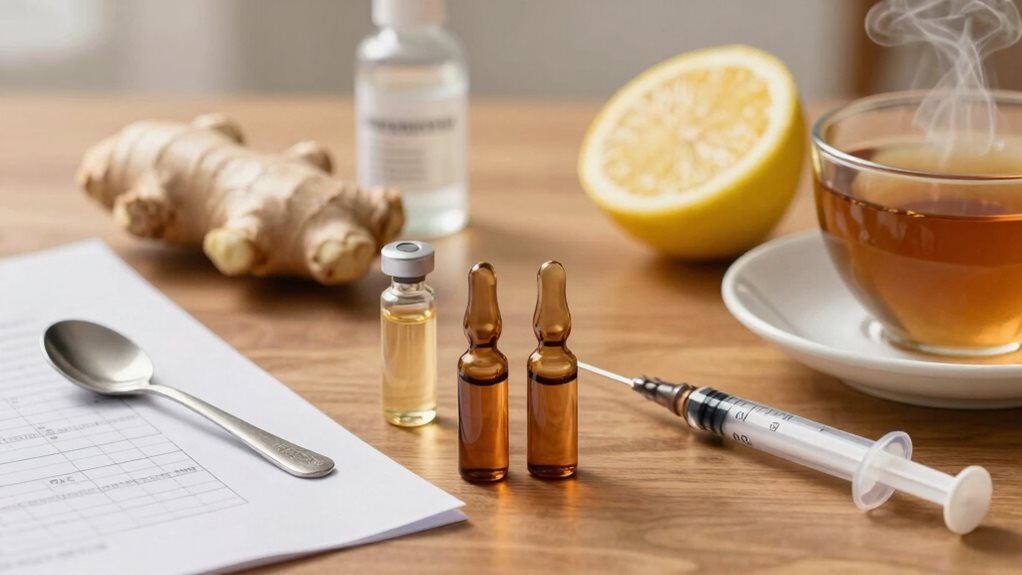
You’ll likely experience some stomach discomfort when starting GLP-1 receptor agonists, since nausea, diarrhea, and constipation rank among the most common side effects of these medications, but you can take specific steps to minimize these issues and keep your treatment on track.
By adjusting your dose gradually, modifying what and how you eat, and paying close attention to timing and hydration, you’ll give your body the best chance to adapt without unnecessary suffering. GI side effects can be anticipated with a thoughtful dosing plan and supportive lifestyle choices, including staying hydrated and maintaining a gentle transition to higher doses.
Managing GI Discomfort
Gastrointestinal discomfort represents one of the most frequently encountered challenges when starting GLP-1 and dual-incretin weight-loss peptides, with nausea, vomiting, and diarrhea emerging as particularly common complaints during the early weeks of treatment and dose escalation periods. You can reduce nausea by eating smaller portions, avoiding high-fat and spicy foods, consuming fluids between meals, and trying ginger.
For diarrhea, prioritize hydration with sugar-free liquids and consider bland, low-fiber foods. If constipation develops, increase fiber intake and physical activity, using psyllium or stool softeners if needed. Persistent or severe symptoms warrant prompt medical attention.
Dose Adjustment Strategies
Since GI side effects often emerge during dose increases, you’ll want to approach escalation with patience rather than urgency, recognizing that slower titration is one of the most effective strategies for tolerating GLP-1 and dual-incretin peptides long-term.
If nausea, diarrhea, or stomach upset appears, don’t escalate further—return to your previous dose until symptoms resolve.
Extending each level to 6–8 weeks, or even monthly increases, often works better than standard schedules.
For significant symptoms, stay longer at your current dose, or step back and retry only after improvement.
Persistent issues may warrant anti-emetics, prokinetics, or other symptom-directed medications alongside dietary adjustments like smaller, frequent meals and bland foods.
Timing and Hydration
Managing the digestive effects of GLP-1 and dual-incretin peptides requires attention to when you take your dose and how you support your body through common symptoms like nausea, diarrhea, and stomach upset.
You’ll find that empty-stomach dosing—roughly two hours after eating and thirty to sixty minutes before your next meal—often reduces discomfort, while bedtime administration can help you sleep through transient nausea.
Staying hydrated with at least sixty-four ounces daily supports you through vomiting or diarrhea, and slow dose titration over six to eight weeks lets your body adjust gradually.
Who Shouldn’t Take Weight Loss Peptides?
If you’re considering weight loss peptides, you’ll want to know that these medications aren’t appropriate for everyone, and understanding the contraindications—medical reasons to avoid a treatment entirely—can help you have a more informed conversation with your healthcare provider. You’ll need to avoid these drugs if you’ve had medullary thyroid carcinoma, MEN2, or a severe allergic reaction to similar medications. Pregnancy and breastfeeding also rule out use. Your doctor should review your history of pancreatitis, gallbladder disease, severe gastroparesis, or eating disorders before prescribing, since these conditions require careful evaluation or may preclude treatment entirely. Additionally, peptides are part of ongoing longevity and healthy aging research, where safety and long-term effects remain important considerations when evaluating any therapeutic option. contraindications
Compounded and Grey-Market Peptides: The Risks
If you’re considering compounded or gray-market peptides for weight loss, you need to understand that these products operate in a regulatory gray zone where FDA oversight is limited or absent, which creates significant uncertainty about what you’re actually injecting into your body.
Unlike approved medications that undergo rigorous premarket review for safety, effectiveness, and quality, these alternatives may vary widely in their identity, purity, and dosing accuracy, with independent testing showing that a substantial portion contain the wrong substance, no active ingredient at all, or potentially dangerous contaminants.
While the lower cost or easier access might seem appealing at first glance, you’re accepting serious risks—including hospitalization, severe infections, and preparation errors that occur far more frequently than with FDA-approved options—risks that demand careful consideration before you make any decision about your health.
Regulatory Uncertainty
Why does the regulatory terrain for weight loss peptides feel so difficult to navigate? You’re encountering products that occupy a grey zone: not fully approved, not clearly prohibited, and often relabeled as “research only” to sidestep oversight. FDA reclassifications create temporary ambiguity, while compounded versions lack dedicated safety monitoring. This uncertainty leaves you without reliable safeguards when evaluating these substances.
Quality Concerns
How can you be certain that the peptide vial you’re holding actually contains what the label claims? You can’t, not without independent verification, and that’s precisely the problem.
Gray-market testing reveals alarming failure rates: 38% of vials miss quality standards, 12% contain entirely wrong peptides, and 9% hold only fillers. Endotoxin contamination, mislabeled doses, and sterility failures create serious health risks you can’t see or prevent through appearance alone.
Safety Risks
Wherever you obtain your peptides—whether from a compounding pharmacy, an online vendor, or another gray-market source—you’re navigating a terrain where regulatory oversight is fragmented and safety assurances aren’t guaranteed. You face dosing inconsistencies, contamination risks nearly 20 times higher than approved products, and potential immune reactions including anaphylaxis. Without FDA review, you’re relying on limited human safety data while exposure to impurities and preparation errors increases your odds of hospitalization significantly.
How to Get Real Peptides Legally

When you’re seeking legitimate peptide therapies, understanding the lawful pathways isn’t just prudent—it’s essential for your safety and legal standing. You should start with a licensed clinician who’ll evaluate your symptoms, review your bloodwork, and determine whether a prescription is medically appropriate. Once you have that prescription, you’ll fill it through a licensed 503A or 503B compounding pharmacy, verifying state licensure and batch-specific COAs before purchase. Avoid direct-to-consumer sellers, research-use-only vendors making therapeutic claims, and personal-use imports, as these carry significant legal and safety risks. Remember that FDA category changes can alter a peptide’s availability, so you’ll need to confirm lawful status before each purchase. A responsible next step is to consult with a clinician about appropriate documentation and a compliant sourcing plan clinical evaluation to ensure safety and legality throughout your treatment.
Retatrutide: The Triple Agonist That Could Beat Them All
Retatrutide stands apart from other weight-loss peptides because it activates three distinct receptors—GLP-1, GIP, and glucagon—rather than just one or two, which means you’re looking at a molecule engineered to suppress appetite, regulate glucose, and increase energy expenditure all at once.
Phase 2 trials have already demonstrated impressive results, with the 12 mg dose producing up to 24.2% mean weight loss after 48 weeks and even higher reductions in follow-up studies, though you should note that phase 3 trials are still ongoing to confirm these findings across larger populations and longer timeframes.
While retatrutide remains investigational and hasn’t yet received regulatory approval, its development pipeline includes studies for obesity, type 2 diabetes, and related cardiometabolic conditions, positioning it as a potential next-generation therapy that could surpass current options if late-stage results hold up. multireceptor activity
Triple Receptor Targeting
How does a single molecule outpace drugs that have already altered obesity treatment? Retatrutide activates three receptors—GIP, GLP-1, and glucagon—simultaneously, combining appetite suppression, glucose control, and increased energy expenditure.
This triple mechanism, developed by Eli Lilly as LY3437943, represents the first therapy targeting all three gut-hormone receptors, offering you a more thorough metabolic approach than single or dual agonists provide.
Phase 3 Results
Although earlier trials hinted at extraordinary potential, the Phase 3 data for retatrutide confirmed what researchers had anticipated: this triple agonist delivers weight loss that rivals surgical interventions. In TRIUMPH-1, the 12 mg dose produced 28.3% mean weight loss at 80 weeks, with 45.3% of participants achieving at least 30% reduction. By 104 weeks, average loss reached 30.3%, or roughly 85 pounds.
TRIUMPH-4’s 68-week results showed 28.7% reduction, described as the highest ever recorded in Phase 3 obesity trials. You’ll find dose-dependent efficacy without plateau, with 65.3% reaching non-obese BMI thresholds, supporting retatrutide’s position among the most potent metabolic therapies available.
Approval Timeline Status
Where does retatrutide stand in the path from promising clinical data to your potential prescription?
As of mid-2026, you’re still waiting—this triple agonist isn’t FDA-approved, and no pharmacy can legally dispense it. You’ll find it only in clinical trials, with Lilly’s TRIUMPH program running through 2028.
Realistic approval? Late 2027, assuming Phase 3 obesity data holds and standard FDA review proceeds on schedule.
Natural Food Peptides: Do They Actually Work?
When you hear about peptides helping with weight loss, you might image lab-created compounds rather than the food sitting in your refrigerator, yet natural food peptides—short chains of amino acids released from proteins during digestion, fermentation, or processing—have captured researchers’ attention as potential metabolic modulators. These bioactive fragments from milk, eggs, fish, and soy can stimulate satiety hormones like GLP-1 and CCK, suppress appetite, and influence fat-cell formation. However, most evidence remains preclinical, meaning strong human proof for routine weight loss is still developing rather than established.
Diet and Exercise: Still Required?

Peptides can reshape how your body regulates hunger and metabolism, but they don’t rewrite the fundamental physics of weight loss—you’ll still need to manage what you eat and how you move to get the most from any therapy.
You’ll pair your therapy with a 500-calorie daily deficit, whole foods, and 3-4 weekly resistance sessions to preserve muscle, plus 150+ minutes of moderate cardio for heart health and added expenditure.
Without these foundations, mobilized fat can simply re-esterify, and you’ll risk losing lean mass alongside fat. metabolic regulation
Weight Loss Peptide Costs and Insurance Coverage
How much you’ll actually spend on weight-loss peptides depends almost entirely on which compound you choose, whether your insurance covers it, and how much clinical support you want bundled with your prescription. Brand-name options like Wegovy or Zepbound typically run $900-$1,350 monthly without coverage, though insured patients sometimes pay $0-$25.
Compounded alternatives—semaglutide or tirzepatide prepared by licensed pharmacies—usually cost $150-$500 monthly, making them attractive if you’re paying cash. Insurance coverage remains inconsistent, and Medicare excludes anti-obesity medications entirely.
Factor in consultations and labs, which often add $100-$300 monthly, pushing first-year totals toward $2,000-$2,800.
Do You Take Peptides Forever? What Stopping Looks Like
Once you’ve invested months and significant expense into peptide therapy, you’re bound to wonder whether you’ll need to keep injecting indefinitely or if there’s a clean exit strategy.
The evidence is clear: stopping semaglutide or similar GLP-1 drugs typically leads to substantial weight regain, with about two-thirds of lost weight returning within one year.
Obesity is a chronic condition, and these medications function as long-term support rather than short-term cures.
You’ll find that appetite increases when you stop, since the drug’s satiety effects disappear.
If you’re considering discontinuation, work with your clinician on gradual tapering over 6–12 months while strengthening lifestyle habits, or investigate indefinite low-dose maintenance to preserve your results.
How to Find a Doctor Who Prescribes These Drugs
Finding a qualified prescriber for weight-loss peptides requires more than a quick online search, since these medications demand proper medical oversight, ongoing monitoring, and a clinician who understands your specific metabolic profile. Start with your primary care physician, who may prescribe directly or refer you to an endocrinologist or obesity medicine specialist. Check your insurance directory for in-network providers, confirming they accept new patients and prescribe specific agents like semaglutide or tirzepatide. If local options are limited, explore telehealth platforms or academic medical centers, which often combine prescribing with comprehensive metabolic support.
Frequently Asked Questions
Can Peptides Target Stubborn Belly Fat Specifically?
You can’t target belly fat alone with peptides, since fat loss occurs throughout your entire body, not in isolated spots. However, you can reduce visceral abdominal fat— the dangerous fat surrounding your organs— with specific options. Tesamorelin offers the strongest evidence, reducing visceral fat by roughly 15–20% in clinical trials, though it’s FDA-approved only for HIV-associated lipodystrophy. Alternatively, GLP-1 agonists like tirzepatide and semaglutide produce substantial overall weight loss that includes meaningful reductions in abdominal fat.
Do Weight Loss Peptides Affect Muscle Mass or Strength?
GLP-1–based weight-loss peptides like semaglutide and tirzepatide cause substantial fat loss with smaller, often adaptive reductions in skeletal muscle mass, and most patients preserve or increase relative muscle mass. Your strength and function typically remain stable, especially with improved metabolic health, though older or frail individuals face higher risk. Collagen peptides, combined with resistance training, better support muscle gains. To minimize muscle loss, prioritize protein intake, resistance exercise, and adequate caloric intake rather than aggressive restriction.
Are Peptide Injections Painful or Difficult to Self-Administer?
You’ll find peptide injections surprisingly manageable, as most patients describe only a brief pinch—typically rated 1–2 out of 10—using thin 30–31 gauge needles.
Self-administration becomes straightforward once you learn proper technique: pinch a skin fold, insert at 45–90 degrees, inject slowly over 5–10 seconds, and allow alcohol to dry fully beforehand.
Warm the solution to room temperature, avoid rushing the plunger, and rotate sites to minimize any lingering soreness.
How Quickly Do Weight Loss Peptides Start Working?
You’ll notice appetite suppression within days to one week, while measurable weight loss typically begins in two to four weeks.
Visible body changes often emerge around four to twelve weeks, though peak results accumulate over many months. Your individual timeline depends on the specific peptide, dose escalation schedule, and how consistently you maintain supportive nutrition and activity habits alongside treatment.
Can You Combine Different Peptides for Faster Results?
Yes, you can combine peptides, but faster results aren’t guaranteed. Evidence supports pairing GLP-1 with amylin for appetite suppression synergy, though most stacks lack robust clinical data. You’ll want to start one peptide at a time, waiting 1–2 weeks between additions, and monitor glucose, IGF-1, and thyroid markers. Limit yourself to 3–4 peptides to manage complexity, as multi-pathway targeting requires careful timing, dosing, and attention to half-life interactions.
And Finally
You’ve now explored how weight loss peptides function, compared their mechanisms and outcomes, and examined practical considerations like cost, insurance, and long-term use. Whether you’re evaluating tirzepatide, semaglutide, or another option, your next step involves consulting a qualified physician who can assess your health history, discuss realistic expectations, and develop a sustainable plan. Remember: these medications amplify, not replace, foundational habits like nutrition and movement, so commit to the comprehensive approach that yields lasting results.
References
- https://www.peptidejournal.org/guides/peptides-for-obesity-clinical-evidence-review
- https://pmc.ncbi.nlm.nih.gov/articles/PMC11924896/
- https://pmc.ncbi.nlm.nih.gov/articles/PMC10086289/
- https://peptidescienceinstitute.org/conditions/peptides-for-weight-loss/
- https://pmc.ncbi.nlm.nih.gov/articles/PMC12249546/
- https://www.goodrx.com/conditions/weight-loss/peptides-for-weight-loss
- https://med.stanford.edu/news/all-news/2025/03/ozempic-rival.html
- https://www.medicalnewstoday.com/articles/peptides-for-weight-loss
- https://www.progressivemedicalcenter.com/blog/how-do-peptides-work-for-weight-loss/
- https://ro.co/weight-loss/peptides/