The best peptides for hair growth, such as GHK-Cu, primarily support scalp health by promoting follicle repair, reducing inflammation, and enhancing blood circulation. These peptides activate signaling pathways like Wnt/β-catenin, which extend the hair’s growth phase and stimulate keratinocyte activity, strengthening hair strands. While peptides like collagen and keratin improve hair thickness and resilience, their effectiveness varies depending on formulation and application. Continued exploration reveals how combining these peptides with other treatments can optimize results and guarantee safety.
TLDR
- GHK-Cu is the most researched peptide with strong evidence supporting its role in scalp health and follicle stimulation.
- Copper peptides activate Wnt/β-catenin pathways, promoting hair follicle growth and increasing blood supply.
- Peptides like Thymosin Beta-4 and Acetyl Tetrapeptide-3 show potential but need further clinical validation.
- Structural peptides such as collagen and keratin strengthen hair and support follicle health for thicker, healthier hair.
- Combining peptides with other treatments or delivery methods can enhance absorption and overall hair growth results.
What Are Hair Growth Peptides and How Do They Work?
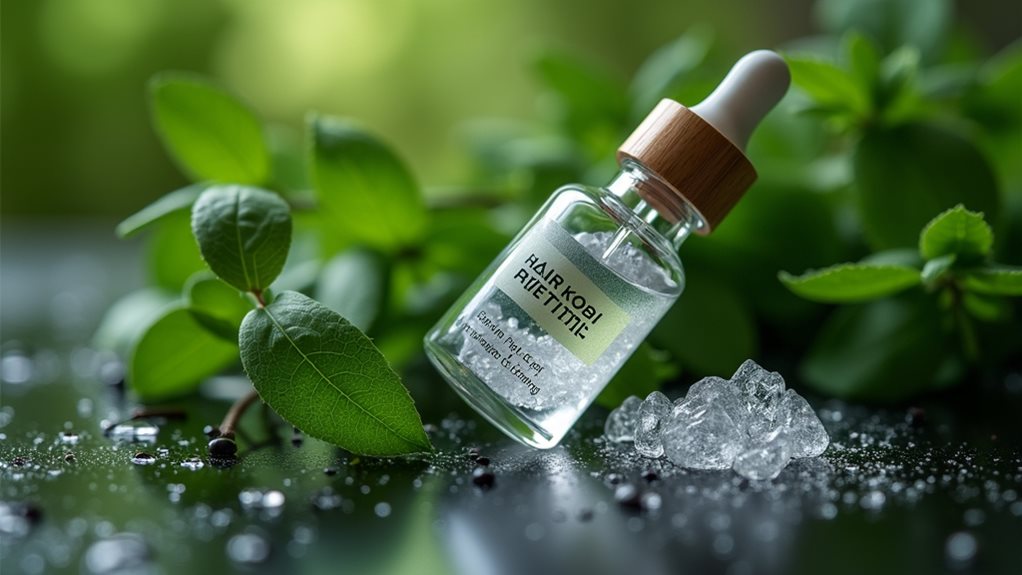
Hair growth peptides are short chains of amino acids that function as signaling molecules within the body, playing an essential role in cellular communication.
They support the scalp’s environment by promoting follicle repair, reducing inflammation, improving circulation, and stimulating collagen production.
These actions help create conditions favorable for hair growth, focusing on enhancing follicle health rather than directly inducing new hair production.
A growing body of research indicates that peptide signaling can influence wound healing and extracellular matrix remodeling, which may support healthier hair follicles over time collagen synthesis.
The Top Peptides Supported by Research for Hair Regrowth
Research into peptides for hair regrowth has identified several candidates with promising evidence supporting their potential benefits, although the strength and scope of this evidence vary among different compounds.
GHL-Cu stands out as the most researched, showing potential for stimulating follicle growth and improving scalp health, with emerging clinical data.
Others like Thymosin Beta-4 and Acetyl Tetrapeptide-3 show early promise but require further validation. amylin analog
How Copper Peptides Like GHK-Cu Stimulate Hair Follicles
Copper peptides like GHK-Cu support hair follicle stimulation by activating key signaling pathways that promote follicle growth, such as Wnt/β-catenin, which encourages follicles to enter the active growth phase, or anagen.
They also enhance blood supply through increased angiogenesis, improving nutrient and oxygen delivery essential for sustained hair production.
Additionally, GHK-Cu promotes keratinocyte proliferation and cell survival, which are critical for maintaining healthy hair strands and extending the duration of the growth phase.
Link between animal studies and human relevance It’s important to note that much of the peptide evidence base comes from animal studies, which may not fully replicate human biology and responses, underscoring the need for cautious interpretation when applying these findings to human hair growth.
Follicle Stimulation Mechanism
Copper peptides like GHK-Cu stimulate hair follicle activity through a complex process that primarily involves activating cells within the follicle’s microenvironment.
They promote dermal papilla cell proliferation, enhance blood vessel formation via VEGF, and activate Wnt/β-catenin pathways, all contributing to follicle growth.
Additionally, they support extracellular matrix remodeling, strengthening the follicle structure and optimizing conditions for hair regeneration.
Anagen Phase Extension
The ability of GHK-Cu to promote hair growth largely depends on its capacity to extend the duration of the anagen phase, the active growth period of hair follicles.
Keratinocyte Proliferation
Keratinocyte proliferation plays an essential role in supporting hair growth, as these specialized skin cells form the hair shaft and contribute to the structural integrity of the follicular outer layer.
Copper peptides like GHK-Cu stimulate growth factors such as FGF-7/KGF and activate Wnt/β-catenin signaling. This promotes cellular differentiation, increasing follicle activity, and enhancing the microenvironment necessary for strong, healthy hair production.
How Structural Peptides Like Collagen and Keratin Improve Hair Thickness

Collagen reinforces follicular framework, promotes the growth phase, and increases keratin production, resulting in stronger, fuller hair. Keratin peptides repair damage by penetrating and binding within the hair cortex, improving resilience and overall hair integrity. Melanotan I (Afamelanotide) is an FDA-approved peptide used to increase sun tolerance and protect skin in certain photodamage conditions, while Melanotan II is not FDA-approved and carries safety concerns including bolder sexual side effects; both have differing research statuses and safety profiles compared with structural peptides. melanotan
Combining Peptides With Other Hair Care Ingredients for Better Results
Combining peptides with other hair care ingredients can create synergistic effects that enhance overall results, as certain compounds work together to support follicle health more effectively than when used alone. Additionally, understanding safety and mechanism is important when integrating experimental peptides into regimens. Adipotide is a peptide studied for targeting fat tissue blood supply, highlighting how peptides can influence specific tissue pathways and the importance of evaluating risks before combining such agents with hair care strategies.
Synergistic Ingredient Effects
Have you ever wondered why some hair care formulations seem more effective than others? Combining peptides with vitamins, antioxidants, and hydrating agents can support follicle health, reduce breakage, and repair the hair shaft.
Botanical extracts and growth factors further enhance these effects by stimulating follicular activity and strengthening the hair, offering an all-encompassing approach to hair regeneration.
Enhancing Absorption Rates
Enhancing the absorption rates of topical peptides involves strategic combinations with other hair care ingredients and application techniques designed to overcome the skin’s natural barriers.
Techniques like microneedling create micro-channels that facilitate peptide entry.
Formulations such as serums or leave-on vehicles extend contact time, improving penetration.
Combining these methods with stable, well-formulated peptides, especially GHK-Cu, optimizes delivery to scalp follicles.
Combining for Comprehensive Support
Integrating peptides with other hair care ingredients can substantially enhance their effectiveness by addressing multiple aspects of hair growth and scalp health.
Combining peptides like GHK-Cu with minoxidil, microneedling, or prescription therapies utilizes different mechanisms—such as follicle support, improved delivery, or hormonal regulation—creating a more all-encompassing, synergistic approach.
This combination enhances overall results, especially in early-stage thinning or density loss.
Do Peptide Hair Products Really Work? Safety and Effectiveness Explained
Although peptide hair products are often marketed as natural and safer alternatives to pharmaceutical treatments, their actual effectiveness remains uncertain. Evidence shows modest, product-dependent benefits mainly for early thinning, involving improved scalp health, reduced inflammation, and strengthened hair. They’re generally safe, with no serious side effects, but results tend to be slow and less proven than traditional options like minoxidil. In longevity research, Epitalon and Thymosin Alpha-1 target different systems, but both show potential in supporting age-related processes through mechanisms that influence cellular resilience and immune function. longevity mechanisms
Frequently Asked Questions
Are Peptide Treatments Suitable for All Types of Hair Loss?
Peptide treatments aren’t suitable for all hair loss types. You’ll likely benefit most if your loss is early, mild, or androgenetic. For advanced, scarring, or autoimmune cases, peptides may have limited or no effectiveness.
How Long Does It Typically Take to See Results From Peptide Hair Products?
You’ll typically notice reduced shedding within 2–6 weeks and see visible improvements in hair density and strength around 3–4 months. Consistent use and individual factors influence how quickly you’ll see significant results.
Can Peptides Be Used Safely With Other Hair Loss Medications?
Yes, you can safely use peptides with other hair loss medications like minoxidil or finasteride, but it’s best to space applications, monitor your scalp for irritation, and consult your healthcare provider for personalized advice and to guarantee safety.
Are There Any Side Effects Associated With Topical Peptide Applications?
You might experience mild side effects like scalp redness, itching, dryness, or flaking when using topical peptides. Allergic reactions or irritation can occur, especially with overuse or sensitive skin, so monitor your scalp and discontinue if symptoms worsen.
What Is the Difference Between Cosmetic and Medical Peptide Hair Treatments?
You should know that cosmetic peptide treatments mainly improve scalp appearance and hair quality on the surface with less regulation, while medical treatments target hair follicles directly, backed by stronger clinical evidence and administered under healthcare supervision for more significant results.
And Finally
Ultimately, peptides present a promising option for supporting hair regrowth, especially when integrated with other proven ingredients. Understanding their mechanisms—such as stimulating follicles with copper peptides or enhancing hair thickness through structural proteins—empowers you to make informed decisions. While research supports their efficacy, individual results may vary, and safety should be prioritized. Consulting with a healthcare professional can help tailor a suitable regimen, ensuring that your approach to hair health is both effective and safe.