PT-141 and Melanotan II are distinct peptides with different functions: PT-141 enhances sexual desire and arousal by targeting central nervous system receptors, mainly MC4R and MC3R, while Melanotan II stimulates skin pigmentation through broader melanocortin receptor activity, including MC1R, and is also associated with tanning. Their safety profiles vary, with PT-141 generally considered safer under medical supervision, but both require careful monitoring due to potential side effects. Understanding receptor actions and specific goals can guide your choice if you investigate further.
TLDR
- PT-141 enhances sexual desire by targeting CNS receptors, while Melanotan II promotes skin tanning through melanocortin receptor activity.
- PT-141 is FDA-approved for libido, whereas Melanotan II is unapproved and primarily used for tanning.
- PT-141 has a safer, well-studied safety profile; Melanotan II poses risks like hyperpigmentation and blood pressure changes.
- Receptor specificity: PT-141 mainly targets MC4R and MC3R; Melanotan II acts on multiple receptors, including MC1R.
- Choice depends on goals: PT-141 for libido support, Melanotan II for skin pigmentation and tanning effects.
What Are PT-141 and Melanotan II? Key Differences
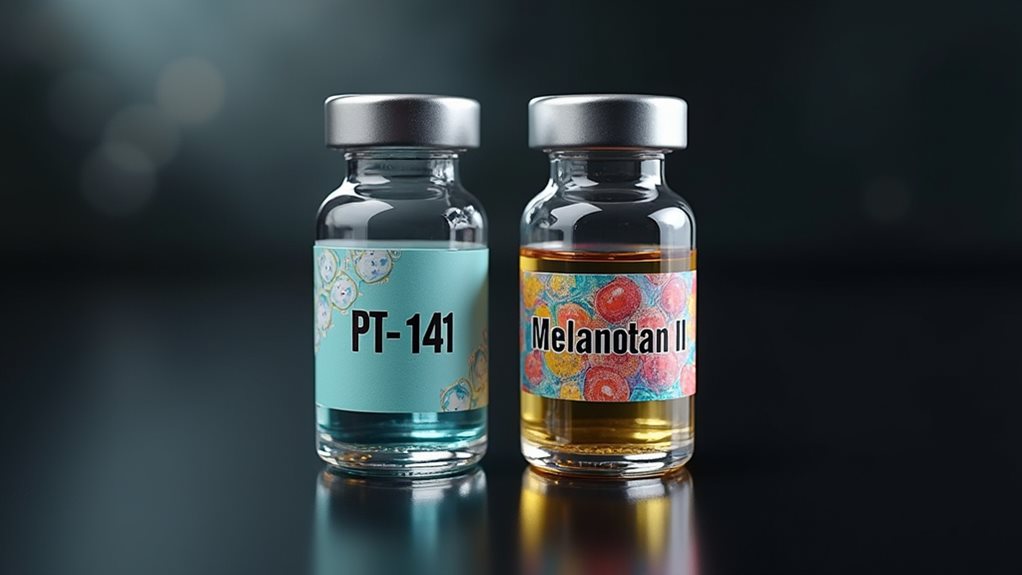
Understanding the fundamental differences between PT-141 and Melanotan II is essential for anyone considering these peptides, whether for medical, cosmetic, or research purposes.
PT-141, marketed as Vyleesi, targets sexual desire and arousal.
Melanotan II primarily promotes skin tanning through broader melanocortin activity.
They differ chemically, in purpose, regulation, and side-effect profiles, guiding safe and informed choices. Melanocortin system and its role in peptide activity inform these distinctions.
How Receptor Activity Affects Their Effects and Uses
The effects and potential uses of PT-141 and Melanotan II are heavily influenced by the specific receptors they target within the body.
PT-141 mainly binds to MC4R and MC3R in the central nervous system, affecting sexual desire and arousal.
In contrast, Melanotan II acts on multiple receptors, including MC1R, which influences pigmentation, and others linked to neuroendocrine functions, broadening its effects.
Are PT-141 and Melanotan II Safe? What Are the Risks?
While both PT-141 and Melanotan II are used for specific therapeutic or cosmetic purposes, their safety profiles and associated risks vary considerably. This makes it essential to understand the potential adverse effects before considering their use.
PT-141 has an acceptable safety profile but can cause nausea, flushing, headaches, and cardiovascular changes, especially in those with underlying health issues.
Melanotan II’s safety is less established, and risks include nausea, hyperpigmentation, and blood pressure fluctuations. There are also concerns about quality control and its unapproved status.
Which Is Better for Sexual Desire or Tanning?
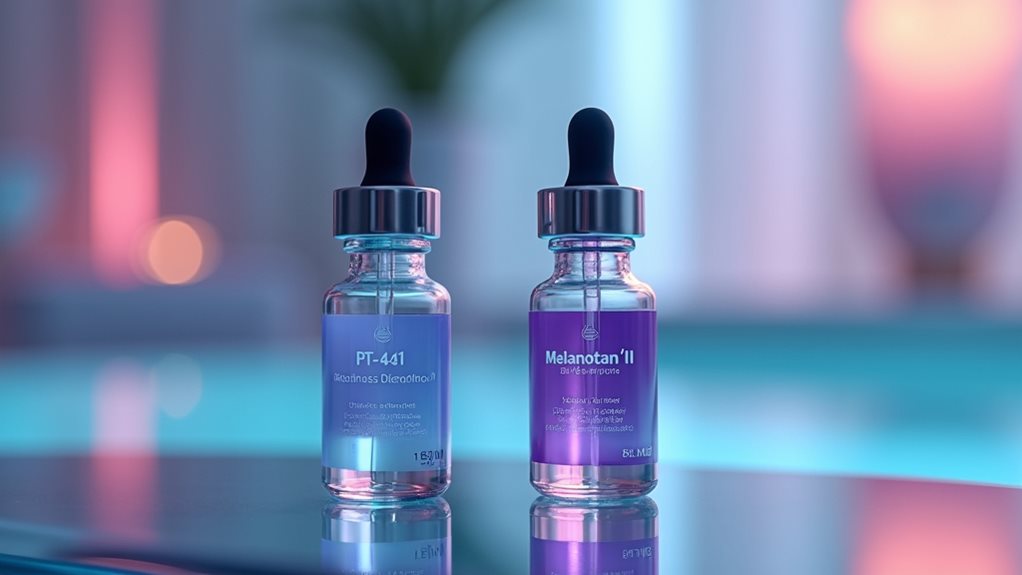
PT-141 is primarily designed and clinically proven to enhance sexual desire and arousal, with FDA approval for this purpose.
In addition, research comparing retatrutide and tirzepatide addresses weight loss mechanisms targeting different receptors, with varying trial outcomes and ongoing investigations to determine long-term efficacy and safety for obesity treatment.
Safety Risks and Side Effects to Know Before Using
Are you aware of the potential safety risks and side effects associated with PT-141 and Melanotan II before considering their use?
Both compounds can cause nausea, flushing, headaches, and injection-site reactions.
With PT-141, there is also the potential to raise blood pressure and cause skin darkening.
Monitoring cardiovascular health and understanding individual sensitivities are vital, especially for those with pre-existing conditions or medication interactions. PT-141 can influence sexual arousal pathways and may interact with other medications affecting blood pressure cardiovascular safety considerations.
Choosing Between PT-141 and Melanotan II: What You Need to Consider
Choosing between PT-141 and Melanotan II requires careful consideration of your specific goals and the scientific distinctions that differentiate these compounds.
PT-141 targets central pathways for sexual desire, offering a regulated, on-demand approach suitable for libido support.
In contrast, Melanotan II primarily stimulates pigmentation through broader receptor activity, aligning with tanning goals but lacking FDA approval for medical use. FDA-approved indication
Frequently Asked Questions
Can Melanotan II Cause Skin Cancer or Melanoma?
Melanotan II may increase your risk of skin cancer or melanoma because it stimulates pigment cells, darkens moles, and can cause abnormal growth. However, definitive proof isn’t available, so long-term safety remains uncertain and caution is advised.
Is PT-141 Effective for Sexual Desire in Men?
PT-141 may modestly elevate your sexual desire, especially if you have erectile dysfunction or low libido. It acts on your brain, not blood flow, and results vary; some men experience increased thoughts, motivation, and satisfaction.
How Quickly Do PT-141 and Melanotan II Produce Effects?
You’ll notice PT-141 effects within 30–60 minutes, peaking around 1–2 hours, making it quick for planned activity. Melanotan II takes longer, with effects building over 1–2 hours and less predictable timing.
Are There Legal Restrictions on Purchasing Melanotan II?
You can’t legally buy Melanotan II in many countries, including the US, Australia, UK, and Ireland, because it’s unapproved for human use and considered an illegal medicinal product, with restrictions on import, sale, or promotion.
Can Melanotan II Be Used Safely for Tanning?
You can’t use Melanotan II safely for tanning, as it’s unregulated, linked to serious side effects, and may increase skin cancer risks. Safer options like fake or spray tans are recommended, and you should stop use immediately.
And Finally
Choosing between PT-141 and Melanotan II requires careful consideration of your specific goals, safety profile, and potential side effects. Both substances influence distinct physiological pathways—PT-141 primarily targets sexual desire, while Melanotan II promotes tanning—that should align with your needs. Prioritize consulting healthcare professionals, thoroughly understanding the risks involved, and evaluating the scientific evidence before use. Making an informed decision guarantees your safety and maximizes the potential benefits of these compounds.
References
- https://riteaid.com/peptides/compare/pt-141-vs-melanotan-2
- https://peptidepedia.org/guides/pt-141-vs-melanotan-ii
- https://bc9.co/melanotan-2-vs-pt-141/
- https://www.youtube.com/watch?v=d2QhfVauvIo
- https://thepeptidecatalog.com/articles/pt-141-vs-melanotan-2
- https://peptideslabuk.com/melanotan-2-vs-pt-141-for-research-uk-2026-melanocortin-receptor-pharmacology-mc3r-and-mc4r-biology-and-mechanistic-distinctions/
- https://www.mypeptidematch.com/compare/pt-141-vs-melanotan-ii
- https://www.dosagepeptide.com/pt-141-vs-melanotan-2/
- https://uaewellnesslab.com/learn/pt-141-vs-melanotan-2
- https://maxxlaboratories.com/blog/melanotan-ii-vs-pt-141-peptide-comparison