
Research shows peptide side effects vary sharply between FDA-approved medications and unregulated products, so you’ll encounter markedly different risk profiles depending on your source. Approved peptides like semaglutide carry documented, generally mild effects—nausea in 20-44% of users, diarrhea in 12-30%, and injection site reactions in 10-30%—with rare but serious risks including pancreatitis at roughly 2.2 cases per 1,000 patient-years. Unregulated compounds lack this safety data, leaving you vulnerable to contamination, impure dosing, and unknown long-term endocrine effects. You’ll want to distinguish verified therapies from questionable supplements before making any decisions about your regimen.
TLDR
- FDA-approved peptides show mostly mild GI effects in trials, while unregulated products lack long-term safety data entirely.
- Common side effects include nausea in 20–44% of users and diarrhea in 12–30%, especially during dose increases.
- Local injection reactions affect 10–30% of users, with pain and redness typically resolving within one to two days.
- Serious risks like pancreatitis occur in roughly 2.2 per 1,000 patient-years with some GLP-1 peptides.
- “Research only” labels often mislead consumers, as dosing remains unstandardized and purity claims are frequently unverified.
Peptide Safety Reality: FDA-Approved vs. Unregulated

FDA-approved peptides, like semaglutide, offer you established safety profiles from trials with thousands of participants, where mild gastrointestinal effects are common but serious events remain rare. In contrast, DAC-containing CJC-1295 and other unregulated research peptides carry limited or no long-term safety data, increasing uncertainty about potential endocrine disruptors and rare adverse events endocrine signaling and contamination risks.
“Research Only” Labels: What They Actually Hide
You now understand the divide between regulated and unregulated peptides, but the labels on unregulated products deserve closer attention because they often mislead more than they inform. A careful reading of the evidence shows that even so-called “research only” products may be marketed with optimistic cognitive claims without robust human data or approved dosing. Regulatory transparency remains a critical gap, and without it, consumers cannot distinguish between rigorously studied therapies and unverified supplements.
Stomach Issues: Nausea, Diarrhea, and When They Fade
Where nausea and diarrhea rank among the concerns people report with GLP-1 peptides, you’ll find they dominate the early experience more than almost any other side effect. You’re likely to encounter nausea in 20%–44% of cases, sometimes higher, while diarrhea appears in roughly 12%–30%. These symptoms typically emerge during dose escalation, not stable dosing, as your body adjusts to slower gastric emptying and brain receptor activation. Modulation of immune responses can influence how these gastrointestinal symptoms manifest in certain contexts, highlighting the importance of context-dependent dosing.
Injection Safety: Pain, Reactions, and Infection Risks

You’ll likely experience some degree of pain, redness, or swelling at the injection site when using subcutaneous peptides, as these local reactions are reported in roughly 10% to 30% of users and typically resolve within 24 to 48 hours without any intervention.
Selank’s immunomodulatory effects—such as shifting Th1/Th2 balance and reducing pro-inflammatory cytokines—may influence systemic responses after injections, underscoring the importance of monitoring for unusual reactions beyond local site symptoms. GABA-A modulation
Local Pain Risks
How significant are the risks of pain and irritation when you’re administering peptides by injection? You’ll likely experience mild, brief discomfort—studies show 10% to 50% of users report injection-site reactions, with pain accounting for 12.4% and erythema for 42.8% in systematic reviews. Most symptoms, including redness, swelling, and tenderness, resolve within 24 to 48 hours without intervention when you use proper technique.
Infection Prevention Measures
While managing local pain and irritation remains important when you’re injecting peptides, the consequences of unsafe injection practices extend far beyond temporary discomfort. You must use a new sterile syringe and needle for every injection, as reusing equipment transmits blood-borne pathogens in 40% of cases even without visible blood. Follow CDC and WHO guidelines: disinfect your skin with 60–70% alcohol for 30 seconds, wipe vial septums and allow them to dry, and never enter a vial with used needles. Store multi-dose vials in clean areas away from patient zones, and dispose of sharps immediately in designated containers without additional handling.
Beyond the Gut: Headaches, Fatigue, and Blood Sugar Swings
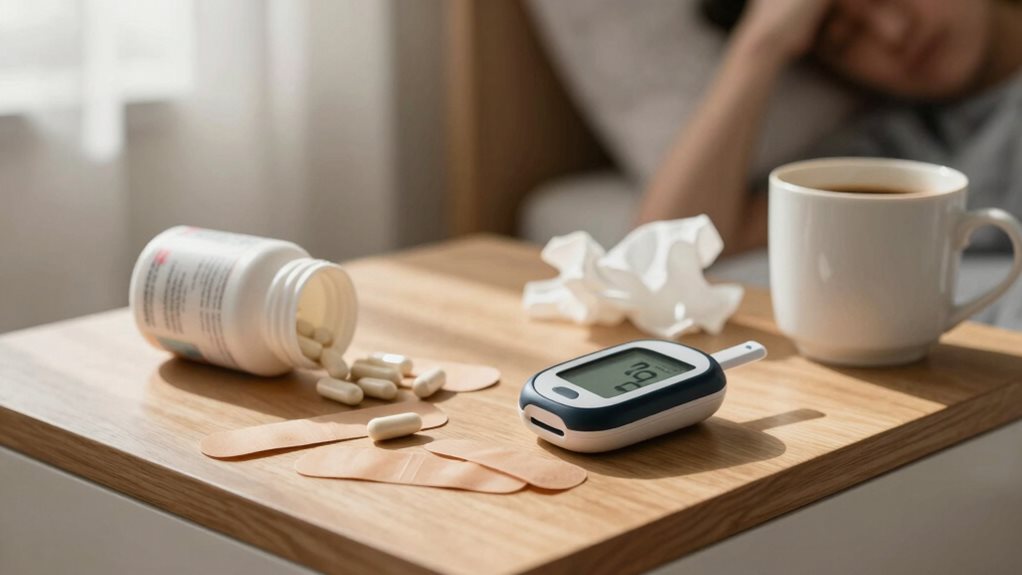
Where might you feel the effects of a new peptide? You may notice headaches, fatigue, or blood sugar changes beyond typical gut symptoms. Headaches affect 10–20% of users, often resolving within 24–48 hours. Fatigue commonly accompanies early adaptation, while blood sugar swings—especially with GLP-1 peptides—require monitoring. These effects usually fade as your body adjusts, though persistent symptoms warrant medical evaluation. Follistatin-344 interacts with muscle pathways that can influence signaling related to muscle growth and inflammation Follistatin-344 and may modulate activin and myostatin activity, which are important factors in muscular adaptation.
Serious Warning Signs: Pancreatitis, Gallstones, Thyroid
Most side effects from peptides settle down as your body adjusts, yet some symptoms signal conditions that need your immediate attention. Severe, persistent abdominal pain—especially with vomiting, back radiation, or post-meal worsening—demands urgent evaluation, as this pattern suggests pancreatitis, which occurs in roughly 2.2 per 1,000 patient-years with semaglutide.
Yellowing skin, dark urine, or right-upper-quadrant pain indicates possible gallbladder obstruction, since rapid weight loss increases gallstone risk and stones can trigger pancreatic inflammation.
A rapidly enlarging neck mass, hoarseness, or swallowing difficulties warrant immediate assessment due to theoretical thyroid concerns, though human evidence remains limited.
Fever, rigid abdomen, bloody stools, or fainting require emergency care.
Safe Sourcing: Spotting Fake Peptides and Bad Sellers
How do you know the peptide you’re holding is actually what the label claims? You start by demanding a batch-specific COA with recent testing dates, third-party lab contact information, and ISO/IEC 17025 accreditation, because generic or missing documentation signals trouble. You verify the lab exists independently, check that HPLC data is paired with mass spectrometry for identity confirmation, and reject anything below 95% purity. You examine pricing—unusually cheap products often cut corners on quality control—and you avoid sellers using pressure tactics or making therapeutic claims about research chemicals.
When your order arrives, you match the batch number to your paperwork, inspect for visible particles or discoloration, and consider independent retesting before use.
And Finally
You’ve now examined the full landscape of peptide side effects, from common, self-limiting symptoms to rare but serious complications requiring immediate attention. While unregulated products carry substantial risks you simply cannot ignore, FDA-approved options under proper medical supervision offer a far safer path forward. Your next step involves verifying sources rigorously, recognizing warning signs early, and maintaining open dialogue with qualified healthcare providers who can guide your decisions with evidence-based clarity.
References
- https://peptidesclinic.org/articles/peptide-safety-evidence/
- https://biomedgrid.com/pdf/AJBSR.MS.ID.003647.pdf
- https://www.klarovel.com/en/blog/peptide-side-effects-guide
- https://www.ama-assn.org/public-health/prevention-wellness/what-doctors-want-patients-know-about-injectable-peptides
- https://www.peptides.org/are-peptides-safe/
- https://www.medicalnewstoday.com/articles/326701
- https://www.peppal.app/blog/peptide-side-effects
- https://scientificaminos.com/article/peptide-side-effects-guide/
- https://www.peptideeffect.com/articles/peptide-side-effects
- https://www.brgeneral.org/news-blog/peptides-hype-hope-and-few-hard-truths