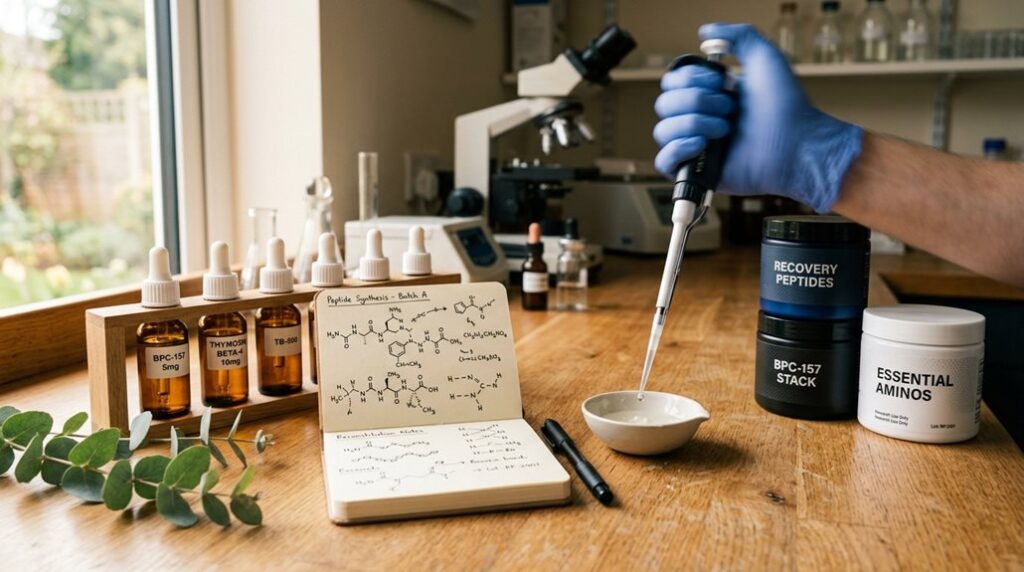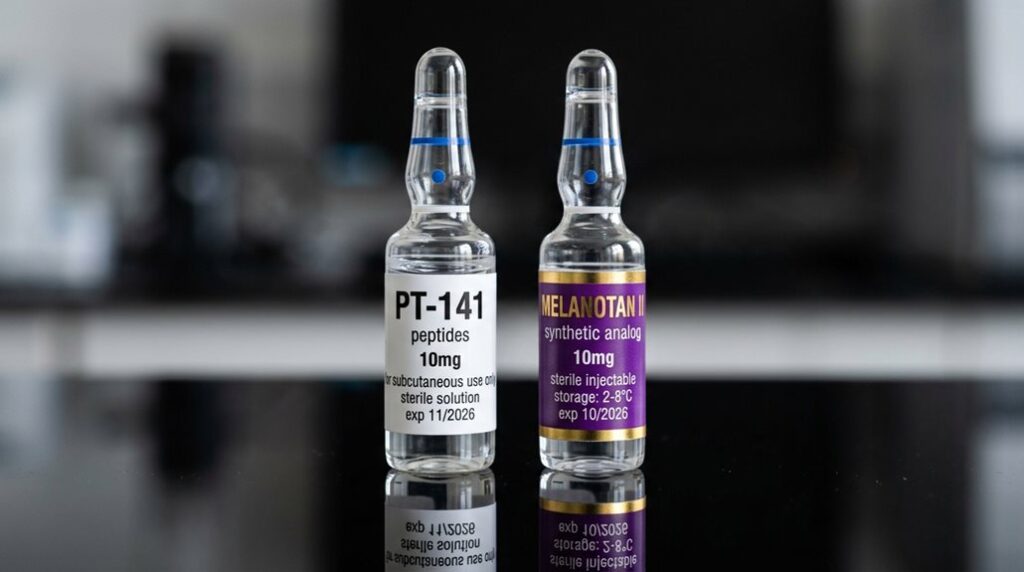
You’re looking at two related but distinct molecules: peptides are short amino acid chains, usually 2–50 units, while proteins contain 50 or more. This size gap matters because proteins fold into stable, complex shapes that enable enzymatic and structural roles, whereas peptides stay flexible and act primarily as rapid, precise signals for hunger, immunity, and repair. Peptides break down faster since they lack the protective folding that shields larger proteins from enzymes. Both serve essential, complementary functions your body needs—so understanding where each fits helps you make informed choices about your health, and there’s more to unpack about how these differences play out in practical ways.
TLDR
- Peptides are short chains of 2–50 amino acids, while proteins contain 50 or more amino acids.
- Proteins fold into stable complex structures enabling enzymatic and structural functions.
- Peptides remain flexible and primarily serve as signaling molecules or hormones.
- Peptides degrade faster than proteins due to exposed bonds and lack of protective folding.
- Both are essential but complementary: proteins build tissues, while peptides regulate cellular processes.
What’s the Difference Between a Peptide and a Protein?
Why should you care about distinguishing peptides from proteins? You’re encountering molecules built from the same amino-acid building blocks, yet their differences matter considerably. Peptides are shorter chains—typically 2 to 50 amino acids—while proteins contain 50 or more. This size gap creates real consequences: peptides often act as signals or hormones with simpler structures, whereas proteins fold into complex shapes that enable enzymatic and structural roles you’ll encounter throughout biology. Central nervous system targets and signaling roles can differ between peptide hormones like PT-141 and larger protein enzymes, illustrating how size and structure influence function central nervous system targets.
Where Exactly Is the Size Cutoff?
So where exactly does a peptide end and a protein begin? You won’t find a universal answer, since scientists, textbooks, and industries draw the line at different points. Most sources place peptides at roughly 2–50 amino acids, with proteins starting at 50 or more. Some pharmaceutical guidelines use 40 residues, while looser definitions extend to 100. Context—whether you’re reading a biochemistry textbook, a drug regulatory document, or a research paper—shapes which cutoff applies, so you’ll need to check your source rather than memorizing one number. LL-37 provides a concrete example of how size and function can influence classification, since its peptide nature is tied to its role in immune defense and antimicrobial activity immune roles and mechanism.
How Peptide and Protein Size Creates Different Biology
How does a simple chain length reshape what a molecule can do in your body? You can think of peptides—those compact chains of roughly 2–50 amino acids—as nimble messengers, slipping through tissues and delivering quick, transient signals before enzymes break them down. Semax, for example, exemplifies how a peptide can modulate brain plasticity and neurotransmitter activity, offering multi-pathway effects without classic stimulants BDNF upregulation and with a favorable safety profile in short-term use.
Why Proteins Have Shape and Peptides Don’t
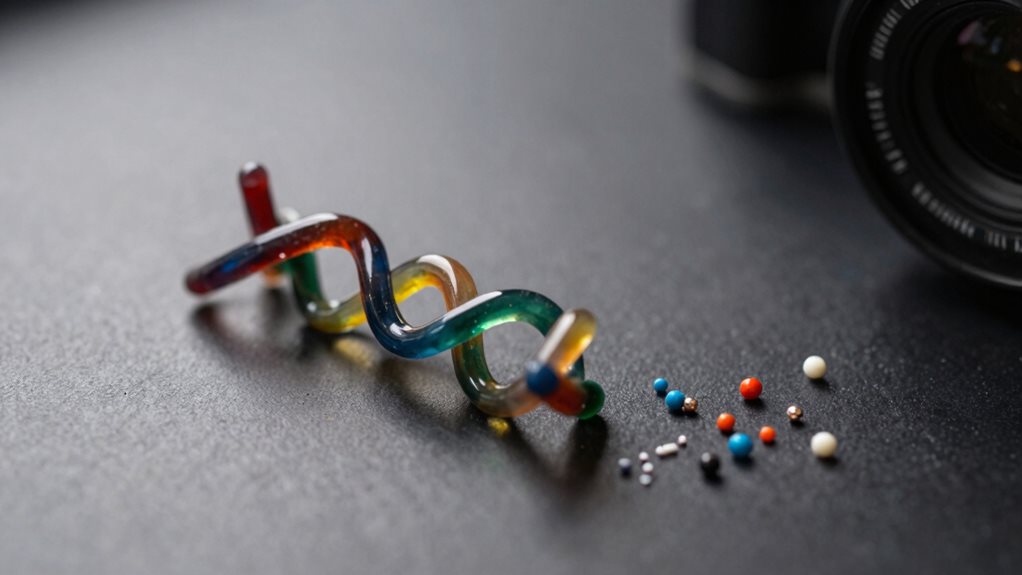
You might assume that any chain of amino acids will naturally twist into a stable shape, yet you’ll soon see that proteins and peptides follow fundamentally different structural rules because chain length determines whether a molecule can meet the folding requirements needed for complex, stable architect.
This distinction matters because it explains why proteins can perform sophisticated biological tasks while peptides typically serve simpler, often signaling-based roles. The ability of longer chains to support stable tertiary structures underpins how proteins achieve functional complexity and specific interactions, whereas shorter chains tend to remain flexible and context-dependent. Dihexa
Chain Length Thresholds
Where exactly does a peptide end and a protein begin? You’ll find no universal rule, though most scientists draw the line near 50 amino acids—chains below this threshold are typically called peptides, while longer ones earn the protein label. Some sources prefer 10 kilodaltons by mass instead. These boundaries aren’t absolute laws, just conventions that help you categorize molecules whose structural complexity grows with their size.
Folding Requirements Met
Why does a protein hold a definite shape while a peptide often behaves like a loose strand? You can understand this by recognizing that folding demands sufficient chain length, sequence information, and stabilizing forces. Proteins meet these requirements: they’re long enough to form a hydrophobic core, their sequences direct specific conformations, and hydrogen bonds, salt bridges, and sometimes disulfide bonds lock that shape in place. Chaperones assist when needed, ensuring proper assembly.
Peptides typically lack the size and intramolecular contacts for stable tertiary structure, leaving them flexible and conformationally variable, which suits their biological roles even without a fixed fold.
Functional Complexity Gained
How does a simple chain of amino acids convert into a sophisticated molecular machine? You’ll find the answer in structural complexity.
As chains lengthen beyond fifty amino acids, they fold into tertiary and quaternary architectures, creating multiple interaction surfaces.
These shapes let proteins perform enzymatic catalysis, transport, and regulation, while shorter peptides remain limited to simpler signaling roles with less functional diversity.
What Peptides Do in Your Body
The peptides coursing through your body are far more than simple molecular fragments—they’re sophisticated signaling molecules that coordinate countless biological processes, often without your conscious awareness.
You rely on them to regulate hunger, balance blood sugar through hormones like insulin, defend against microbes, repair tissues, and maintain metabolic homeostasis. These short amino acid chains act as precise keys, fitting into receptors to trigger specific responses that keep your systems functioning optimally.
What Proteins Do in Your Body
You rely on proteins to perform enzymatic catalysis, structural support, and transport functions throughout your body every single day. Enzymes, which are specialized proteins, speed up chemical reactions that would otherwise proceed too slowly to sustain life, while structural proteins like collagen and keratin give strength and shape to your tissues, bones, skin, and hair. Additionally, transport proteins such as hemoglobin carry oxygen through your bloodstream, and channel proteins create passageways that allow nutrients and other essential substances to move across cell membranes exactly where they’re needed. Selank, a peptide with multi-system effects on GABA signaling, immune modulation, and stress responses, exemplifies how non-protein biomolecules can influence physiological regulation beyond classical protein functions peptide-based regulation.
Enzymatic Catalysis
Why do biochemical reactions in your body proceed at speeds that sustain life rather than taking millennia to complete? The answer lies in enzymes, specialized proteins that act as biological catalysts. You’ll find enzymes throughout your cells, lowering activation energy to accelerate reactions by factors of millions or even trillions. They bind specific substrates at active sites, stabilize transition states, and emerge unchanged—ready to catalyze again.
Without enzymatic catalysis, your metabolism would halt, digestion would fail, and cellular signaling would collapse, making these protein catalysts absolutely indispensable for every moment you’re alive.
Structural Support
Beyond their role as biological catalysts, proteins serve as the physical architecture that holds your body together, giving shape to your cells and strength to your tissues. Collagen reinforces your tendons, skin, and bones against stretching and tearing, while keratin fortifies your hair, nails, and outer skin layer against environmental damage.
Inside your cells, actin filaments and tubulin networks maintain cellular organization, positioning organelles and preserving shape under mechanical stress. These structural proteins don’t merely scaffold; they actively resist compression, enable tissue resilience, and protect underlying structures through precisely folded, cross-linked configurations optimized for durability rather than chemical reactivity.
Transport Functions
Every cell in your body depends on a constant flow of materials—nutrients arriving, waste departing, ions balanced just so—and it’s transport proteins that make this exchange possible, serving as selective gatekeepers embedded within the plasma membrane.
Channel proteins form hydrophilic pores for facilitated diffusion, while carrier proteins bind molecules and change shape to move them.
Active transport pumps use ATP to push substances against their gradients, maintaining homeostasis.
Why Peptides Break Down Faster Than Proteins
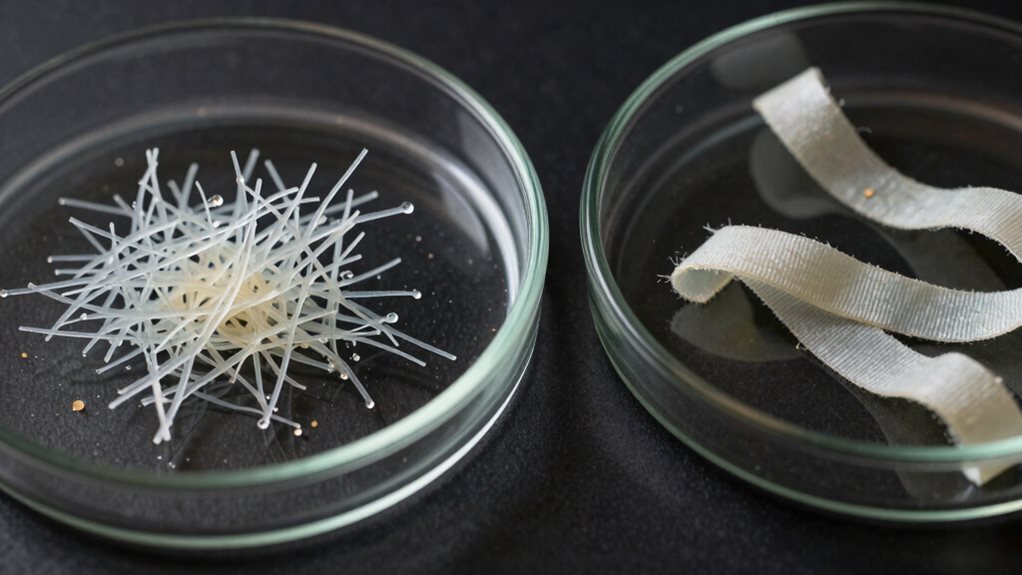
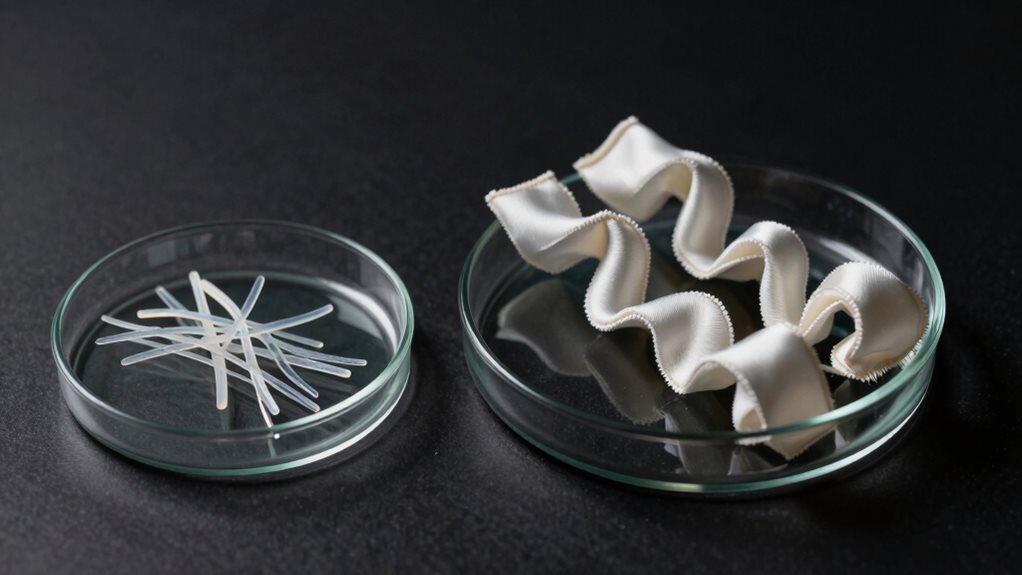
Consider how quickly a single strand of yarn unwinds compared to a tightly woven rope—this analogy captures why peptides degrade faster than proteins in biological environments. You’re looking at chains under fifty amino acids, lacking the complex folding that shields larger proteins. Without tertiary structure, peptide bonds remain exposed to proteases like DPP-4 and neprilysin. Your bloodstream’s enzymes cleave small messengers such as GLP-1 within minutes, while proteins endure through structural compactness that limits enzymatic access. protein folding helps protect longer chains from rapid degradation, a concept supported by how compact structures reduce protease accessibility.
How Peptides and Proteins Work as Medicine
When you’re prescribed a peptide like insulin or a protein-based antibody, you’re receiving a molecule that communicates directly with your body’s cellular machinery, binding to specific targets with notable precision that synthetic drugs often struggle to match.
Additionally, TB-500 (a synthetic fragment of thymosin beta-4) is studied for its potential to influence actin dynamics and tissue repair, though human clinical evidence remains limited and regulatory approvals are not in place. actin dynamics
Should You Take Peptides or Protein Supplements?
How do you decide between peptides and protein supplements when both line the shelves promising better health, stronger muscles, or improved recovery? Match your choice to your specific goal: if you need complete protein for muscle building, recovery, or meal replacement, whey or casein powder delivers all nine essential amino acids your body can’t produce.
However, if you target joint support, skin elasticity, or connective tissue health, collagen peptides offer specialized benefits despite their incomplete amino acid profile. Consider your priorities carefully, since these supplements serve distinct purposes rather than functioning interchangeably. Peptide mechanisms show that signal peptides can support collagen production and matrix integrity, which may complement broader protein intake in a balanced wellness plan.
Which One Matters More for Your Health?
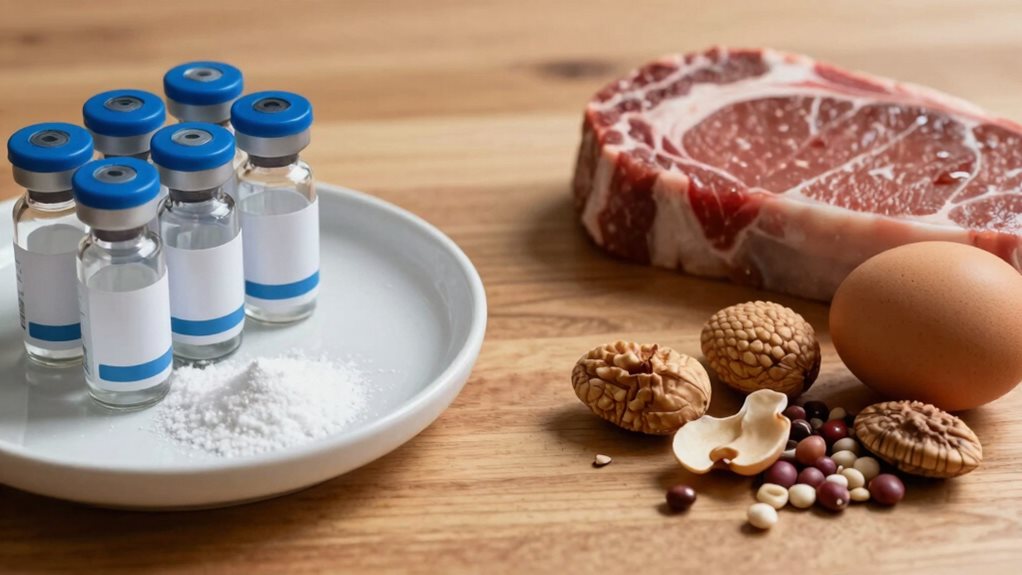
You need both proteins and peptides to stay healthy, but they serve fundamentally different biological roles that complement rather than replace each other. Proteins provide the structural foundation your body uses for tissue repair, enzyme production, and metabolic maintenance, while peptides often function as specialized signaling molecules that regulate processes like hunger, hormone release, and cellular communication. They help modulate immune responses and tissue repair in contextually appropriate ways rather than merely increasing baseline activity. immunomodulation
Both Are Essential
The body’s molecular machinery relies on two closely related yet functionally distinct players—peptides and proteins—each built from amino acids but serving complementary rather than competing roles in your health. You need proteins for tissue repair and enzymes, while you depend on peptides for signaling and regulation. Neither replaces the other; your wellness requires adequate intake and production of both.
Different Biological Roles
Peptides and proteins diverge sharply when you examine what they actually do inside your body, even though both originate from the same amino acid building blocks. Peptides act as messengers, carrying hormonal signals that regulate your cells with precision and speed.
Proteins, however, provide your structural framework, power your metabolism as enzymes, and transport vital substances. Both matter, yet proteins sustain more daily functions.
Complementary Health Functions
Whether you’re optimizing athletic recovery, managing skin aging, or supporting metabolic health, understanding how peptides and proteins complement each other becomes essential for making informed wellness decisions. You gain rapid, targeted benefits from peptides—enhanced absorption, cellular signaling, and hormone regulation—while proteins provide foundational amino acids for structural tissue and enzyme synthesis. Neither replaces the other; together, they address distinct physiological needs efficiently.
And Finally
You now understand that peptides and proteins aren’t fundamentally different—they’re simply amino acid chains of varying lengths, with the cutoff around 50 amino acids serving more as a practical guideline than a rigid biological rule. While proteins fold into complex structures that enable diverse cellular functions, peptides remain flexible, acting rapidly as hormones and signaling molecules before breaking down. For your health, you need both: proteins provide structural building blocks, while peptides coordinate essential processes, making neither inherently superior to the other.
References
- https://imb.uq.edu.au/article/2017/11/explainer-peptides-vs-proteins-whats-difference
- https://www.britannica.com/story/what-is-the-difference-between-a-peptide-and-a-protein
- https://www.peptidejournal.org/reference/peptide-vs-protein-whats-the-difference
- https://www.beckman.com/resources/sample-type/bio-molecules/proteins-and-peptides
- https://www.youtube.com/watch?v=eJ0PloCG_BA
- https://www.cellgs.com/blog/the-difference-between-peptides-and-proteins.html
- https://www.bachem.com/knowledge-center/peptides-vs-proteins-whats-the-difference/
- https://www.neulandlabs.com/en/insights/stories/peptide-vs-protein
- https://www.twc.health/blogs/news/peptide-or-protein-what-s-the-difference
- https://www.abbviecontractmfg.com/news-and-insights/fun-science-friday/proteins-vs-peptides.html