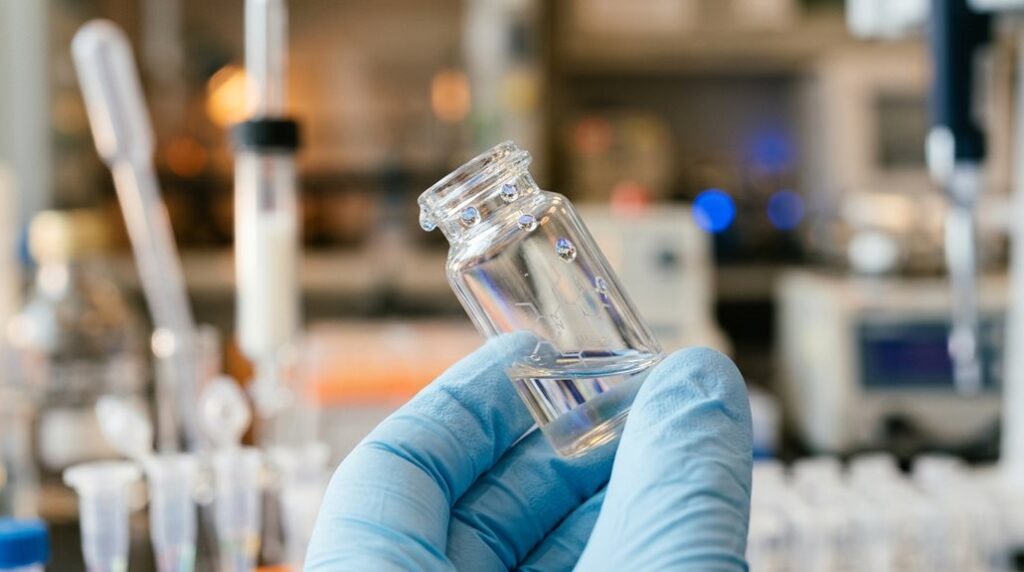
In 2026, peptide research funding concentrates on developing innovative therapies through advances in technology, sustainable manufacturing, and personalized medicine, supported by public and private investments. Key focus areas include platform technologies, oral delivery systems, cyclic peptides, and AI-driven design. Funding also promotes greener synthesis methods, like water-based processes and continuous-flow manufacturing, to reduce environmental impact. Leading clinical candidates target metabolic and cardiometabolic conditions, exemplifying rapid progress. Understanding these trends enhances your awareness of ongoing scientific breakthroughs and emerging therapeutic opportunities.
TLDR
- Funding is increasingly directed toward platform technologies, oral delivery systems, and AI-driven peptide discovery methods.
- Research emphasizes sustainable manufacturing practices, green chemistry, and environmentally friendly synthesis techniques.
- Major clinical programs focus on metabolic peptides and receptor agonists targeting obesity and cardiometabolic diseases.
- Advances in automated synthesis and high-throughput screening accelerate development of novel, targeted peptide therapeutics.
- Signaling dynamics and personalized medicine are central to developing more precise, effective peptide-based treatments.
What’s Driving the Surge in Peptide Therapeutics Investment in 2026?

The surge in investment in peptide therapeutics in 2026 is driven by a combination of strong market fundamentals and increasing confidence among investors, who recognize the significant commercial potential of these drugs. A growing body of evidence from needle-free peptide delivery research underscores translational progress, with several platforms advancing toward clinically meaningful readouts. Needle-free peptide delivery advances are expanding the ways peptides can be administered, improving patient acceptance and broadening addressable indications. Factors like projected market growth, high deal flow, and funding for late-stage programs with clinical validation attract capital, indicating sustained optimism and belief in peptides’ future role as scalable, impactful therapies.
Top Focus Areas Fueling Peptide Research and Funding
Advancements in peptide research and funding are primarily concentrated around several key focus areas that reflect both scientific innovation and unmet medical needs. These include metabolic peptides, especially dual- and triple-receptor agonists targeting obesity and cardiometabolic risks. These efforts are underpinned by a growing evidence base for incretin-based therapies and their potential to deliver durable weight and glycemic improvements. twincretin
How Academic and Government Agencies Are Supporting Peptide Innovation
Academic and government agencies are increasingly prioritizing public funding that supports sustainable and environmentally friendly approaches to peptide research. They emphasize green chemistry principles such as reducing hazardous reagents and waste in peptide synthesis. Researchers also focus on evaluating peptide activity, safety, and potential therapeutic applications through multidisciplinary collaborations that integrate chemistry, biology, and engineering, while exploring scalable, eco-friendly methods that minimize environmental impact and advance therapeutic potential. Green chemistry principles
Public Funding Priorities
Have you ever wondered how research in peptides is supported and prioritized by government agencies and academic institutions? In 2026, funding focuses on therapeutics, diagnostics, and core chemistry, emphasizing platform technologies that enable uncovering.
Defense agencies prioritize antimicrobial and rapid-response peptides, while disease-focused programs support clinical translation, all aligning research efforts with strategic national and medical needs.
Focus on Green Chemistry
What role do government agencies and academic institutions play in advancing green chemistry within peptide research? They provide targeted funding, such as the ACS GCIPR grants, supporting projects on greener synthesis methods, replacing hazardous reagents like TFA, and improving processes like solid-phase peptide synthesis.
This backing encourages innovation, fundamental research, and sustainable practices essential for environmentally responsible peptide manufacturing.
Advances in Peptide Manufacturing and Green Chemistry
Advances in peptide manufacturing are increasingly focused on implementing greener synthesis methods, which aim to reduce chemical waste and reliance on hazardous solvents while maintaining efficiency and product quality.
Understanding the broader concept of peptide stacks and how combinations of peptides are discussed in research contexts can inform the design of greener, more sustainable peptide production pathways. peptide stacks are studied for proposed mechanisms, potential interactions, and limitations of current evidence, which may influence how researchers approach synthesis, purification, and formulation with greener methods.
Greener Synthesis Methods
Recent developments in peptide manufacturing emphasize the importance of greener synthesis methods that aim to reduce environmental impact while maintaining efficiency and product quality.
Techniques like solvent substitution—including replacing DMF with options like NBP, propylene carbonate, and Cyrene—water-based approaches, and continuous-flow systems are advancing.
These methods lower hazardous solvent use, improve process control, and support sustainable peptide production.
Scalable Manufacturing Challenges
Scaling up peptide manufacturing presents a range of significant technical and logistical challenges that must be carefully managed to guarantee consistent quality and reliable supply.
These challenges include sourcing expensive raw materials, controlling process variability, overcoming purification bottlenecks, and reducing environmental impact.
Addressing these issues requires strategic investments, process innovations, and diversified sourcing to make certain of efficiency, sustainability, and supply resilience.
Key Technologies Shaping Peptide Drug Development
The development of peptide drugs is increasingly shaped by a suite of advanced technologies that enhance the precision, efficiency, and scalability of peptide synthesis and design. Automated synthesis platforms, such as solid-phase peptide synthesis combined with continuous-flow methods, enable rapid, scalable production. AI-guided design and high-throughput screening further refine peptide properties and accelerate identification, ensuring more effective therapeutic candidates. Solid-phase peptide synthesis remains a cornerstone technique enabling robust, modular construction of complex sequences across scalable manufacturing workflows.
Which Peptide Candidates Are Leading the Clinical Pipeline?

Numerous peptide candidates are currently advancing through the clinical pipeline, reflecting a diverse range of therapeutic areas and developmental stages. Leading efforts include obesity and metabolic peptides like Retatrutide, Survodutide, CagriSema, Orforglipron, and Mazdutide, all in or approaching Phase 3 trials.
Additionally, next-generation incretin peptides such as MariTide and Amycretin are progressing toward late-stage development, shaping future treatment options. Phase 3 trials
How Funding Trends Are Accelerating Peptide Innovation
Funding trends are increasingly favoring platform technologies that streamline and enhance peptide development, a shift that’s markedly accelerating innovation within the field.
AI-driven exploration supports faster design cycles and reduces risks, alongside continued emphasis on oral delivery systems and cyclic platforms. AI-driven exploration is a notable concept highlighted in recent funding activity, reinforcing the role of computational methods in accelerating discovery.
Investment focuses on oral delivery systems, cyclic platforms, and AI-driven exploration, supporting faster design cycles and reducing risks.
Larger financings for companies with validated mechanisms or human data indicate a strategic move toward multi-asset, high-potential therapeutics.
Emerging Opportunities and Future Directions in Peptide Research
Advancements in peptide research are opening new opportunities that could considerably alter therapeutic approaches and scientific understanding.
AI-driven design accelerates uncovering by optimizing peptide properties and replacing random libraries, while multi-target peptides and innovative delivery methods enhance efficacy and patient convenience. tissue repair pathways and cellular signaling dynamics present additional avenues for targeted recovery strategies. These emerging directions promise more personalized, effective treatments and broaden the scope of peptide applications across medicine and biologics.
Frequently Asked Questions
How Do Funding Priorities Differ Between Metabolic and Non-Metabolic Peptide Programs?
You’ll notice metabolic peptide funding focuses on proven markets, scale, and quick commercialization, while non-metabolic funding emphasizes innovative mechanisms, niche applications, and longer-term exploration, reflecting differing risk appetites and strategic priorities in the 2026 terrain.
What Role Does AI Play in Peptide Discovery and Optimization in 2026?
In 2026, AI accelerates peptide identification by supporting design, screening, and property prediction, reducing experimental cycles, and enabling multi-objective optimization. You utilize models like transformers and diffusion to create, prioritize, and refine promising peptides efficiently.
How Are New Delivery Platforms Improving Peptide Drug Administration?
New delivery platforms enhance peptide drug administration by protecting peptides from degradation, enabling noninvasive routes like buccal or transdermal, and offering controlled release systems, which improve effectiveness, patient comfort, and adherence to therapies.
What Are the Main Challenges in Scalable Peptide Manufacturing?
You face challenges like non-linear synthesis scale-up, impurity control, limited purification capacity, and rising costs. These issues hinder producing large peptide batches efficiently, requiring process re-engineering, advanced purification methods, and reliable supply chains to meet demand.
How Is Green Chemistry Influencing Peptide Synthesis Methods?
Green chemistry influences peptide synthesis by promoting greener solvents, solvent-free methods, water-based techniques, and continuous-flow systems, reducing hazardous waste and energy use, while emphasizing solvent recovery, reuse, and process efficiency for sustainable, scalable manufacturing.
Final Note
Staying informed about current funding trends and technological advances in peptide research enables you to identify promising areas for investment, collaboration, or further study. As the field continues to evolve through innovations in manufacturing, regulatory support, and clinical development, understanding these fluctuations helps you make strategic decisions grounded in scientific progress. By monitoring key focus areas and emerging opportunities, you can better steer the complex terrain of peptide therapeutics, ensuring your efforts align with ongoing advancements and future prospects.
References
- https://peptidestaff.com/news/peptide-biotech-q2-2026-funding-roundup/
- https://peptidestaff.com/news/peptide-industry-q2-2026-funding-roundup/
- https://peptidestaff.com/news/peptide-academic-research-grant-funding-2026/
- https://finance.yahoo.com/sectors/healthcare/articles/formblends-publishes-2026-state-peptides-112500373.html
- https://onlinelibrary.wiley.com/doi/10.1002/psc.70119
- https://www.grandviewresearch.com/industry-analysis/peptide-therapeutics-market
- https://www.mordorintelligence.com/industry-reports/peptide-therapeutics-market
- https://www.fortunebusinessinsights.com/industry-reports/peptide-therapeutics-market-101420
- https://acsgcipr.org/funding-awards/research-grants/
- https://peptidedrughunting.org/wp-content/uploads/2026/06/Peptide-News-Jan-June-2026-1.pdf