Recovery peptides activate signaling pathways—like VEGFR2-Akt-eNOS cascades—that promote blood flow, tissue oxygenation, and balanced inflammation to support healing. BPC-157, TB-500, and GHK-Cu show promise in animal models for regeneration and collagen synthesis, but human evidence remains limited: only three small pilot studies exist, totaling fewer than 30 subjects, with no randomized controlled trials in trained individuals. While mechanisms are biologically plausible, translation from rats to humans is uncertain due to physiological differences, and you should weigh this evidence gap carefully before considering use, keeping in mind that the sections ahead break down what each compound actually offers.
TLDR
- Recovery peptides activate VEGFR2-Akt-eNOS pathways to enhance blood flow and oxygen delivery.
- Inflammation is modulated rather than suppressed, supporting organized tissue repair and collagen deposition.
- BPC-157 shows strong animal regeneration data but human translation remains uncertain with only three small pilot studies.
- No randomized controlled trials exist for TB-500, GHK-Cu, or recovery peptides in trained individuals.
- Human evidence for deep tissue recovery from peptides remains weak and largely uncontrolled.
How Do Recovery Peptides Work?
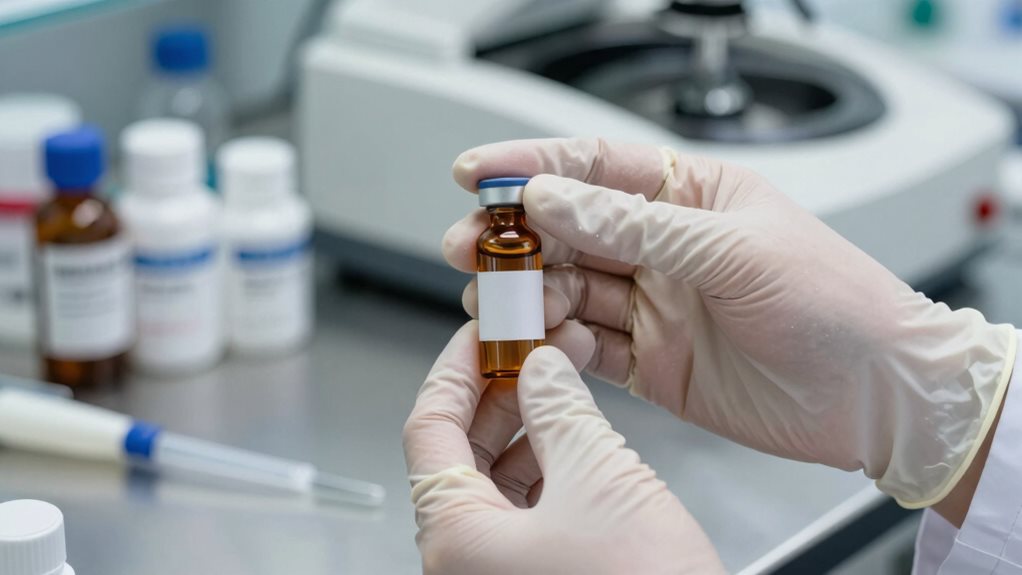
How exactly do peptides convert your body’s healing capabilities from the inside out? You activate VEGFR2 receptors, which trigger the Akt-eNOS cascade and enhance nitric oxide production. Your blood vessels dilate, improving oxygen flow while new vascular networks form.
Meanwhile, peptides shape inflammation into a productive process, modulating signaling rather than shutting it down entirely. This controlled response prevents excessive inflammation that would otherwise block tissue repair, instead balancing pathways to support organized collagen deposition and efficient healing.
BPC-157 for Recovery: Why Animal Studies Don’t Guarantee Human Results
Why does BPC-157 generate so much enthusiasm despite having such thin human evidence? You see robust animal data—regeneration in muscle, tendon, and bone—then assume it applies to you, but human translation is uncertain. Only three pilot studies exist, totaling fewer than 30 subjects, with no randomized controlled trials. Your physiology differs from rats; absorption, dosing, and healing timelines vary. Animal plausibility supports research, not proof. You deserve well-designed human trials before trusting recovery claims. clinical trials
What Peptide Human Trials Actually Show
When you’re weighing peptide therapies for recovery, you’re likely wondering what human studies actually demonstrate rather than what animal models or online testimonials suggest.
You’ll find the evidence disappointingly thin: no randomized controlled trials exist for trained individuals, and only three small uncontrolled studies—sixteen patients total—have examined injury recovery. Additionally, evidence indicates that intranasal Semax appears to modulate neurotrophic factors and neurotransmitter activity, which may influence recovery processes in limited, early-stage human data neurotrophic modulation.
TB-500 vs. GHK-Cu: Different Compounds, Different Limits

At the intersection of recovery research, you’ll find TB-500 and GHK-Cu frequently mentioned together, yet these compounds operate through fundamentally different biological mechanisms that shape what each can realistically offer.
TB-500 drives cell migration and blood vessel formation as an early repair signal, while GHK-Cu supports collagen synthesis and matrix remodeling for connective tissue.
Neither has robust human trial data for deep tissue recovery: TB-500 lacks controlled human studies entirely, and GHK-Cu’s evidence is limited to topical skin applications.
You should view them as distinct tools with separate evidence limits, not interchangeable recovery solutions.
In addition to these distinctions, research on Humanin highlights its potential roles in cellular protection and longevity pathways, which may inform future recovery strategies and tissue maintenance cellular protection.
Are Peptides Worth Trying for Recovery?
Whether you’re weighing a peptide protocol against conventional recovery methods or simply trying to separate credible science from marketing hype, the question of value demands a clear-eyed look at what the evidence actually offers versus what promotional claims suggest.
You should approach peptide therapy cautiously, prioritizing established recovery methods unless you’re working closely with knowledgeable medical supervision and fully understand the uncertain risk-benefit profile. immune-related studies
And Finally
You’re now equipped to evaluate recovery peptides with realistic expectations, recognizing that promising animal data doesn’t automatically translate to human benefit. While compounds like BPC-157, TB-500, and GHK-Cu show mechanistic potential, you’ll need to weigh limited clinical evidence against your specific recovery goals, consult qualified healthcare providers, and prioritize established rehabilitation fundamentals before considering experimental approaches.
References
- https://peptidescienceinstitute.org/conditions/peptides-for-injury-recovery/
- https://pmc.ncbi.nlm.nih.gov/articles/PMC12753158/
- https://peptidescienceinstitute.org/conditions/peptides-for-athletic-recovery/
- https://www.frontiersin.org/journals/nutrition/articles/10.3389/fnut.2026.1767738/full
- https://www.peptides.org/peptides-for-healing-injury-repair-and-recovery/
- https://www.verrotraining.com/blog/peptides-for-recovery-and-performance
- https://pubmed.ncbi.nlm.nih.gov/41476424/
- https://pmc.ncbi.nlm.nih.gov/articles/PMC11426299/
- https://www.sportsmed.org/the-boom-of-peptides-in-sports-medicine-do-we-know-anything-more
- https://peptidebreakdown.com/guides/best-peptides-injury-recovery/