TB-500 is a synthetic peptide fragment derived from thymosin beta-4, a 43-amino-acid protein that regulates actin dynamics in your cells by binding to G-actin monomers and preventing premature polymerization. This mechanism supports cell migration, tissue repair, and angiogenesis, with animal studies showing faster tendon healing and enhanced wound re-epithelialization. However, no published human trials confirm muscle recovery benefits, and the safety profile for injected use remains unestablished since regulatory agencies haven’t approved it. Side effects like injection-site reactions, headache, or fatigue appear mild and transient in related topical studies, though long-term data doesn’t exist. If you’re weighing whether this peptide fits your research or recovery goals, you’ll want to examine the specific evidence for tendons, wounds, and proper dosing protocols before making any decisions.
TLDR
- TB-500 is a synthetic 17-amino-acid fragment of thymosin beta-4 that regulates actin dynamics for tissue repair research.
- It binds G-actin monomers 1:1 to prevent premature polymerization and enable cytoskeletal remodeling.
- Preclinical studies show accelerated wound healing and tendon repair, but no human trials confirm muscle recovery benefits.
- Side effects include injection-site reactions, fatigue, headaches, and possible blood pressure changes; long-term safety data is absent.
- TB-500 lacks regulatory approval for human use, with the strongest human evidence existing only for topical ophthalmic formulations.
What Is TB-500? Thymosin Beta-4 Explained
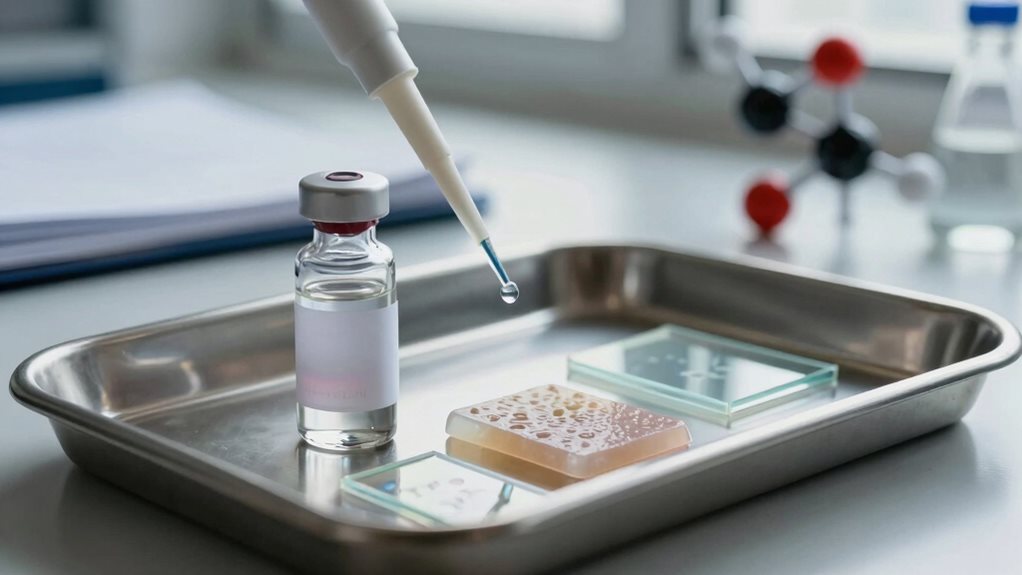
TB-500, a synthetic research peptide modeled after thymosin beta-4, represents one of the most extensively studied fragments in regenerative biology, though its name often generates confusion about what it actually is and how it relates to the natural protein.
TB-500, by contrast, is a shorter synthetic fragment—often described as a 17-amino-acid segment containing the actin-binding domain—that researchers use to study these biological processes in controlled settings. Thymosin beta-4 is a 43-amino-acid peptide naturally present in your cells, first isolated from bovine thymus in 1966, where it functions as an abundant intracellular regulator of movement and repair. actin-binding domain
How TB-500 Works: Actin and Cell Repair
TB-500 exerts its core therapeutic effects through a remarkably specific molecular mechanism: the intracellular sequestration of G-actin monomers via its conserved LKKTETQ binding motif, which regulates actin polymerization dynamics by holding these structural subunits in reserve for precisely timed cytoskeletal remodeling. This actin-centered activity directly promotes cell migration, enabling repair cells to reprogram their behavior and travel toward damaged tissue zones rather than remaining stationary, a process essential for wound healing, tendon repair, and soft-tissue regeneration. By modulating the cytoskeleton in this controlled manner, TB-500 supports the shape changes and tissue reorganization that underpin its broader regenerative effects, setting the stage for understanding how these cellular actions connect to angiogenesis and inflammation control. Actin sequestration further contributes to coordinated tissue repair by guiding cellular movement toward injury sites.
Actin Binding Dynamics
The intricate choreography of cellular repair depends heavily on how a cell manages its structural building blocks, and you’ll find that TB-500—more precisely, thymosin beta-4 (Tβ4)—plays a central role in this process through its intimate relationship with actin, one of the most abundant proteins in your body. Tβ4 binds individual actin monomers in a one-to-one ratio, preventing them from spontaneously assembling into filaments while maintaining a reserve of polymerization-ready G-actin.
This isn’t simple blocking, though; the peptide induces conformational changes in actin, altering its structural flexibility. Tβ4 also inhibits nucleotide exchange, yet competes dynamically with profilin—another actin-binding protein that promotes exchange—allowing your cells to finely tune actin availability for rapid cytoskeletal remodeling during repair.
Cell Migration Promotion
Moving through damaged tissue requires more than just raw materials—it demands precise coordination of your cells’ internal scaffolding, and this is where TB-500’s influence on actin dynamic becomes directly relevant to how repair cells reach the sites where they’re needed. By sequestering G-actin monomers, TB-500 maintains a dynamic reserve that fuels lamellipodia formation, enabling endothelial and myocardial cells to migrate efficiently into injured zones for functional tissue restoration rather than scar formation.
Does TB-500 Actually Speed Up Muscle Recovery?
Whether you’re managing a strain from training or simply curious about emerging recovery options, understanding what TB-500 can—and cannot—do for muscle repair requires a clear-eyed look at the evidence.
Animal studies show promising regeneration markers, yet human trials confirming faster recovery remain unpublished.
You’re looking at a compound with theoretical potential, not proven clinical benefit for your muscles. TB-500 evidence
Can TB-500 Heal Tendons and Ligaments Faster?
You might be wondering whether TB-500 can actually accelerate healing in your tendons and ligaments, given how frustratingly slow these injuries typically recover due to their naturally poor blood supply. While preclinical studies in animals have shown promising results— including faster collagen organization, reduced inflammation, and roughly 40% quicker healing in Achilles tendon models—the translation to reliable human outcomes remains uncertain. You should understand that no definitive randomized clinical trials currently prove TB-500 speeds tendon or ligament repair in people, making it a promising but still unproven option rather than an established treatment. emerging studies
Preclinical Healing Evidence
How exactly does TB-500 demonstrate its healing potential before human trials begin? Preclinical studies reveal persuasive evidence across multiple tissue types. In rodent tendon and ligament models, you’ll find improved collagen organization, enhanced tensile strength, and accelerated functional recovery. TB-500 promotes cellular migration through G-actin sequestration while supporting angiogenesis for better blood supply. Inflammatory markers drop 30–50% within two weeks, fibrosis decreases, and wound closure speeds up markedly compared to untreated controls.
Clinical Translation Status
So you’re wondering if TB-500 can actually speed up tendon or ligament healing in people, not just in lab animals—and that’s precisely where the science becomes more cautious than convincing.
Right now, no Phase III human trials confirm faster recovery for orthopedic injuries, though early safety studies show acceptable tolerability.
The evidence remains promising but unproven, leaving clinical recommendations unjustified.
TB-500 for Wound Healing: What Dermal Studies Show
Accelerating skin repair has become a focal point in regenerative medicine research, and TB-500—synthetic thymosin beta-4—has drawn considerable attention for its potential to enhance dermal wound healing through multiple coordinated mechanisms. In mouse wound models, topical or intraperitoneal application increased re-epithelialization by 42% at day 4 and up to 61% at day 7, with at least 11% greater wound contraction. You’ll find evidence of enhanced keratinocyte migration, collagen deposition, and angiogenesis, all supporting faster closure and improved tissue organization. However, you should note that human randomized trials for synthetic TB-500 in wound healing remain unpublished, so current evidence stays preclinical. TB-500 has been studied for its effects on actin dynamics and cell migration, which may underpin its role in tissue repair and remodeling keratinocyte migration.
Does TB-500 Work for Dry Eye?
You may have encountered claims that TB-500 could help with dry eye, and while the injectable form lacks clinical trial support, research does exist for a related compound—topical thymosin beta-4 eye drops, specifically the formulation known as RGN-259. Human studies of this ophthalmic solution have demonstrated measurable improvements in both corneal staining and patient-reported discomfort, offering a modest but promising signal of efficacy for certain dry-eye presentations. In the following sections, you’ll examine the clinical trial evidence, the proposed mechanisms behind these effects, and what safety data are currently available to inform your understanding of this therapeutic approach.
Clinical Trial Evidence
How, then, does TB-500 actually perform when tested in human clinical trials for dry eye disease? It doesn’t—because no such trials exist. You’ll find zero published human studies examining injectable TB-500 for this condition.
The clinical evidence you may encounter actually belongs to RGN-259, the full-length Tβ4 ophthalmic formulation, which demonstrated 35-59% symptom reduction in Phase II trials.
FDA has scheduled no review for TB-500 eye drugs; instead, TB-500 remains an unapproved Category 2 bulk substance lacking controlled human safety or efficacy data. You’re wise to distinguish fragment from parent compound.
Mechanism of Action
The peptide’s therapeutic promise begins at the molecular level, where TB-500 binds directly to monomeric G-actin—the soluble, building-block form of a protein that shapes your cells’ internal architecture.
By sequestering G-actin in a 1:1 ratio, TB-500 prevents premature polymerization into filamentous actin, maintaining an available pool for rapid cytoskeletal remodeling.
This actin regulation drives enhanced cell migration, angiogenesis, and tissue repair, supporting corneal epithelial resurfacing in dry eye through surface restoration rather than tear production.
Safety and Tolerability
Three decades of research into thymosin beta-4’s therapeutic potential have culminated in one of its most rigorously tested applications: the treatment of dry eye disease, where TB-500 has demonstrated both measurable efficacy and a reassuring safety profile in controlled human trials. Phase II studies show 0.1% eye drops significantly improved symptoms at 28 days with no reported adverse events, establishing a large safety window. You’ll find this ophthalmic formulation particularly notable because it represents the most robust human evidence for TB-500, offering clear dosing guidance and documented tolerability that contrasts sharply with the limited clinical data available for musculoskeletal applications.
Can TB-500 Help With Hair Loss?
Whether you’re researching experimental treatments for thinning hair or simply curious about emerging therapies, you’ve likely encountered claims that TB-500—a synthetic version of thymosin beta-4—might stimulate regrowth. While preclinical studies suggest it could activate hair follicle stem cells and improve blood flow, no human clinical trials have proven this works in people. Anecdotal reports exist, but evidence remains speculative, not established. TB-500 has been studied primarily in preclinical and non-cutaneous contexts, and its safety profile in humans for hair-related applications has not been established. preclinical studies
Is TB-500 Safe? What Human Trials Show
How safe is TB-500, really? You should know that no published human trials have tested injected TB-500 directly, so its full safety profile remains unknown. Evidence from related topical thymosin beta-4 studies suggests mild side effects like injection-site reactions, transient fatigue, and headaches. Short-term tolerability appears favorable, but long-term safety data are nonexistent, and no regulatory agency has approved TB-500 for human use. Growth hormone pathways further underscore the need for rigorous human research before drawing conclusions about broader safety and efficacy.
TB-500 Side Effects and Injection Tips
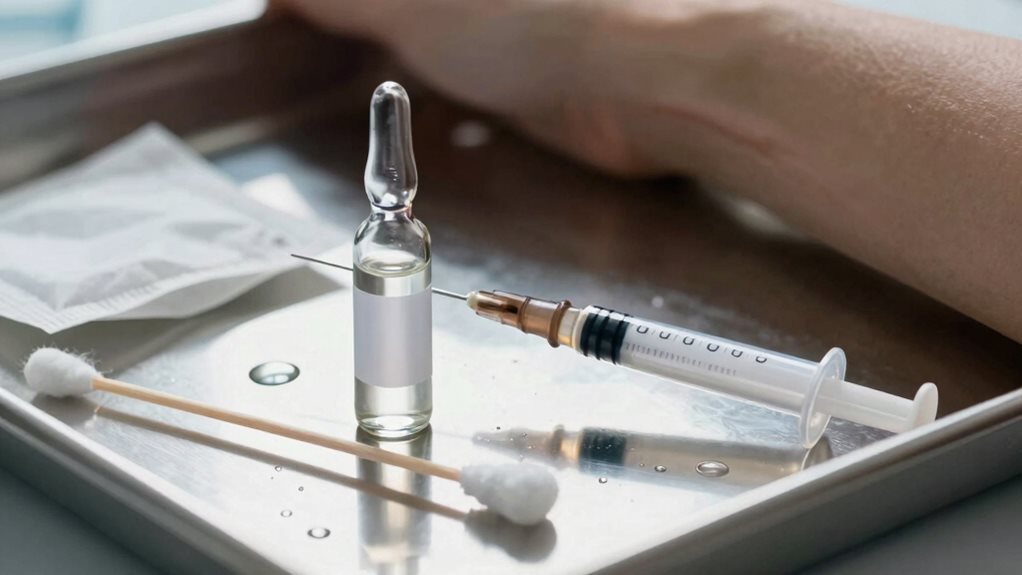
What side effects should you actually expect when using TB-500, and how can you minimize them?
You’ll most commonly notice redness, swelling, bruising, or mild soreness at your injection site, which typically resolves within days without treatment. Systemic effects like headache, fatigue, dizziness, or nausea are usually mild and transient, especially during your first week. To reduce these issues, inject slowly, rotate sites, stay hydrated, and consider smaller, gradual dosing adjustments. Blood pressure changes have been reported in some users, so monitor any unusual symptoms and consult a healthcare professional if you have concerns. injection techniques
How Much TB-500 Do Studies Use?
When you’re trying to understand how much TB-500 researchers actually use, you’ll quickly discover there isn’t a single, standardized dose that studies follow, which can feel confusing at first but simply reflects how differently this peptide has been tested across various models and endpoints.
In preclinical work, dosing has ranged widely across cell cultures and animal models, underscoring the importance of aligning the dose to the specific experimental context and endpoints dose variation.
TB-500 vs. BPC-157: Which Heals Better?
TB-500 vs. BPC-157: Which Heals Better?
Now that you’ve seen how research doses vary widely depending on the model and endpoint, you’re probably wondering how TB-500 stacks up against other peptides that get mentioned in the same conversations—particularly BPC-157, which often comes up when people are comparing options for tissue repair.
You’ll find that TB-500 tends to shine in systemic muscle recovery and wound healing through its actin-regulating mechanism, whereas BPC-157 typically fits localized tendon, ligament, and gastrointestinal repair through angiogenesis and inflammation control.
Neither peptide dominates universally; your specific injury type—connective tissue versus muscle, localized versus widespread—should guide which mechanism aligns better with your research goals, keeping in mind that robust human trials remain limited for both.
Semax research has illuminated cognitive effects and mechanisms that involve modulation of neurotrophic factors and cerebral blood flow, which can offer context for how peptide-based strategies may interact with neural tissue and recovery processes neurotrophic modulation.
Should You Use TB-500? 4 Key Questions
Whether you’re weighing TB-500 for a specific research objective or simply trying to separate promising biology from proven therapy, you’ll need to look past the mechanism charts and animal data to ask harder questions about your own situation.
First, does your goal have human clinical support, or are you relying mainly on preclinical findings?
Second, have you ruled out active cancer, given the pro-angiogenic risks?
Third, can you accept that long-term safety remains uncharacterized?
Finally, are you prepared for regulatory and compliance complexities?
Honest answers here matter more than any mechanism.
Frequently Asked Questions
Is TB-500 Legal to Buy and Use?
You can’t legally buy TB-500 for personal use in the United States, as the FDA hasn’t approved it for any human medical purpose. While researchers may obtain it for qualified laboratory studies under proper protocols, purchasing it for self-administration, performance enhancement, or therapeutic use violates federal law.
Though TB-500 isn’t a controlled substance, products marketed “for research only” don’t authorize human consumption, and unregulated sources pose significant contamination and dosing risks.
Does TB-500 Require Refrigeration for Storage?
Yes, you’ll need to refrigerate TB-500 after reconstitution, keeping it at 2–8°C for up to 2–4 weeks, though the dry powder should be frozen at -20°C or -80°C for long-term storage before mixing.
You must avoid room-temperature storage once it’s reconstituted, as liquid form degrades faster, and you should aliquot into single-use portions to prevent harmful freeze-thaw cycles that damage peptide stability.
Can TB-500 Be Taken Orally or Only Injected?
You should inject TB-500, not take it orally, because your stomach acid and digestive enzymes rapidly break down this 43-amino-acid peptide, rendering oral bioavailability near zero.
Subcutaneous injection, the standard route, bypasses this degradation and achieves 80–95% bioavailability, whereas oral absorption claims lack credible support.
For systemic regenerative effects—wound repair, tissue recovery—you’ll need injectable delivery, as research dosing relies exclusively on milligram-range injections, not capsules or strips.
How Long Until TB-500 Results Appear?
You’ll typically notice subtle changes, like reduced stiffness, within one to two weeks, though this isn’t true tissue repair yet.
Clear functional improvements usually emerge around two to four weeks, while meaningful recovery for tendons or ligaments generally requires four to eight weeks of consistent use.
Chronic injuries may need eight to twelve weeks. Your timeline depends on tissue type, injury severity, and how you’re measuring progress.
Does TB-500 Show up on Drug Tests?
TB-500 won’t appear on standard workplace drug tests, as these panels target common drugs like THC and opiates rather than peptide structures, but it will show up on WADA-accredited anti-doping screens that use advanced mass spectrometry specifically designed to detect prohibited peptides.
If you’re an athlete subject to drug testing, you should assume detection is possible, while those facing routine employment screening face minimal risk of exposure.
And Finally
You’ve investigated TB-500’s mechanisms, from actin regulation to tissue repair, and you now understand both its promise and its limitations. While preclinical research shows genuine potential for accelerating healing in muscles, tendons, and skin, human clinical data remains sparse, and regulatory approval has not been achieved. You’re encouraged to weigh the evidence carefully, consult qualified healthcare providers, and recognize that peptides marketed for research aren’t substitutes for proven therapies. Your informed, cautious approach protects your health.