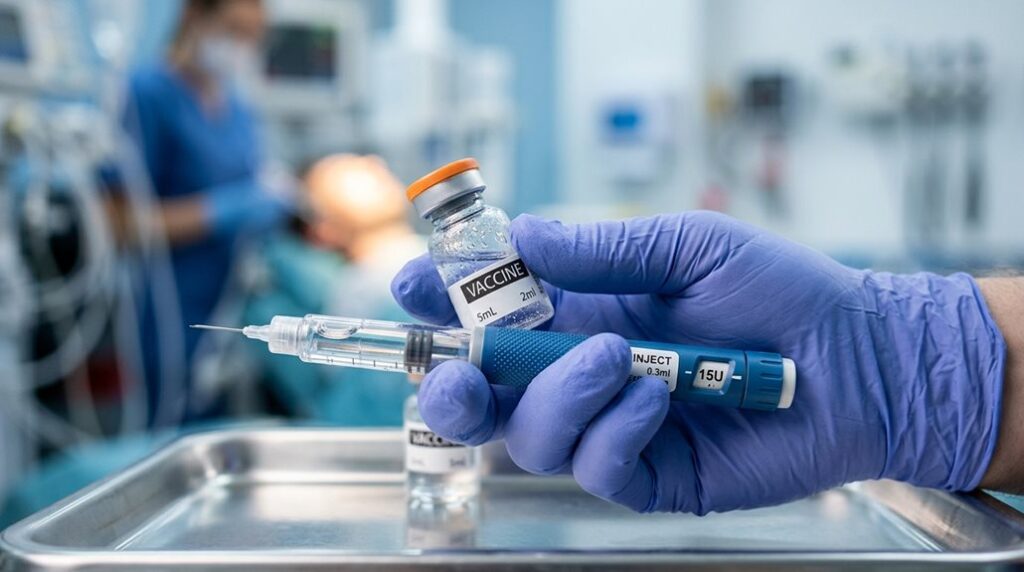
Survodutide is an experimental drug that acts as a dual receptor agonist for GLP-1 and glucagon, targeting pathways that promote satiety, increase energy expenditure, and enhance fat burning, which may support weight loss and metabolic health improvements. It can lower blood sugar, reduce liver fat, and improve cardiovascular markers, although side effects like nausea and gastrointestinal issues are common initially. While clinical trials are ongoing to evaluate its long-term safety and effectiveness, further details will clarify its potential benefits and risks.
TLDR
- Survodutide is a dual receptor agonist targeting GLP-1 and glucagon receptors, promoting satiety, fat burning, and insulin secretion.
- It offers significant weight loss (8–19%) and improves metabolic markers like blood sugar and lipid levels.
- Common side effects include nausea, diarrhea, and vomiting, mainly during early treatment; serious events are rare.
- Currently in Phase 3 trials, it aims to establish safety, efficacy, and potential applications for liver disease and cardiovascular health.
- Survodutide’s long-term safety and benefits are under ongoing research, with promising results for obesity and metabolic disorders.
What Is Survodutide and How Does It Work?

Have you ever wondered how certain medications can influence multiple metabolic pathways to promote weight loss and glycemic control? Survodutide, an experimental peptide, acts as a dual receptor agonist for GLP-1 and glucagon, stimulating satiety, insulin secretion, and fat burning. It targets both central and peripheral systems to improve metabolic health by combining actions similar to GLP-1 receptor activity with glucagon receptor stimulation central and peripheral systems. Its once-weekly dosing supports sustained effects, targeting both central and peripheral systems to improve metabolic health.
How Survodutide Helps With Weight Loss and Metabolic Health
Survodutide enhances weight loss and improves metabolic health through a complex mechanism that targets both central and peripheral pathways involved in energy regulation.
It combines GLP-1 and glucagon receptor activation to reduce appetite, increase energy expenditure, and promote lipolysis, leading to significant weight reductions—averaging around 8–19%.
It also results in improvements in blood pressure, triglycerides, and blood sugar levels, supporting overall metabolic well-being, while concerns about long-term safety and translational evidence remain areas for careful consideration Category 2 bulk substance restrictions, highlighting the importance of regulatory context in interpreting emerging data.
How Survodutide Improves Blood Sugar and Reduces Liver Fat
Survodutide improves blood sugar regulation by activating pathways involving both GLP-1 and glucagon, which work together to enhance insulin sensitivity and promote better glucose control.
This dual receptor engagement not only helps lower fasting plasma glucose and HbA1c levels but also supports the recovery of pancreatic beta-cell function, essential for maintaining stable blood sugar levels.
Additionally, by stimulating glucagon receptors in the liver, survodutide encourages lipolysis, leading to a reduction in hepatic fat content. This is especially beneficial for conditions like non-alcoholic steatohepatitis (NASH).
Glucagon and GLP-1 Roles
Understanding how glucagon and GLP-1 hormones work together provides perspective into how Survodutide improves blood sugar and reduces liver fat.
Glucagon stimulates processes like lipolysis and ketogenesis, mobilizing energy during scarcity, while GLP-1 suppresses glucagon secretion and enhances insulin release.
Their balanced interaction helps regulate glucose and lipid metabolism, supporting overall metabolic health.
Blood Sugar Regulation
Have you ever wondered how medications can actively improve blood sugar control and reduce liver fat simultaneously?
Survodutide enhances blood sugar regulation by stimulating insulin secretion through GLP-1 receptor activation, delaying gastric emptying, and improving glucose clearance. These combined effects lower HbA1c levels, promote weight loss, and support overall metabolic health.
This provides an all-encompassing approach to managing diabetes and related conditions.
Liver Fat Reduction
How does Survodutide contribute to reducing liver fat while simultaneously improving blood sugar regulation?
By activating glucagon receptors, it directly increases hepatic fatty acid oxidation, which decreases liver fat. This dual action also reduces lipogenesis, or fat production in the liver.
MRI measurements confirm significant liver fat reduction—up to 67%—and improvements in liver health markers, supporting its role in managing fatty liver disease.
What Are the Side Effects and Is Survodutide Safe?

While Survodutide has shown promise as a treatment within the GLP-1 receptor agonist class, it’s important to take into account its potential side effects and safety profile.
Most participants experience gastrointestinal issues like nausea, diarrhea, or vomiting, especially early in treatment, leading to discontinuation in some cases.
Serious adverse events are rare, and overall, the drug appears relatively safe with proper medical oversight.
In clinical contexts, weight loss and glycemic improvements have been observed alongside these GI effects, underscoring the importance of individualized dosing and monitoring to optimize tolerability and outcomes incretin receptor activity.
Where Is Survodutide in Clinical Trials?
Survodutide is currently undergoing extensive evaluation in multiple clinical trials worldwide, reflecting its promising potential as a treatment for obesity and related metabolic conditions. These include large Phase 3 trials, such as SYNCHRONIZE-1 and -2, examining efficacy in different populations.
Regional studies in China and Japan are also underway, along with a global cardiovascular safety trial. These efforts aim to establish thorough safety and effectiveness data. Clinical trial safety considerations
How Does Survodutide Compare to Other Weight Loss Drugs?
Comparing survodutide to other weight loss medications reveals notable differences in mechanisms, efficacy, and safety profiles that can influence treatment choices.
Survodutide’s dual GLP-1 and glucagon receptor activation promotes greater weight loss, up to 18.7%, with added benefits like improved liver fat reduction.
Unlike FDA-approved drugs like tirzepatide, survodutide remains investigational, but its unique approach may offer enhanced metabolic effects over single-agonist options. dual GLP-1 and glucagon receptor activation
What’s Next for Survodutide? Future Research and Expectations
Ongoing research efforts are critically shaping the future of survodutide, with multiple clinical trials focused on evaluating its long-term safety, efficacy, and potential uses beyond weight loss.
These include studies on cardiovascular and metabolic outcomes, safety management, dosing optimization, and expansion into liver diseases like MASLD/MASH.
Results will guide regulatory decisions and broader therapeutic applications.
In addition, researchers are evaluating long-term safety profiles and real-world tolerability to better understand how survodutide performs across diverse patient populations.
Frequently Asked Questions
Can Survodutide Be Used Alongside Other Diabetes Medications Safely?
Yes, survodutide can generally be used safely alongside other diabetes medications like metformin, SGLT2 inhibitors, and DPP-4 inhibitors without dose adjustments, but prescriber oversight is essential.
Combining survodutide with insulin or sulfonylureas requires careful monitoring and possible dose reduction due to hypoglycemia risks.
Always consult your healthcare provider before combining treatments, especially when using medications like GLP-1 agonists or oral contraceptives, to manage interactions and adverse effects effectively.
What Are the Long-Term Effects of Survodutide Treatment?
Long-term survodutide treatment appears promising, with sustained weight loss, improved metabolic markers, and potential benefits for liver health, as seen in early trials.
However, side effects like gastrointestinal discomfort may lead to discontinuation, especially at higher doses.
Current research indicates no significant safety concerns, but ongoing Phase 3 studies are essential to confirm long-term efficacy and safety across diverse populations, ensuring you receive balanced, evidence-based guidance.
How Does Survodutide Affect Cardiovascular Health Beyond Weight Loss?
You see that survodutide improves cardiovascular health beyond weight loss by directly lowering blood pressure, reducing systemic inflammation, and decreasing visceral fat, which collectively lessen cardiovascular stress.
It also enhances lipid profiles by lowering triglycerides and hepatic fat, potentially preventing fibrosis.
Additionally, early renal benefits and reduced fibrosis-related remodeling support long-term heart health.
These effects occur independently of weight reduction, offering a holistic approach to cardiovascular risk management.
Are There Specific Populations That Should Avoid Survodutide?
You should avoid survodutide if you have a personal or family history of medullary thyroid carcinoma (MTC), are diagnosed with Multiple Endocrine Neoplasia syndrome type 2 (MEN2), or have active thyroid C-cell tumors, as these conditions increase the risk of thyroid malignancies linked to the drug.
Additionally, individuals with severe gastrointestinal disorders such as gastroparesis, bowel obstruction, or active inflammatory bowel disease shouldn’t use survodutide, given its mechanism of slowing gastrointestinal motility.
Pregnant women or those planning pregnancy must also refrain, due to potential fetal harm demonstrated in animal studies.
When Might Survodutide Receive Regulatory Approval for General Use?
Survodutide might receive regulatory approval between 2027 and 2028, depending on the success of ongoing clinical trials and the review process.
If Phase 3 results are positive and regulatory agencies expedite review, approval could occur as early as late 2026 or early 2027.
However, realistic timelines suggest market availability will likely be around 2027 or 2028, contingent on successful trial outcomes and regulatory proceedings.
And Finally
Survodutide offers promising benefits for weight management and metabolic health, supported by ongoing clinical research. While it shows potential in improving blood sugar levels and reducing liver fat, understanding its safety profile and side effects remains crucial. As future studies continue, it’s important to consult healthcare professionals to evaluate whether this medication aligns with your health needs. Staying informed and cautious guarantees you make well-grounded decisions based on current evidence and emerging data.
References
- https://diatribe.org/diabetes-medications/survodutide-shows-promising-weight-loss-and-cardiometabolic-benefits
- https://pmc.ncbi.nlm.nih.gov/articles/PMC11542446/
- https://pmc.ncbi.nlm.nih.gov/articles/PMC11664303/
- https://www.jacc.org/doi/10.1016/j.jchf.2024.09.004
- https://www.zealandpharma.com/pipeline/survodutide/
- https://www.healio.com/news/endocrinology/20230630/survodutide-induces-up-to-187-weight-loss-among-adults-with-obesity-in-phase-2-trial
- https://pmc.ncbi.nlm.nih.gov/articles/PMC12184113/
- https://pmc.ncbi.nlm.nih.gov/articles/PMC12274044/
- https://auctoresonline.org/article/survodutide-a-promising-agent-with-novel-mechanism-of-action-for-treatment-of-obesity-and-type-2-diabetes