Recovery peptides are short amino acid chains that signal your body’s natural repair pathways, with collagen peptides offering the strongest human evidence—take 15 grams 30–60 minutes before training with vitamin C for tendon and muscle recovery. Injectable options like BPC-157 and TB-500 show promising animal data but lack robust human trials and carry regulatory warnings, so you’ll want to match your choice to specific recovery needs while verifying safety and legal status. Understanding the difference between well-supported oral supplements and experimental compounds will help you navigate this landscape with confidence.
TLDR
- Recovery peptides are short amino acid chains that signal tissue repair through receptor activation and targeted cellular responses.
- Collagen peptides show strongest benefits at 15 grams daily, taken 30–60 minutes before training with vitamin C for optimal synthesis.
- BPC-157 demonstrates promising healing mechanisms in animal studies but lacks robust human clinical validation for efficacy.
- Delivery route critically affects peptide bioavailability: injectable forms bypass digestion while oral peptides face enzymatic breakdown challenges.
- Molecular weight determines tissue penetration, with 2,000–5,000 Da ranges offering superior bioavailability for recovery applications.
What Are Recovery Peptides and How Do They Work?
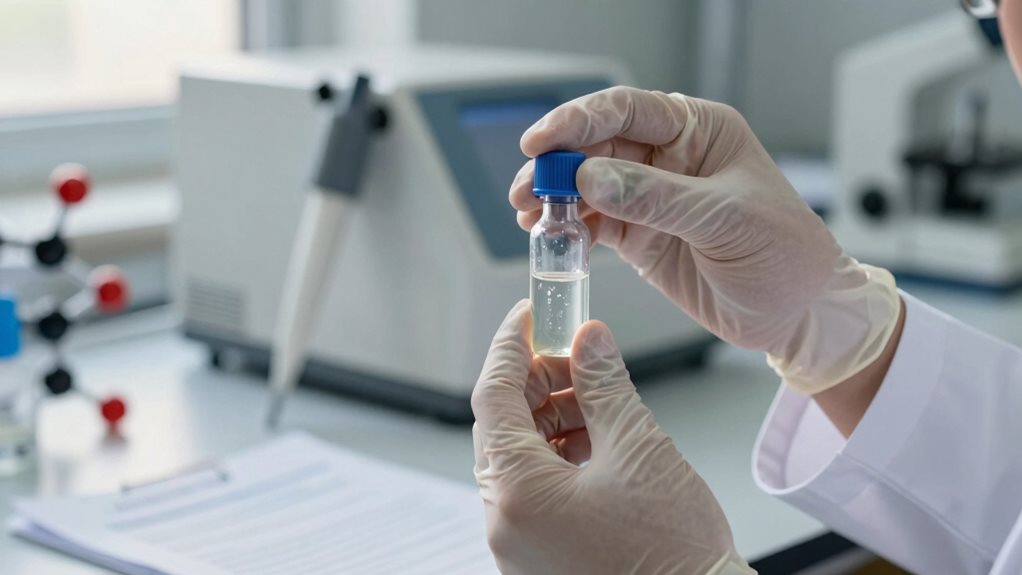
How do your cells know when it’s time to repair damaged tissue? Recovery peptides—short chains of 2 to 100 amino acids—act as precise signaling messengers, instructing your cells to activate natural repair pathways.
From studies in longevity research, these molecules can influence tissue repair processes by engaging specific receptors and modulating cellular responses at the site of injury. They may promote targeted healing by coordinating angiogenesis, modulating inflammatory signals, and guiding regeneration without broad systemic effects.
Recovery peptides—short chains of 2 to 100 amino acids—act as precise signaling messengers, instructing your cells to activate natural repair pathways receptor-targeted signaling to initiate and fine-tune tissue restoration.
Oral vs. Injectable: The Key Difference Most People Miss
When you’re weighing your options between oral and injectable recovery peptides, you’re really deciding between two fundamentally different pathways that determine where, how, and how effectively these signaling molecules reach your tissues. Injectable forms bypass digestion entirely, delivering compounds directly into circulation for systemic exposure, while oral peptides face enzymatic breakdown that typically limits them to local gut effects unless specifically engineered otherwise. Additionally, formulation and delivery science play a crucial role in how efficiently peptides can reach target tissues, influencing both efficacy and safety. Oral bioavailability remains a central challenge in peptide therapeutics, shaping choices between the two routes.
Collagen Peptides: The Strongest Human Evidence for Recovery
You’ll want to understand how collagen peptides work best when combined with your training routine, since research shows resistance exercise creates the mechanical signals that let these peptides actually rebuild your connective tissue rather than simply passing through your system. Getting the dose right matters significantly, with studies pointing toward 15 grams daily as the threshold where measurable improvements in joint comfort, tendon recovery, and muscle soreness begin to appear. What many overlook entirely is that molecular weight determines whether these peptides reach your target tissues intact, meaning hydrolyzed forms with specific peptide sizes—typically between 3,000 and 5,000 Daltons—deliver the bioavailable building blocks your body can actually use for repair. Evidence-based dosing is essential for aligning training adaptations with supplement timing and ensuring practical recovery benefits.
Training Synergy Effects
Among the various recovery peptides studied in human trials, collagen peptides stand out as having the most durable and consistent evidence base when they’re paired with regular training.
You’ll see the clearest benefits when you combine supplementation with concurrent or resistance training, where studies show improved recovery from muscle damage, reduced soreness, and better reactive strength.
The effects don’t appear as strongly without exercise, so timing your intake around workouts maximizes results.
Optimal Dosing Strategies
How much collagen peptide supplementation actually delivers results, and when should you take it for maximum effect?
Research consistently supports 10–15 grams daily, with 15 grams emerging as the most reliable “sweet spot” for joint and tendon recovery.
You’ll want to take this dose 30–60 minutes before exercise, pairing it with 50–100 milligrams of vitamin C to support synthesis.
Daily consistency matters: plan for at least eight weeks before expecting meaningful benefits, as connective tissue adapts slowly to mechanical loading and nutritional support.
Molecular Weight Matters
What separates a collagen supplement that actually reaches your tissues from one that largely passes through unutilized? Molecular weight is the critical factor you’re evaluating. Lower-molecular-weight peptides, particularly those in the 2,000–3,500 Da range, demonstrate superior bioavailability because they pass through intestinal membranes with less steric hindrance than larger 5,000 Da fractions.
You’ll find many commercial products cluster near 1,000 Da, with some formulations reduced below 500 Da for enhanced absorption.
This size-dependent permeability directly influences whether collagen peptides reach circulation intact and become available for tissue incorporation, rather than being digested into generic amino acids without targeted bioactivity.
How Much Collagen Should You Take for Muscle and Tissue Repair?
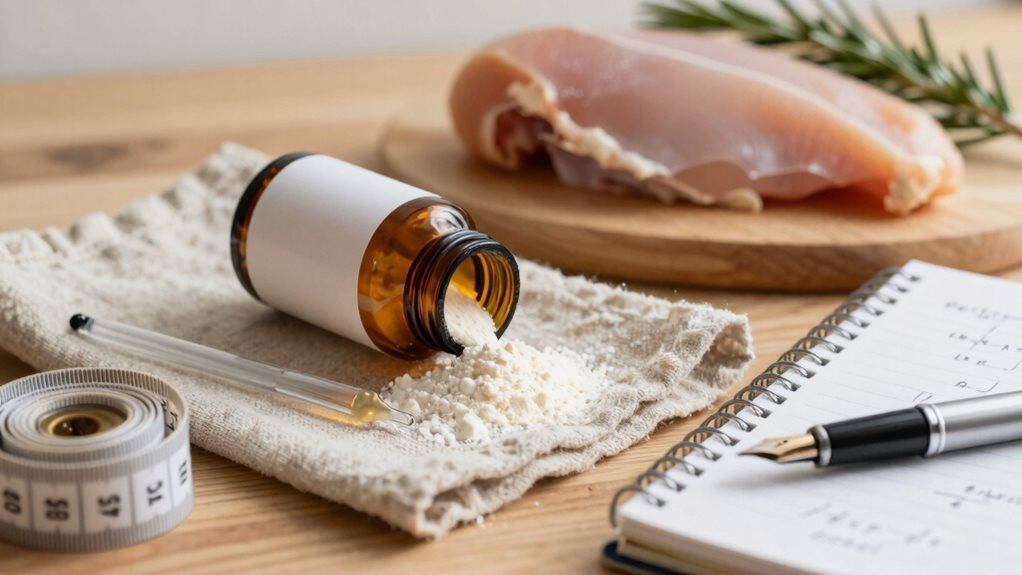
When you’re trying to rebuild muscle after intense training or support your body’s natural tissue repair processes, you can’t just guess at your collagen dosage and hope for the best. You’ll want 10–15 grams daily for muscle recovery, especially if you’re resistance training or managing sarcopenia. For joint and tendon repair, 10 grams of hydrolyzed collagen works well, though tendinopathy may respond to 5 grams with strength training. Take it one hour before or after workouts, and pair with 50 mg Vitamin C to boost synthesis. Don’t exceed 15 grams without evidence of added benefit, and watch for stomach upset at higher doses. Collagen’s role in supporting connective tissue is linked to its amino acid profile, which can influence collagen synthesis in tissues under mechanical load collagen synthesis and may interact with overall protein intake to optimize recovery.
Which Training Maximizes Collagen Peptide Benefits?
To get the most from your collagen peptide supplementation, you’ll want to align your training approach with the protocols that research has shown to enhance uptake and adaptation.
This means considering how concurrent training protocols, which blend resistance and endurance work, may support recovery differently than resistance training alone, while also paying attention to resistance load progression since heavier lifting appears to trigger stronger molecular signaling for collagen incorporation.
Finally, you’ll need to factor in molecular weight timing—both the size of the peptides you’re consuming and when you take them relative to exercise—since these variables influence how effectively your muscles and connective tissues can utilize the supplement.
Incorporating sleep optimization strategies can further support peptide efficacy by promoting recovery processes that enhance tissue remodeling and adaptation. Sleep optimization can help synchronize peptide uptake with the body’s natural recovery rhythms, potentially improving overall results.
Concurrent Training Protocol
The concurrent training protocol—combining resistance and endurance exercises within the same regimen—offers a uniquely effective framework for maximizing collagen peptide benefits, particularly when you’re seeking improvements across multiple performance domains rather than specializing in a single discipline. You’ll experience 15% greater endurance performance, elevated lactate thresholds, and reduced cardiovascular strain at high intensities when pairing 15g daily collagen peptides with concurrent training for at least eight weeks.
Your fat-free mass increases measurably, maximal strength improves, and tendon morphology strengthens through consistent application, though three months of supplementation proves optimal for structural connective tissue adaptations.
Resistance Load Progression
How should you structure your resistance training to extract the maximum benefit from collagen peptide supplementation? You’ll want to prioritize high mechanical tension through progressive overload, since research shows collagen peptides amplify anabolic signaling—specifically PI3K-Akt and MAPK pathways—when paired with challenging resistance work.
Systematically increase loads over time rather than maintaining steady intensity, as this drives superior muscle and tendon adaptations, including an 11% increase in tendon cross-sectional area versus 4.7% with placebo.
Molecular Weight Timing
When precisely should you take collagen peptides to maximize their structural benefits—morning, pre-workout, or evening? You should consume 15 grams on an empty stomach 30–60 minutes before training, as blood flow to tendons peaks during exercise, delivering Pro-Hyp when your tissues need it most.
Morning timing works well, but pre-workout ingestion targets connective tissue more effectively than evening recovery doses.
Who Should Choose Oral Collagen Over Experimental Peptides?
Not everyone pursuing skin or joint support needs to venture into experimental territory, and you’ll find that oral collagen offers a well-mapped path for several distinct groups of users. If you’re an older adult with dry, thinning skin, or you want modest, non-invasive improvements backed by systematic reviews, oral collagen fits your needs. In addition, some users may benefit from collagen’s established human trial evidence that supports tolerability and safety at common doses. Know-how on peptides
BPC-157: What Animal Studies Actually Show?
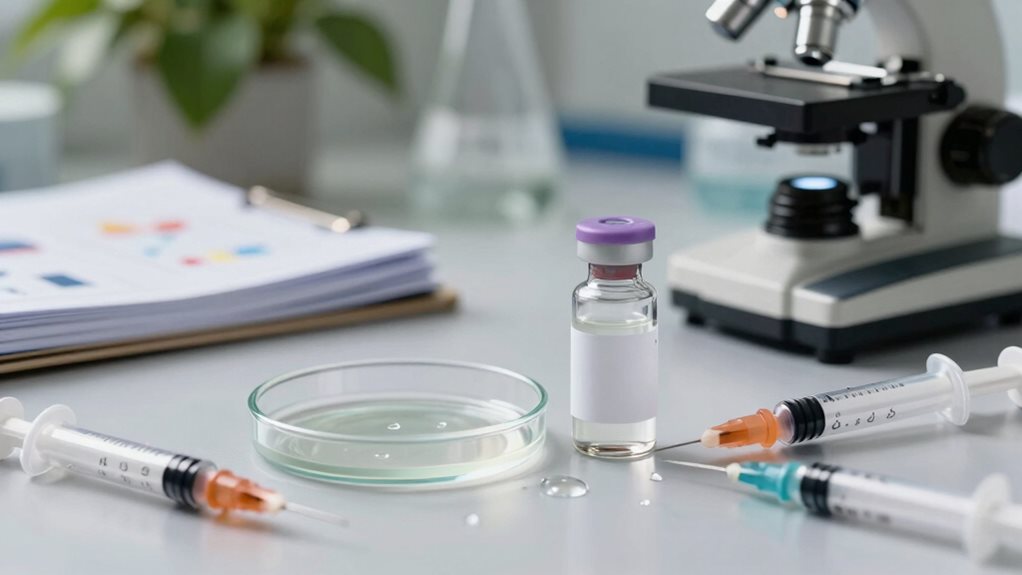
If you’re weighing options beyond familiar supplements like oral collagen, you might encounter BPC-157, a synthetic pentadecapeptide originally pulled from human gastric juice that’s gained attention in research circles for its repair-focused properties.
Animal studies from 1993 to 2024 show it improved healing in muscle, tendon, ligament, bone, nerve, gut, and skin through VEGF-driven angiogenesis and reduced oxidative stress. However, these 35 preclinical rodent studies and one uncontrolled human review mean you’re looking at animal physiology, not confirmed human efficacy, so manage expectations accordingly angiogenesis mechanism.
Why BPC-157 Hype Exceeds Human Data
You’ve likely encountered bold claims about BPC-157’s ability to heal tendons, repair gut damage, or accelerate recovery, yet when you look for human studies supporting these promises, you’ll find a striking disconnect: nearly all published research comes from rodents, not people. While animal data can hint at biological mechanisms, you should recognize that rats and mice metabolize substances differently, experience injuries on vastly different scales, and can’t report subjective improvements—limitations that make direct translation to human outcomes unreliable. Before you consider any peptide for personal use, you’ll want to understand why the gap between laboratory excitement and clinical proof matters so much for your safety and decision-making.
Preclinical Promise vs Proof
Where does the real evidence for BPC-157 stand when you strip away the marketing claims and social media testimonials? You’re looking at a compound with impressive animal studies—accelerated tendon healing, gut protection, and blood vessel growth—but basically no confirmed human benefits.
The mechanism seems plausible, yet that plausibility hasn’t translated into validated clinical outcomes you can trust for your own recovery decisions.
Rodent Studies Dominance
How did a compound with virtually no human clinical validation become so widely discussed in recovery circles? You’re looking at a body of evidence built almost entirely on rodents—over 210 animal studies spanning three decades, with just one human survey and a handful of tiny pilot trials totaling thirty participants. The striking rat data on tendon healing, gut repair, and angiogenesis has never translated into controlled human trials, leaving you with preclinical promise but no clinical proof.
Human Trial Gaps
Although the internet overflows with testimonials and before-and-after stories, you’re actually standing on remarkably thin scientific ground when it comes to BPC-157’s effects in humans. Over 500 animal studies exist, yet fewer than 30 people appear across all published human trials, none randomized or controlled. No Phase 2 or 3 data exists, and regulatory agencies worldwide haven’t approved therapeutic use.
TB-500: Another Preclinical Favorite With Limited Human Proof
TB-500 is used to study actin dynamics and tissue repair in controlled settings actin dynamics.
TB-500 vs. BPC-157: What’s the Actual Difference?
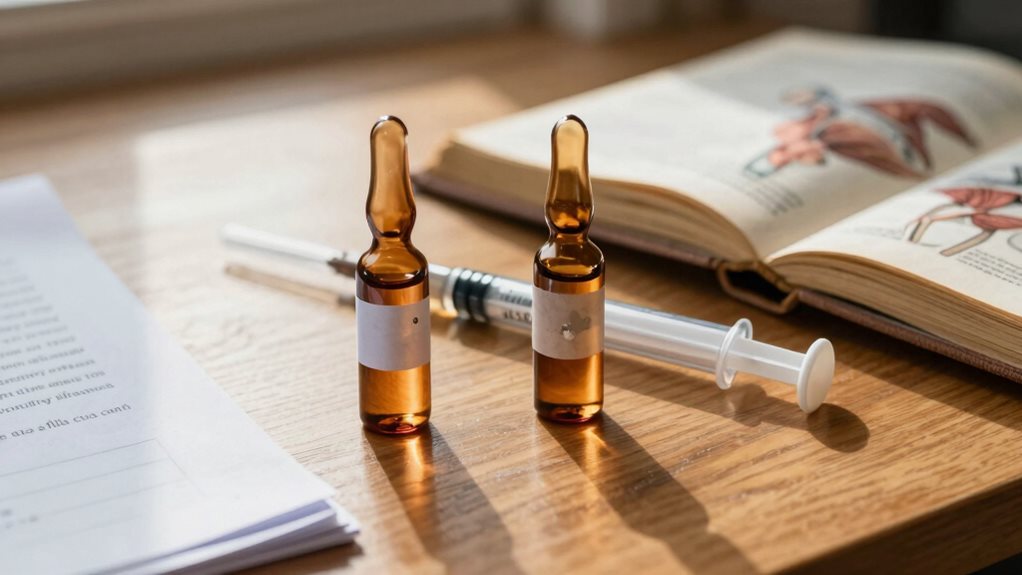
When you’re weighing TB-500 against BPC-157, you’ll want to focus on three key distinctions: how each peptide actually works at the cellular level, how much (or how little) human evidence exists to support their use, and which scenarios favor one over the other in practical research planning.
BPC-157 tends to center on localized vascular support and growth-factor signaling, while TB-500 operates through broader cytoskeletal and cell-migration mechanisms—yet both share a critical limitation, namely that robust human clinical trials remain scarce for either compound.
Understanding these differences helps you make more informed decisions about which peptide aligns with your specific recovery context, whether that’s a targeted tendon issue or a more systemic tissue-repair goal. FDA approval status
Mechanisms of Action
Three distinct molecular pathways separate TB-500 and BPC-157, and understanding these differences will help you grasp why researchers often pair them rather than treat them as interchangeable options.
TB-500 binds G-actin inside your cells, shifting the cytoskeletal balance to support migration and tissue remodeling through actin dynamics.
BPC-157 works at the cell surface, activating FAK and eNOS pathways to drive vascular repair and endothelial signaling.
You’ll find TB-500 governs structural mechanics while BPC-157 orchestrates perfusion and barrier function, giving you complementary rather than overlapping mechanisms when combined in research settings.
Evidence Quality Gap
How do you separate promising science from proven medicine when both peptides lack the clinical trial data you’d expect for standard treatments? You’re looking at TB-500, which has completed Phase 1 and 2 human trials showing safety and symptom improvement, versus BPC-157, where no large-scale human studies exist—only rodent and cell culture evidence. This disparity matters because preclinical data, while extensive, doesn’t reliably predict human outcomes. You’re navigating a landscape where theoretical mechanisms for tissue repair, angiogenesis, and cell migration remain largely unvalidated in people, creating genuine uncertainty about efficacy, optimal dosing, and long-term safety for both compounds.
Practical Use Considerations
Given the uncertainty surrounding clinical validation, you’re left weighing practical factors that might guide your choices between these compounds, particularly how they’re actually used rather than how they’re theoretically supposed to work.
You’ll notice BPC-157 gravitates toward localized injuries—tendons, ligaments, gut tissue—while TB-500 suits broader, multi-site recovery.
Dosing differs too: BPC-157 typically runs 250–500 mcg daily, TB-500 2–5 mg twice weekly.
Response timing varies by source, so patience matters.
GHK-Cu and Other Recovery Peptides for Collagen Support
When you’re seeking to support collagen repair after injury, surgery, or the natural decline that accompanies aging, you’ll encounter several peptides marketed for tissue recovery, yet not all of them target the extracellular matrix with equal precision.
GHK-Cu stands out as the most research-backed option, stimulating collagen, elastin, and glycosaminoglycan synthesis in dermal fibroblasts through its copper-binding mechanism.
Evidence supports improved wound healing, skin firmness, and elasticity, though most data comes from cell and animal studies rather than large human trials.
Other recovery peptides may aid tissue repair generally, but they lack GHK-Cu’s specific, documented focus on matrix remodeling and collagen production extracellular matrix targeting.
Which Peptides Target Bone, Tendon, and Ligament Recovery?
Where exactly should you turn when injury or overuse has compromised your bone, tendon, or ligament integrity? You’ll find BPC-157 dominates the evidence, showing promise across all three tissues through angiogenesis and collagen remodeling, though human trials remain scarce.
For bone specifically, W9 and OP3-4 offer early RANKL-targeting potential, while TB-500 pairs with BPC-157 for soft-tissue combinations.
You should recognize that tendon and ligament recovery rely heavily on preclinical models, meaning clinical certainty eludes you still.
PSP 29-mer emerges for tendon stem-cell regulation, yet no peptide carries robust human confirmation.
You must weigh mechanistic plausibility against evidence gaps carefully.
Do Recovery Peptides Actually Reduce Exercise Inflammation?
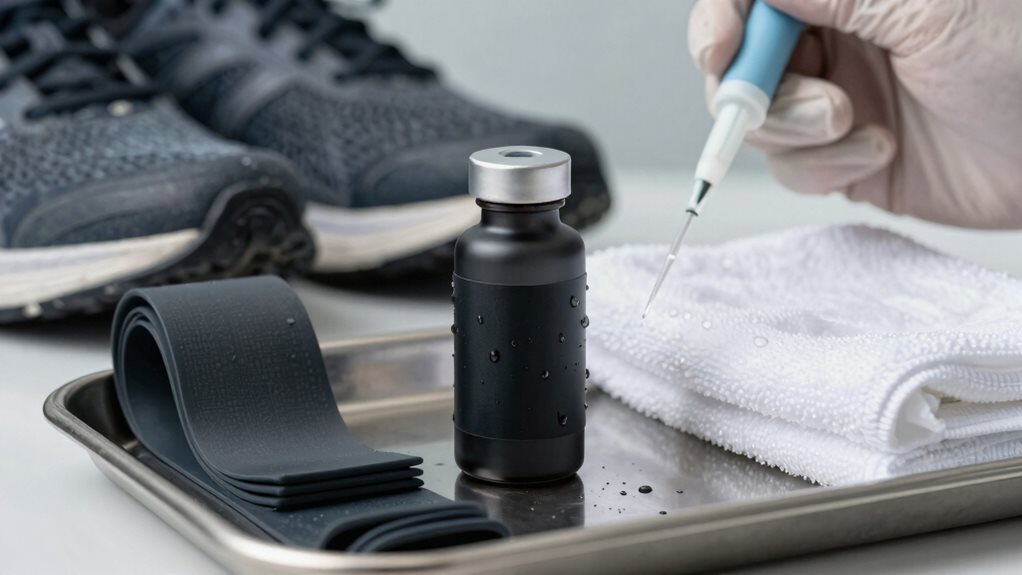
How exactly should you interpret the growing claims that recovery peptides can tame the inflammation following intense training? You’ll find the strongest human evidence for collagen peptides, which at 15 g/day may reduce muscle stress markers like creatine kinase and myoglobin after damaging exercise. However, direct anti-inflammatory effects remain inconsistent—some trials show lower IL-6 or TNF-α, while others reveal no biomarker change despite reduced soreness.
This distinction matters: you can expect modest recovery support and less discomfort, but you shouldn’t view these peptides as proven anti-inflammatory agents comparable to drugs. For marketed injectable “recovery peptides,” human data is substantially weaker, leaving collagen supplementation as the more defensible, evidence-based choice for exercise-related inflammation concerns.
How to Judge Recovery Peptide Study Quality
Why should you scrutinize recovery peptide studies more carefully than typical supplement research? Because no recovery peptide has completed phase III human trials for musculoskeletal repair, leaving you with predominantly low-quality evidence per GRADE standards. You must prioritize systematic reviews, demand objective measures like imaging or validated scales, and dismiss anecdotal photos, which carry high bias potential and lack scientific rigor.
Safety Risks of Gray-Market Injectable Peptides
Even the most promising recovery peptide data becomes irrelevant if you’re injecting an unknown substance from an unregulated source. You’re facing bacterial endotoxins in roughly 8% of samples, while 60% may lack the intended peptide entirely.
Between 40%–75% fail basic safety standards, and some contain merely 40% of labeled doses. You risk sepsis, septic shock, immune reactions, and permanent tissue damage from impurities, incorrect sequences, or your own non-sterile technique.
Red Flags: Spotting Overhyped Recovery Peptide Claims
Wherever you encounter promises of rapid healing or near-miraculous recovery, you’ll need to apply careful scrutiny, because the gap between enthusiastic marketing and verified science is often vast when it comes to peptides. You should distrust “miracle” language, celebrity endorsements, and before-and-after stories, as these often signal weak evidence. Watch for small studies, missing randomization, vague purity claims, “research chemical” labels, and kitchen-sink blends, all of which reveal products that lack rigorous human trials, third-party verification, or transparent ingredients, and remember that Health Canada and the FDA have specifically warned against unauthorized peptides like BPC-157 and TB-500 due to scant safety data and banned sports status.
Which Recovery Peptides Are Worth Your Money?
How do you separate promising recovery peptides from overhyped alternatives when the evidence base varies so dramatically across compounds? You’ll want to prioritize compounds with mechanistic clarity and at least some human data, even if limited.
BPC-157 offers the broadest preclinical support for tendon, muscle, and gut recovery, though human trials remain sparse.
Pair it with TB-500 for systemic, multi-site repair when you’re addressing several areas simultaneously.
If skin quality or surgical scar remodeling matters most, GHK-Cu stands out for having actual human clinical evidence behind its collagen-organizing effects.
For sleep-driven systemic recovery rather than localized healing, growth-hormone peptides like Ipamorelin and CJC-1295 support overnight repair environments through IGF-1 signaling.
Consider KPV when inflammation stalls your progress, or MOTS-c if cellular energy depletion limits tissue rebuilding.
Match the peptide to your specific recovery bottleneck, not marketing hype.
Frequently Asked Questions
Can Recovery Peptides Speed up Surgery Recovery Times?
You may see faster recovery with peptides like BPC-157 or TB-500, but strong proof from large human surgical trials is lacking.
Most evidence comes from animal studies and small reports suggesting 25–40% quicker healing through reduced inflammation and better tissue repair.
While the biology looks promising, doctors can’t yet recommend these as standard care, so you should discuss risks and unknowns with your surgeon before considering them.
Do Peptides Work Better for Acute or Chronic Injuries?
Peptides have stronger biological appeal for acute injuries, since early inflammation and tissue repair align with how compounds like BPC-157 work in animal studies, but you won’t find solid human proof for either scenario.
For chronic injuries, the rationale shifts: stalled healing, persistent inflammation, and poor remodeling create a theoretical niche, though evidence remains equally weak.
In practice, neither application has validated clinical trials, so you’re choosing between mechanistic promise and unproven reality.
Are Vegan Collagen Alternatives as Effective?
Vegan collagen alternatives can work just as well as animal-based versions when they’re properly formulated, though they function differently.
You’re not actually consuming collagen; instead, you’re taking plant-derived nutrients—like vitamin C, zinc, silica, and specific amino acids—that support your body’s own collagen production.
Clinical studies show these builders can reduce wrinkles by roughly 27–38%, improve skin elasticity by 5–6%, and increase collagen density over 8–12 weeks, matching or approaching results from marine or bovine collagen supplements.
Effectiveness depends entirely on ingredient quality, dosage, and your consistency, not the “vegan” label itself.
How Long Until Recovery Peptide Results Appear?
You’ll notice initial changes within days to two weeks, particularly improved sleep, energy, and reduced inflammation, while measurable recovery progress typically emerges between two and four weeks.
For visible tissue repair, such as tendon or ligament healing, you’ll generally wait four to eight weeks, with full benefits often requiring eight to sixteen weeks of consistent use.
Your specific timeline depends on the peptide type, your baseline health, and protocol adherence.
Can You Combine Multiple Recovery Peptides Safely?
You can combine recovery peptides safely by following a structured, evidence-based approach that prioritizes your health and minimizes risk. Start with one peptide for 2-4 weeks to establish your individual tolerance, then add a second agent while maintaining your established dose. Limit yourself to two or three peptides maximum, ensuring they target distinct biological pathways—such as pairing BPC-157 for vascularization with TB-500 for muscle repair—rather than competing for the same receptors. Document baseline biomarkers including IGF-1 and liver enzymes before beginning, monitor these markers every 8-12 weeks, and maintain detailed logs of functional improvements alongside any adverse effects. Reconstitute each peptide separately, mix only immediately before injection, and rotate sites consistently. Consult a healthcare professional promptly if your blood work shows significant deviations, as this vigilance protects you while optimizing your recovery outcomes.
And Finally
You’ve now got the tools to navigate recovery peptides with confidence, distinguishing between solid collagen research and speculative injectable claims. Prioritize oral collagen with your training, verify study quality yourself, and steer clear of gray-market risks. Your recovery strategy should rest on evidence, not marketing hype, and this foundation will serve you well as research evolves.
References
- https://pmc.ncbi.nlm.nih.gov/articles/PMC8521576/
- https://peptiderevealed.com/articles/best-peptides-for-injury-recovery.html
- https://purepeptideclinic.com/guides/best-peptides-for-recovery/
- https://www.frontiersin.org/journals/nutrition/articles/10.3389/fnut.2023.1266056/full
- https://formblends.com/articles/peptide-hub/best-best-peptide-for-recovery
- https://www.sportsmed.org/the-boom-of-peptides-in-sports-medicine-do-we-know-anything-more
- https://www.verrotraining.com/blog/peptides-for-recovery-and-performance
- https://www.peptides.org/peptides-for-healing-injury-repair-and-recovery/
- https://www.nyp.org/healthmatters/peptides-promise-health-benefits-but-do-they-actually-work
- https://www.peptidejournal.org/guides/best-peptides-for-nerve-regeneration