Peptides are short amino acid chains that act as precise signaling molecules in your body, binding to receptors to regulate metabolism, tissue repair, and growth hormone pathways without the complex folding required by larger proteins. You’ll match specific peptide types to your goals—BPC-157 for recovery, CJC-1295 with Ipamorelin for muscle growth, or semaglutide with AOD-9604 for fat loss—then start with the lowest effective dose, typically 100–250 mcg, and titrate upward by 15–25% only after holding each dose for 1–2 weeks while tracking symptoms in a written log. Proper handling requires reconstituting with bacteriostatic water, injecting subcutaneously into your abdomen or thigh, and storing reconstituted peptides at 2–8°C protected from light, with unmixed portions kept at -20°C for months-long stability. A six-week single-compound run with baseline blood work and weekly response tracking forms the foundation of safe beginner practice, and the protocols ahead will show you exactly how to implement each step with confidence.
TLDR
- Peptides are short amino acid chains that act as messengers regulating metabolism, tissue repair, and growth hormone pathways.
- Match peptide types to specific goals: CJC-1295 with Ipamorelin for muscle gain, semaglutide with AOD-9604 for fat loss, and BPC-157 for recovery.
- Start with the lowest effective dose, hold for 1–2 weeks, and increase by only 15–25% based on personal response and symptom tracking.
- Reconstitute with bacteriostatic water, inject subcutaneously in abdomen or thigh, and refrigerate reconstituted peptides at 2–8°C away from light.
- Beginners should use single compounds for six-week cycles with baseline blood work and weekly response tracking before any adjustments.
What Are Peptides and How Do They Work in Your Body?
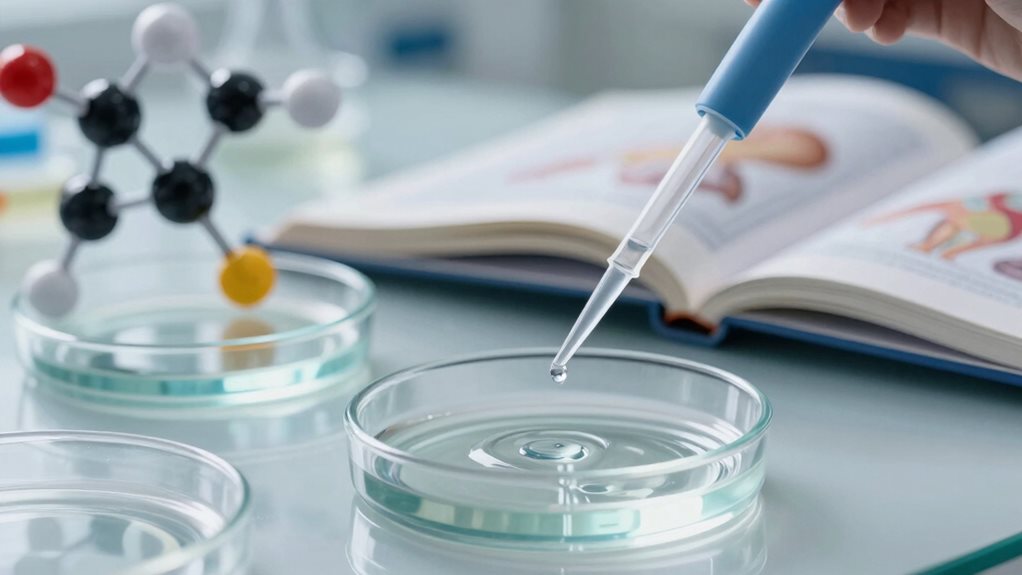
Why should you care about peptides? These short chains of amino acids—typically two to fifty units long—serve as essential messengers throughout your body. When peptides bind to specific cell receptors, they trigger responses that regulate your digestion, metabolism, appetite, and tissue repair. Unlike full proteins, peptides remain small enough to signal precisely without complex folding, making them efficient, targeted communicators in your physiology. Peptides also influence growth hormone pathways, including signaling dynamics that can affect how your body builds muscle, burns fat, and maintains overall metabolic balance growth hormone pathways.
Match Your Goal to the Right Type of Peptide
How do you cut through the noise and find peptides that actually align with what you’re trying to achieve? Start with one primary goal—muscle gain, fat loss, cutting, or recovery—and match the mechanism. For hypertrophy, growth-hormone secretagogues like CJC-1295 with Ipamorelin stimulate natural release patterns. For fat loss, compounds such as semaglutide paired with AOD-9604 target metabolic pathways. Cutting stacks combine appetite control with lean-mass preservation, while recovery-focused options like BPC-157 emphasize tissue repair. Evidence varies substantially across goals, so prioritize understanding each peptide’s specific action rather than expecting broad, steroid-like effects.
Start Low and Titrate: Finding Your Minimum Effective Dose
Where exactly should you begin when every protocol seems to suggest a different starting point? Start with the lowest effective dose and increase only if needed, since peptide response varies substantially between individuals and more isn’t automatically better. Hold each dose for 1–2 weeks minimum before judging its effects, because short observation windows make it difficult to distinguish delayed onset from true lack of response. When you do increase, use small upward adjustments of 15–25% rather than large jumps, which helps preserve tolerability and prevents overshooting your minimum effective dose. Titrate based on your personal response and side effects, not a preset maximum, and track symptoms carefully in a written log to identify the most sustainable dose for your goals. Always consider gradual dose titration and hydration as part of your plan to manage common GI side effects incretin pathways and adjust as needed based on how you respond.
How to Mix and Inject Peptides Safely at Home
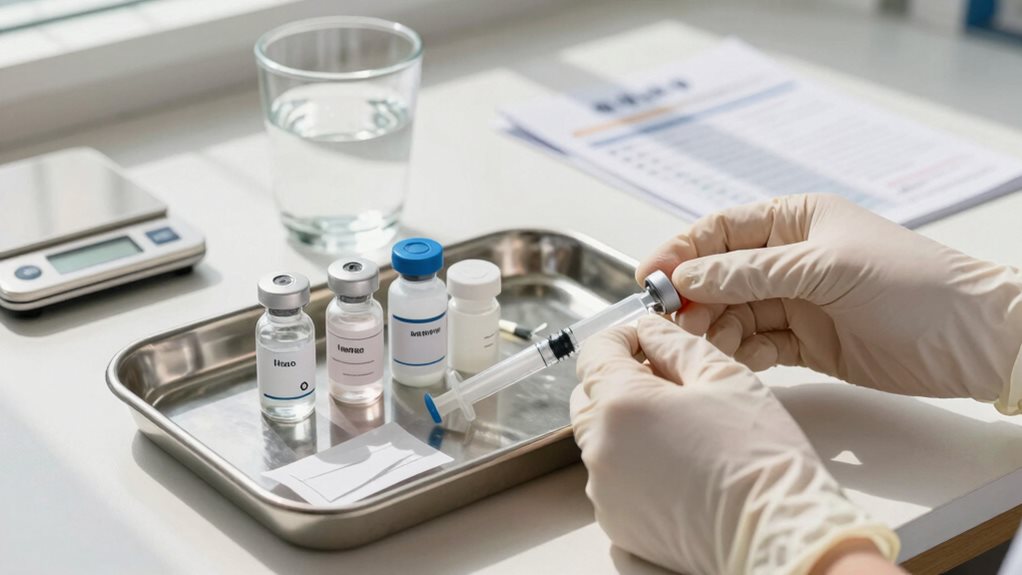
Begin with meticulous hand hygiene and a sanitized work surface, then reconstitute your peptide using bacteriostatic water, injecting slowly and swirling gently—never shaking—until the solution clarifies completely.
Draw your measured dose with a fresh syringe, eliminating air bubbles before subcutaneous injection into clean, pinched skin at common sites like your abdomen or thigh, then dispose of all sharps properly.
Safety and efficacy considerations from the triple-hormone mechanism indicate that closely monitoring for gastrointestinal side effects and heart rate changes is important during dose adjustments.
How to Store Peptides and Stick to a Daily Schedule
Once you’ve mixed your peptide, you’ll need to keep it refrigerated at 2–8°C and protected from light, typically by storing the vial inside its original box or wrapped in aluminum foil to block photodegradation. While unmixed peptides can often stay stable for months in a sealed, dry container at -20°C or even colder, reconstituted solutions are far more vulnerable and should generally be used within days to a few weeks, with some sources suggesting 28 days as a practical upper limit for refrigerated storage.
To protect your supply from the damage caused by repeated freezing and thawing, which accelerates chemical breakdown, you’ll want to divide reconstituted peptides into small aliquots before freezing if long-term storage becomes necessary, then thaw only what you need for each dosing period and return the rest to stable conditions immediately.
Refrigeration Best Practices
How do you keep your peptides potent from the first dose to the last? Store your working vial in the refrigerator’s main compartment, avoiding the door where temperatures fluctuate and the back wall where freezing may occur. Keep it tightly sealed, minimize room-temperature exposure, and return it promptly after each use to maintain stable 2–8°C conditions throughout your daily schedule.
Daily Timing Strategies
You’ve got your refrigerator set up properly, but now you need a routine that keeps your peptides stable while fitting into your daily life. Start by aliquoting your reconstituted peptide into single-use portions, which you’ll freeze at -20°C, ensuring you thaw only what you’ll use that day without repeated temperature swings. Store your working aliquot at 2–8°C, returning it promptly after each use, while keeping the container sealed and protected from light to minimize degradation from moisture, air exposure, and photodegradation throughout your schedule.
What Peptide Protocols Actually Cost: A Beginner’s Budget
Before you commit to any peptide regimen, you’ll want to understand what you’re actually signing up for financially, since monthly costs can swing anywhere from roughly $150 for basic single-peptide telehealth protocols to well over $1,000 for intensive, clinic-supervised stacks with frequent monitoring and premium compounds.
Your total spend depends on several interconnected factors: the specific peptides you choose, whether you source through budget telehealth services or specialized clinics, how often you need labs and follow-ups, and whether you’re running a short therapeutic cycle or a longer-term protocol.
Fortunately, you can take concrete steps to control these expenses, and the next sections will map out realistic monthly ranges across different tiers while showing you where to cut costs without sacrificing safety or oversight. Clinical evidence
Monthly Expense Ranges
When you’re first exploring peptide therapy, understanding what you’ll actually spend each month can feel like navigating a maze of conflicting numbers, but most beginners find their footing somewhere between $100 and $300 monthly for foundational protocols, while those seeking more comprehensive or specialized approaches should prepare for anywhere from $500 to over $1,000 depending on their specific goals and the complexity of their regimen.
Cost-Saving Strategies
How can you make peptide therapy work financially without sacrificing quality or safety? You can start with single-peptide protocols like sermorelin ($40–$90/month) or BPC-157 ($80–$150/month) through compounding pharmacies rather than branded options. You should compare telehealth providers, avoid unnecessary multi-peptide stacks, and budget for labs every 3–6 months rather than monthly. Building in a 20–30% cushion for dose adjustments prevents surprises.
Are Peptides Safe and Legal? What the Research Actually Shows
Why do so many wellness enthusiasts welcome peptides while medical authorities urge restraint? You’re seeing a gap between promising animal studies and limited human evidence. Most safety data comes from rats, not sturdy clinical trials. Side effects—headaches, fatigue, injection reactions—are documented, and gray-market products risk contamination, mislabeling, even endotoxins. Legality varies: some peptides lack FDA approval, while others require proper prescriptions. Caution matters. Regulatory status
Two Beginner-Tested 6-Week Peptide Protocols
Two carefully structured protocols have emerged as practical entry points for beginners who want to investigate peptide use without overwhelming complexity or unnecessary risk.
You’ll start with BPC-157 at 250 mcg daily for tissue recovery, or a GH secretagogue at 100 mcg before bed for sleep support. Both run six weeks, include baseline blood work, and demand consistent timing, single-compound focus, and weekly response tracking before any adjustment. BDNF upregulation neuroplasticity may underlie some cognitive and mood benefits observed with peptide use.
And Finally
You’ve now learned the fundamentals of peptide use, from selecting compounds that match your goals to preparing, dosing, and storing them correctly. While research continues to evolve, approaching peptides with patience, proper technique, and realistic expectations positions you for safer experimentation. Start conservatively, document your response, and prioritize sourcing quality materials. Your informed, methodical approach matters more than any single protocol, and consistency will ultimately determine whether these tools serve your long-term objectives.
References
- https://www.youtube.com/watch?v=0i6WRorfN5k
- https://www.scribd.com/document/979359411/The-Official-Complete-Beginner-s-Guide-to-Peptides-REAL-PEPTIDES
- https://www.youtube.com/watch?v=0dEulbqI4_k
- https://www.youtube.com/watch?v=fVpBKJzXdVM
- https://topdoctormagazine.com/wellness/understanding-peptides-a-comprehensive-guide-for-beginners-part-1/
- https://www.youtube.com/watch?v=BHzo5A9tI08
- https://www.viverelife.co.uk/blog/peptides-beginners-guide
- https://extension.health/the-complete-peptide-guide-reconstitution-injection-storage/
- https://what-the-pep.com/start-here
- https://4everyoungantiaging.com/injectables/what-is-peptide-therapy-a-science-backed-guide-for-beginners/