Vasopressin, also known as antidiuretic hormone, plays an essential role in maintaining fluid balance and regulating blood pressure by inducing water reabsorption in kidneys and constricting blood vessels through specific receptor activation, particularly V1 and V2 receptors. It offers benefits in critical conditions like septic shock, diabetes insipidus, and gastrointestinal bleeding but carries risks such as hyponatremia, tissue ischemia, and cardiovascular effects if misused. Ongoing research investigates its receptor-specific therapies and innovative applications, providing understanding into its complex mechanisms—continue investigating for more detailed information on its therapeutic potential and safety considerations.
TLDR
- Vasopressin regulates water reabsorption and vasoconstriction via V2 and V1 receptors, supporting blood pressure and fluid balance.
- It benefits critical conditions like septic shock, diabetes insipidus, and gastrointestinal bleeding through targeted systemic effects.
- Side effects include hyponatremia, ischemia, arrhythmias, and tissue necrosis, requiring careful monitoring and dose management.
- Ongoing research focuses on receptor-specific analogues, peptide interactions, and AI-driven personalized therapy improvements.
- Proper use involves balancing benefits against risks, with contraindications in cases of ischemia or adverse systemic effects.
What Is Vasopressin and How Does It Work in the Body?
Vasopressin, also known as antidiuretic hormone (ADH), plays an essential role in maintaining the body’s fluid balance and blood pressure regulation by acting through a complex network of synthesis, secretion, and receptor interactions.
It’s produced in hypothalamic neurons, stored in the posterior pituitary, and released into the bloodstream in response to high plasma osmolality.
It regulates water reabsorption and vascular tone, and research on its signaling pathways helps explain how the kidneys respond to dehydration through vasopressin receptors.
What Are the Main Medical Uses of Vasopressin?
Because vasopressin plays an essential role in regulating blood pressure and fluid balance, it has several vital medical applications in acute and critical care settings. It’s used to treat septic shock by maintaining blood pressure when fluids and other medications are ineffective, improve urine output in diabetes insipidus, control gastrointestinal bleeding from varices, and support hemostasis during cardiac arrest or severe bleeding episodes. Epitalon and Thymosin Alpha-1 are both studied in longevity research but target different systems. linkable Vasopressin’s effects on vascular tone and water balance are central to its use in shock states and hemostasis, reflecting its broader homeostatic roles in critical care.
How Does Vasopressin Bind to Receptors and Cause Effects?
When vasopressin binds to its receptors, it triggers specific cellular pathways that lead to distinct physiological effects. The primary receptor types are V1 and V2, each located in different tissues and responsible for different responses. The binding process involves vasopressin acting as an endogenous ligand, activating G-protein-coupled receptors that initiate cascades such as phospholipase C activation for V1 and adenylate cyclase stimulation for V2. This results in vasoconstriction or water reabsorption, respectively. Understanding these mechanisms provides perspective into how vasopressin influences blood pressure regulation and fluid balance, guiding effective clinical applications and research. The efficiency and selectivity of receptor activation underlie the targeted effects observed across tissues, highlighting the concept of receptor specificity receptor binding and its role in pharmacodynamics.
Receptor Types and Functions
Receptor binding is a crucial step in how vasopressin exerts its diverse physiological effects, as it initiates specific cellular responses depending on the receptor subtype involved.
V1A receptors on blood vessels cause vasoconstriction through calcium release.
V2 receptors in the kidneys promote water reabsorption via cAMP.
V3 receptors in the pituitary regulate hormone secretion, each pathway customized to specific functions.
Binding Mechanism Details
Vasopressin binds to its receptors through specific molecular interactions that determine both its affinity and selectivity, ultimately triggering its physiological effects.
High-affinity binding involves hydrophilic residues like Gln-108, Lys-128, and Gln-185 in the receptor’s transmembrane domains, which facilitate rapid, pH-insensitive attachment.
This attachment initiates receptor activation and subsequent intracellular signaling pathways essential for vasopressin’s function.
Physiological Effects Triggered
The process by which vasopressin causes its physiological effects involves a series of targeted molecular interactions that initiate signaling pathways within various cell types.
When vasopressin binds to specific receptors, such as V2 or V1a, it activates intracellular messengers like cAMP or IP3.
This activation leads to water reabsorption in kidneys, vasoconstriction in blood vessels, and modulation of hemostasis.
Ultimately, these processes regulate fluid balance, blood pressure, and vascular responses.
How Can Vasopressin Help in Critical Care Settings?

In critical care settings, vasopressin acts as a helpful adjunct to vasopressors, reducing reliance on high-dose norepinephrine and improving blood pressure control.
It benefits septic shock by enhancing renal function, decreasing dialysis needs, and supporting organ perfusion.
Additionally, vasopressin effectively manages vasoplegic shock after cardiac surgery, especially in complex cases with comorbidities, promoting stability and better outcomes.
Thymosin Alpha-1 is one of the peptides studied for immune support, illustrating how peptide-based approaches can influence systemic responses beyond classic vasopressor therapy.
What Are the Common Side Effects and Risks of Vasopressin?
Vasopressin can cause significant cardiovascular risks, such as reduced cardiac output, arrhythmias, and tissue ischemia, especially in patients with pre-existing heart conditions or high doses, which can lead to serious complications.
It may also disturb water and electrolyte balance, resulting in hyponatremia, dehydration, and other metabolic disturbances that require careful monitoring.
Understanding these potential side effects and risks helps guide safe administration and highlights the importance of appropriate dosing and patient assessment.
In addition, weight regain after stopping GLP-1 treatment is a concern that underscores the need for ongoing metabolic monitoring and lifestyle support to sustain any benefits achieved during therapy weight management.
Cardiovascular Risks
Are you aware of the potential cardiovascular risks associated with vasopressin, especially when used in clinical settings? It can cause coronary vasoconstriction, leading to ischemia in the heart and other tissues.
It may decrease cardiac output, resulting in arrhythmias like bradycardia or atrial fibrillation.
High doses or pre-existing heart conditions increase these risks.
Water and Electrolyte Imbalance
Water and electrolyte imbalances are among the most significant risks associated with vasopressin therapy, as this hormone exerts powerful effects on fluid regulation and electrolyte concentrations within the body.
Excessive water reabsorption can cause hyponatremia, water intoxication, and cerebral edema, which may lead to seizures, coma, or death.
Monitoring serum sodium, osmolality, and fluid balance helps prevent these serious complications.
How Does Vasopressin Cause Hyponatremia and Ischemia?
Vasopressin’s dual actions can intersect in the brain, where vasoconstriction may exacerbate regional ischemia while promoting fluid retention that alters plasma osmolality N-Acetyl Semax and its stability profile influence in neurovascular contexts.
What Is the Role of Vasopressin in Brain Function and Behavior?
Vasopressin plays a significant role in brain function and behavior by acting as both a neuromodulator and neurotransmitter within the central nervous system. It influences stress responses, social behaviors, memory, and emotional regulation by binding to specific receptors in key brain regions. In addition, research indicates that vasopressin modulates the hypothalamic-pituitary-adrenal axis and can affect anxiety-related processes through its action in limbic circuits vasopressin receptors in the brain.
How Do You Manage Vasopressin Overdose and Side Effects?
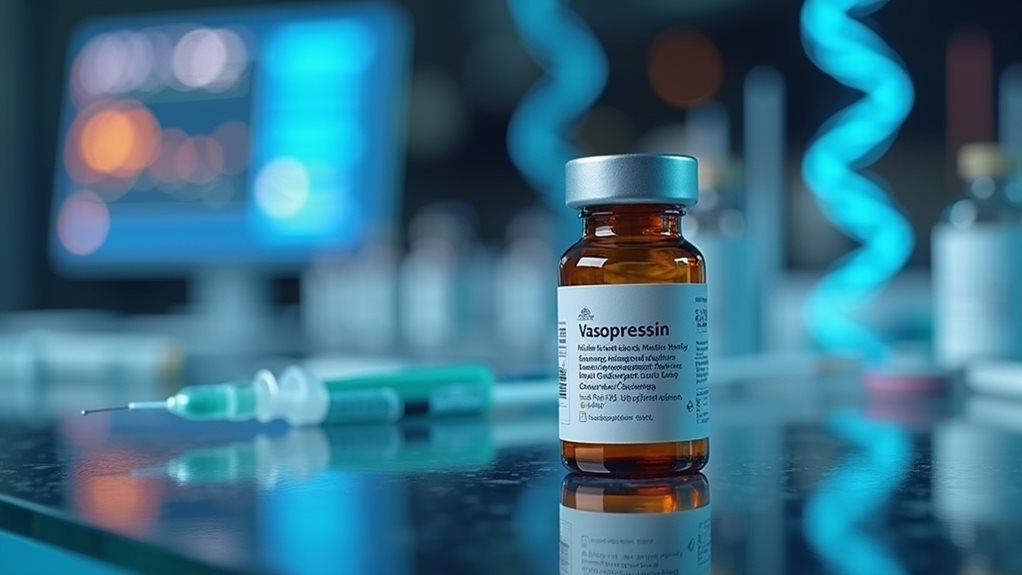
If you suspect a vasopressin overdose or observe adverse effects, it’s vital to recognize symptoms such as sudden increases in blood pressure, signs of tissue ischemia, or neurological changes, and respond promptly.
Immediate discontinuation of the drug is essential to prevent further complications, followed by supportive measures like administering vasodilators or electrolytes as needed.
Correct management involves close monitoring, appropriate intervention to counteract vasoconstriction, and gradual adjustment of therapy to maintain patient safety.
Vasopressin dosing and tissue perfusion must be reassessed regularly to prevent recurrence and ensure safe maintenance therapy critical monitoring.
Recognizing Overdose Symptoms
Recognizing the symptoms of a vasopressin overdose is essential for prompt intervention and preventing serious complications.
You should watch for signs like cold, numb extremities, severe abdominal pain, sudden headaches, chest pain, or irregular heart rhythms, which indicate vasoconstriction or cardiac issues.
Additionally, symptoms like confusion, decreased urine output, skin ischemia, or limb necrosis signal systemic toxicity, requiring immediate assessment.
Implementing Emergency Interventions
Effective management of vasopressin overdose requires prompt recognition of adverse effects and immediate implementation of targeted interventions to prevent severe complications.
You should stop the infusion, administer vasodilators like alpha-blockers, and monitor blood pressure continuously.
Prepare for hypertensive crises, use central access for fluids, and closely observe for ischemia, arrhythmias, or hyponatremia, adjusting treatment as needed.
What Are the Latest Developments and Future Uses of Vasopressin?

Recent advances in the clinical application of vasopressin highlight its progressing role in critical care, particularly in septic shock and cardiac arrest management. Emerging strategies include early, targeted use supported by artificial intelligence, improved resuscitation outcomes with combination therapies, and development of receptor-specific analogues. These innovations aim to optimize dosing, minimize side effects, and expand future therapeutic options. Additionally, researchers are exploring how peptide interactions with prescription drugs may influence vasopressin’s efficacy and safety in polypharmacy contexts, underscoring the need for careful monitoring and personalized dosing strategies. receptor-specific analogues
When Is Vasopressin Therapy Appropriate or Contraindicated?
Vasopressin therapy is most appropriate when used as a targeted intervention in specific clinical scenarios where traditional vasopressors have failed or are insufficient to maintain adequate blood pressure and organ perfusion.
In particular, consider vasopressin as an adjunct when mucosal and splanchnic perfusion is at risk despite conventional therapy synthetic peptides vs natural peptides, and monitor closely for hyponatremia and ischemic complications.
Frequently Asked Questions
Can Vasopressin Be Used to Treat Conditions Beyond Shock and Bleeding?
Yes, you can use vasopressin to treat conditions beyond shock and bleeding, like diabetes insipidus, nocturnal enuresis, and certain neurological disorders, because it influences water balance, social behaviors, and hormone regulation in various bodily systems.
What Are the Long-Term Neurological Effects of Vasopressin Therapy?
You might experience long-term neurological effects from vasopressin therapy, including potential memory improvements, protection against hippocampal injury, but also risks like cognitive impairment from chronic hyponatremia, especially with prolonged use.
How Does Vasopressin Influence Social and Reproductive Behaviors?
You see vasopressin enhances social recognition, promotes pair bonding, and influences aggression, especially in males. It modulates social memory, increases social salience, and supports reproductive behaviors like mate guarding and affiliative interactions.
Are There Genetic Factors That Affect Vasopressin Receptor Response?
Yes, genetic factors like AVPR1b polymorphisms can affect vasopressin receptor responses, influencing behaviors such as aggression, social bonding, and psychiatric risks by altering receptor expression and activity in the brain.
What Are Emerging Therapies Targeting Vasopressin Pathways?
You’ll find emerging therapies targeting vasopressin pathways include receptor antagonists like vaptans, gene-directed treatments, AQP2 trafficking modulators, and CNS-focused AVP modulators. These aim to treat hyponatremia, PKD, and related disorders effectively.
And Finally
Understanding vasopressin’s functions, benefits, and risks enables you to make informed decisions about its use in medical settings. While it plays a critical role in managing conditions like shock and bleeding, careful monitoring is essential to minimize side effects and prevent overdose. By staying aware of its mechanisms and current research developments, you can better appreciate its therapeutic potential and limitations, ensuring safe and effective application under professional guidance.
References
- https://go.drugbank.com/drugs/DB00067
- https://pmc.ncbi.nlm.nih.gov/articles/PMC12015599/
- https://www.ncbi.nlm.nih.gov/books/NBK526069/
- https://pmc.ncbi.nlm.nih.gov/articles/PMC3145307/
- https://litfl.com/vasopressin/
- https://www.mayoclinic.org/drugs-supplements/vasopressin-injection-route/description/drg-20066681
- https://www.accessdata.fda.gov/drugsatfda_docs/label/2020/212593s000lbl.pdf
- https://pubmed.ncbi.nlm.nih.gov/15719846/
- https://www.cancer.gov/publications/dictionaries/cancer-terms/def/vasopressin
- https://www.sciencedirect.com/topics/neuroscience/vasopressin