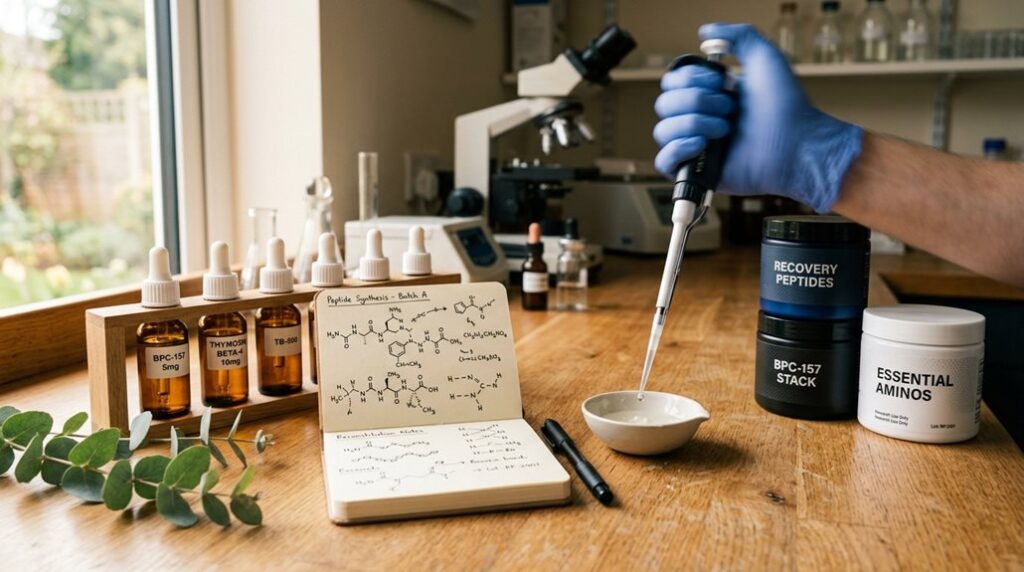
For effective skin and anti-aging benefits, focus on peptides supported by scientific research, such as GHK-Cu, which promotes collagen synthesis, enhances skin firmness, and accelerates wound healing. Other notable peptides include Matrixyl, which stimulates fibroblast activity, and neuromodulators like Argireline, which relax facial muscles to reduce expression lines. Selecting suitable peptides depends on your skin type, and combining these components can optimize results. Continuing to investigate these options can help you develop a targeted skincare approach.
TLDR
- GHK-Cu is the most scientifically supported peptide for boosting collagen, skin firmness, and wound healing.
- Signal peptides like Matrixyl stimulate fibroblasts to produce collagen, elastin, and extracellular matrix components.
- Peptides that relax facial muscles, such as Argireline, help reduce expression lines and wrinkles.
- Combining copper peptides with collagen-boosting peptides enhances skin repair and structural support.
- Choose gentle, barrier-supportive peptides for sensitive or mature skin to minimize irritation and improve anti-aging benefits.
What Are Peptides and How Do They Fight Skin Aging?
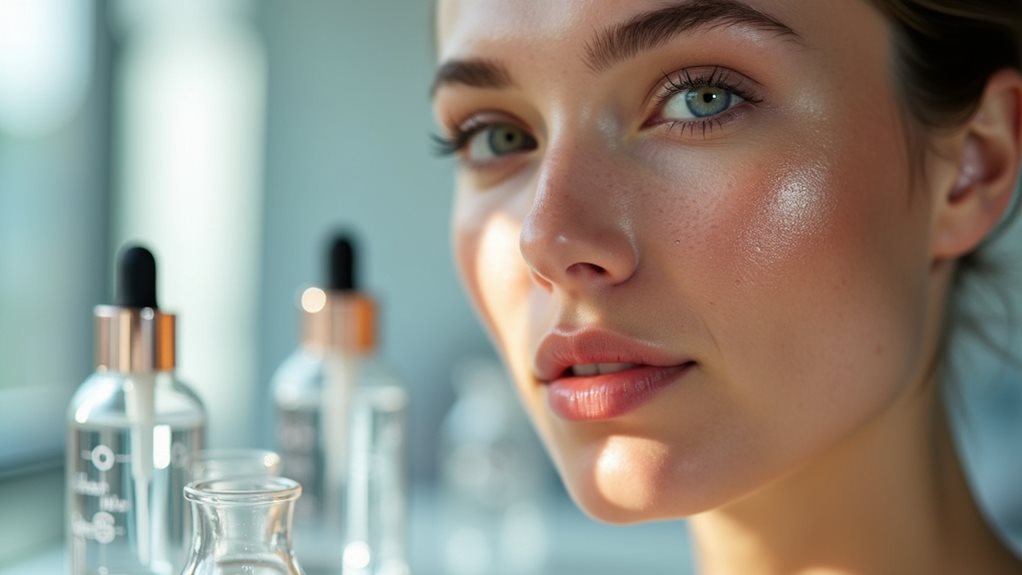
Although peptides are often associated with cosmetic formulations, understanding their fundamental nature explains why they benefit skin aging. These short chains of amino acids act as signaling molecules, guiding cells to repair, produce collagen, and maintain skin structure. Their ability to influence cellular communication makes them precious for supporting skin health, especially as natural production declines with age. N-Acetyl Semax is noted for a different stability profile compared to Semax, which can influence how peptides behave in topical or systemic contexts.
Which Peptides Are Best Backed by Science for Skin Repair?
When considering peptides for skin repair, GHK-Cu stands out as the most scientifically supported, with evidence linking it to collagen production, extracellular matrix support, and enhanced wound healing. This makes it a thorough option for visible skin improvement.
In addition, collagen-boosting peptides like Matrixyl are well-supported for stimulating collagen synthesis and reducing fine lines over time. They provide a gentle yet effective approach for ongoing maintenance.
While other peptides such as Argireline target expression lines with moderate support, it’s essential to understand that the strength of evidence varies. Some blends like SNAP-8 lack solid independent validation, highlighting the importance of choosing products backed by solid clinical research. signal peptide
Evidence for GHK-Cu
What makes GHK-Cu stand out among peptides used for skin repair is the strong scientific evidence supporting its effectiveness in promoting skin regeneration and combating signs of aging.
Human studies show it improves skin density, firmness, and reduces wrinkles, while mechanistic data reveal it enhances collagen synthesis and blood flow.
Although mostly topical, its regenerative and anti-inflammatory properties are well-documented.
Collagen-Boosting Peptides
Among the various peptides promoted for skin repair, collagen-boosting peptides have garnered significant scientific attention due to their targeted mechanisms of action and emerging clinical evidence.
These peptides, such as Matrixyl (Palmitoyl pentapeptide-4), stimulate collagen and extracellular matrix components, helping reduce wrinkles and improve skin firmness.
Their effectiveness is supported by controlled studies, making them some of the most evidence-backed options for skin repair.
Neuromodulators Effectiveness
Scientific research has increasingly focused on the effectiveness of certain peptides as neuromodulators—agents that influence nerve signaling pathways—to improve skin appearance and address signs of aging.
Among these, Argireline and SNAP-8 show moderate evidence for reducing expression lines, primarily softening fluid wrinkles.
Though GHK-Cu and Matrixyl are better supported for overall skin repair and collagen-related improvements.
How Do Peptides Help Reduce Fine Lines and Wrinkles?
Peptides help reduce fine lines and wrinkles primarily by stimulating collagen production, which restores skin firmness and elasticity that decline with age, thereby smoothing the skin’s surface.
Additionally, certain peptides act as neurotransmitter inhibitors, relaxing facial muscles that create expression lines, which can soften expressive wrinkles such as crow’s feet and forehead lines.
In addition to these effects, some peptides influence the release of growth hormones and interact with different receptor families, which may contribute to overall skin structure and renewal receptor differences and ultimately support more resilient skin.
Collagen Production Enhancement
Have you ever wondered how certain skincare ingredients can visibly reduce fine lines and wrinkles? Peptides, especially signal peptides like Matrixyl, act as messengers that stimulate fibroblasts to produce more collagen, elastin, and fibronectin.
This increased production helps restore skin’s structural integrity, resulting in firmer, smoother skin and diminished appearance of wrinkles over time.
Muscle Relaxation Effects
Many topical formulations designed to reduce fine lines and wrinkles work by targeting the muscles responsible for creating expression lines, primarily through mechanisms that inhibit muscle contraction.
Neurotransmitter-inhibitor peptides, like Argireline, decrease muscle movement by blocking nerve signals, leading to partial relaxation of facial muscles. This can soften expressive wrinkles but generally produce milder effects compared to injectable botulinum toxin.
How to Choose the Right Peptides for Sensitive or Mature Skin
Selecting the most suitable peptides for sensitive or mature skin requires a careful understanding of both formulation choices and individual skin needs. Focus on low-irritation, fragrance-free options with minimal ingredients, such as well-tolerated signal peptides like Matrixyl or Argireline. Prioritize barrier-supportive, anti-inflammatory formulas for sensitive skin and firmness-enhancing peptides for mature skin, ensuring proper formulation details. Additionally, consider strategies that researchers use to evaluate peptide safety and activity in lab settings to inform product decisions peptide safety testing.
How to Combine Peptides for Better Anti-Aging Results

Combining different types of peptides in your skincare routine can enhance anti-aging results by targeting multiple pathways involved in skin aging.
Using signal peptides like Matrixyl alongside copper peptides such as GHK-Cu stimulates collagen production and supports structural repair.
Pairing muscle-relaxing peptides with collagen builders addresses both changing wrinkles and structural aging effectively.
Understanding that much of the peptide evidence base comes from animal studies rather than human trials translational gaps and is important when evaluating research claims.
Practical Tips to Incorporate Peptides Into Your Skincare Routine
Applying peptides after cleansing and before heavier creams, layering with hydrating toners or hyaluronic acid, and following with moisturizer; ensure topical integrity to preserve receptor-binding activity for optimal skin repair and collagen support GHK-Cu mechanism.
Frequently Asked Questions
How Long Does It Take to See Results With Peptide Skincare?
You’ll start noticing hydration and texture improvements in 2–4 weeks, but visible anti-aging effects like reduced wrinkles and increased firmness typically appear around 4–8 weeks. Significant results often develop after 8–12 weeks with consistent use.
Are Peptide Products Safe for All Skin Types?
Peptide products are generally safe for all skin types, including sensitive or acne-prone skin. However, start slowly, patch test first, and choose formulations without irritants like fragrances or acids to minimize risks and guarantee compatibility with your skin.
Can Peptides Replace Medical Anti-Aging Treatments?
Peptides can’t fully replace medical anti-aging treatments, but they support skin health by enhancing collagen, hydration, and repair. You can include them in your routine, but for significant changes, consult a professional for advanced procedures.
What Ingredients Enhance the Effectiveness of Peptides?
You can enhance peptide effectiveness with ingredients like hyaluronic acid, niacinamide, vitamin C, retinol, and penetration enhancers like propylene glycol. These support hydration, barrier health, antioxidant protection, and better absorption, maximizing peptides’ skin-repair and anti-aging benefits.
How Often Should I Apply Peptide Serums for Best Results?
You should apply peptide serums once or twice daily, depending on your skin’s tolerance, typically after cleansing. Consistency matters most; use them regularly for 1-3 months to see the best results, especially for anti-aging benefits.
And Finally
Incorporating peptides into your skincare routine can effectively support skin repair, reduce signs of aging, and improve overall skin health when chosen appropriately for your skin type. By understanding the specific peptides and their functions, combining them strategically, and using targeted application methods, you can optimize their benefits. Consistency and informed selection are key to achieving noticeable, long-term improvements, making peptides a useful component of an all-encompassing anti-aging skincare regimen.
Related Research
- Biotinoyl Tripeptide-1: Benefits, Side Effects, Mechanism & Research
- SNAP-8: Benefits, Side Effects, Mechanism & Research