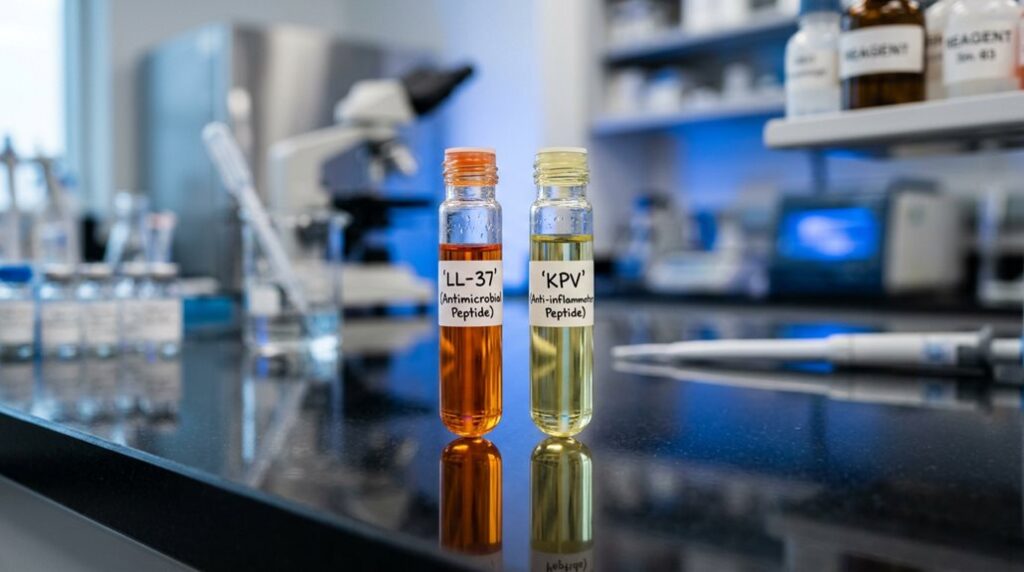
For immune support, peptides like Thymosin Alpha-1, LL-37, and KPV stand out due to their proven roles in modulating immune responses. Thymosin Alpha-1 enhances T-cell function and is supported by extensive clinical research, making it a reliable choice to restore immune balance. LL-37 disrupts microbial membranes and biofilms, providing direct antimicrobial effects, while KPV reduces inflammation during active immune challenges. Understanding how these peptides work can help you choose the most appropriate options for your needs, and exploring their mechanisms further can provide meaningful understanding into optimizing immune health.
TLDR
- Thymosin Alpha-1 (Tα1) is well-supported by clinical trials for enhancing T-cell function and immune modulation.
- LL-37 directly attacks microbes, promotes immune signaling, and reduces biofilm formation, supporting innate immunity.
- VIP helps balance immune responses, suppresses inflammation, and promotes regulatory T-cell activity.
- KPV primarily reduces cytokine-driven inflammation and enhances resistance against infections.
- Combining peptides can target multiple immune pathways but requires professional guidance to ensure safety.
What Are Immune Peptides and How Do They Work?

Although immune peptides are relatively short chains of amino acids, they play a complex and crucial role in supporting your body’s defense mechanisms. They can directly attack microbes, influence immune cell signaling, and regulate inflammation, acting as immunomodulators. Their structural diversity and ability to interact with pathogens and immune receptors make them indispensable components in maintaining immune balance and response. Immune regulation mechanisms play a key role in how these peptides modulate responses across different cell types and contexts.
Why Is Thymosin Alpha-1 Considered the Best Evidence-Based Immune Peptide?
Thymosin alpha-1 (Tα1) stands out as the most well-supported immune peptide due to extensive clinical evidence, including over 30 trials involving more than 11,000 subjects. This robust body of research supports its ability to modulate immune responses, support T-cell function, and treat various conditions like infections and immunodeficiencies, contributing to its reputation for safety and efficacy. clinical evidence supports its status as the most evidence-based choice for immune support. This ensures safety and efficacy.
How Do LL-37 and KPV Differ in Supporting Immune Defense?
LL-37 and KPV play distinct roles in supporting immune defense, primarily differing in their mechanisms of action and target functions.
LL-37 acts directly against microbes, disrupting pathogens’ membranes and promoting immune signaling, making it suitable for infection-related scenarios.
Conversely, KPV primarily suppresses inflammation by reducing cytokines, excelling in managing inflammatory conditions without directly attacking pathogens.
Additionally, LL-37 can enhance chemotaxis and modulate host defense pathways antimicrobial action, contributing to broader antimicrobial resilience.
How Does Thymosin Alpha-1 Help Rebuild Immune Function in Compromised Populations?

Thymosin alpha-1 (Tα1), a peptide composed of 28 amino acids derived from the thymus gland, plays a significant role in restoring immune function in populations experiencing immune suppression or decline.
It promotes T-cell differentiation, enhances cytokine signaling, and stimulates dendritic cells, which support immune activation.
These actions help rebuild immune responses, especially in individuals with compromised immunity due to illness, aging, or medical treatments.
Peptide bioavailability and absorption barriers help explain why some peptides can be effective when taken orally while others require injection, and ongoing research explores strategies to improve oral bioavailability for peptide-based therapies.
What Makes LL-37 Effective Against Infections and Biofilms?
LL-37 is effective against infections and biofilms primarily because of its ability to disrupt microbial membranes through a membrane permeabilization process that creates pores or causes generalized damage, leading to rapid microbial death.
Additionally, it inhibits biofilm formation by preventing bacterial adhesion, degrading the protective extracellular matrix, and weakening established communities, which enhances microbial vulnerability.
Its capacity to recruit immune cells and neutralize bacterial toxins further supports infection control, making it a potent component in immune support strategies.
A key mechanism involves LL-37’s ability to modulate immune signaling, which can enhance coordinated defense responses at sites of infection immune signaling.
Membrane Disruption Mechanism
The effectiveness of certain peptides against bacterial infections and biofilms largely depends on their ability to disrupt microbial membranes through multiple mechanisms. LL-37 binds rapidly to negatively charged membrane components, forming pores or acting like a detergent to destabilize the membrane.
Its charge-driven attraction, combined with pore formation and carpet-like disruption, enables effective membrane permeabilization, leading to bacterial cell death.
Combat Biofilm Formation
Understanding how certain peptides combat biofilm formation reveals a thorough approach that extends beyond simple microbial killing.
LL-37 inhibits biofilms at low concentrations, interferes with quorum sensing—bacterial communication—and reduces surface attachment.
It also enhances motility, disrupting biofilm architecture, and can target both early formation and mature biofilms, making it an all-encompassing defense against persistent infections.
Infection Resistance Boost
Peptides like LL-37 are highly effective in enhancing your body’s resistance to infections because they employ multiple mechanisms that target pathogens directly while simultaneously modulating the immune response.
They disrupt microbial membranes, inactivate toxins, and promote immune functions like phagocytosis and NET formation, which strengthen defenses against bacteria, fungi, viruses, and resistant strains, including biofilm-forming microbes.
When Should You Use KPV to Manage Inflammation?
KPV is most effectively employed during active inflammatory episodes, particularly when symptoms are driven by cytokine activity rather than infections.
In addition, understanding that KPV can modulate specific immune signals may help tailor its use to inflammation-driven tissue injury rather than generalized immune suppression. cytokine activity
How Does BPC-157 Support Gut Health and Boost Immune Response?

BPC-157 plays a notable role in supporting gut health by promoting the repair and maintenance of the gastrointestinal lining, which is essential for overall immune function.
It enhances barrier integrity by increasing tight-junction proteins, reducing permeability, and lowering exposure to harmful microbial products.
Its anti-inflammatory effects help normalize immune responses, thereby supporting gut health and reducing systemic inflammation linked to immune activation.
Additionally, BPC-157 has been associated with promoting mucosal healing and protecting against injury in the gut lining, which supports a balanced immune environment tight-junction integrity.
How Do Thymulin and VIP Help Balance Your Immune System?
Thymulin supports immune balance by promoting the maturation and differentiation of T-cells within the thymus, acting as a regulator of immune development and helping to restore immune homeostasis in cases of dysregulation. VIP, on the other hand, influences immune responses by shifting cytokine patterns toward tolerance, which can reduce excessive inflammation and promote immune regulation. Together, these peptides contribute to a balanced immune system by modulating inflammatory pathways and supporting immune resilience, especially in conditions involving chronic inflammation or immune suppression. Thymic T-cell maturation supports immune balance by promoting the maturation and differentiation of T-cells within the thymus, acting as a regulator of immune development and helping to restore immune homeostasis in cases of dysregulation.
Thymulin’s Thymic Support
The thymus gland plays an essential role in shaping and maintaining a balanced immune system by producing hormones like thymulin, which helps regulate T-cell development and immune signaling pathways.
Thymulin, a zinc-dependent hormone, supports T-cell differentiation, cytokine production, and immune responses, especially during aging or immune deficiencies.
This contribution helps in maintaining overall immune health and resilience.
VIP’s Immune Regulation
Vasoactive intestinal peptide (VIP) functions as a broad immunoregulatory neuropeptide that influences both innate and adaptive immune responses, playing a critical role in maintaining immune balance.
It suppresses inflammatory cytokines, promotes regulatory T cells, and shifts responses toward a balanced, tolerant state.
VIP helps reduce excessive inflammation and supports immune homeostasis, especially in mucosal and gut-associated immunity.
Are Immune Peptides Safe and Effective? What Does the Evidence Say?
Evaluating the safety and effectiveness of immune peptides requires careful consideration, as many marketed products lack comprehensive scientific evidence. While FDA-approved peptides generally have proven safety, unregulated options may pose risks due to limited human data, contamination, or immune reactions. Some peptide effects may take time to become measurable in research settings due to biological processing, study design, and variability between compounds. For example, pharmacokinetics and the specific immune pathways involved can influence how quickly a measured outcome appears, and single-compound findings may not directly translate to broader use. While some show promise in early studies, most claims remain unverified in humans, emphasizing caution and the importance of proper research. Biological processing
Who Should Consider Using Immune Peptides, and When Are They Most Beneficial?
Individuals experiencing vulnerabilities in their immune system, such as recurrent infections or age-related decline, may find immune peptides particularly beneficial when their defenses are compromised or weakened.
Post-viral recovery periods, especially after prolonged illness or immune stress, represent critical windows where immune support can aid in restoring balance.
Additionally, those with chronic immune conditions or persistent inflammation should consider immune peptides as part of a targeted approach to modulate immune function and improve overall resilience.
A HGH Fragment 176-191 mechanism-based approach might inform considerations about how immune peptides can support fat metabolism and systemic balance during immune challenges.
Immune System Vulnerabilities
Understanding who can benefit from immune peptides and when to contemplate their use requires a careful assessment of individual health status and specific vulnerabilities within the immune system.
Older adults experiencing immune decline, those with recurrent infections, and immunocompromised individuals may find peptides especially beneficial, particularly for immune reconstitution.
Conversely, healthy individuals typically don’t require such interventions.
Post-Viral Recovery Needs
Post-viral recovery presents a distinct set of challenges that often extend beyond initial symptom resolution, making targeted immune support essential.
If you experience persistent fatigue, ongoing inflammation, cognitive issues, or slow recovery after respiratory illnesses, immune peptides like thymosin alpha-1 or BPC-157 may help.
They’re most beneficial during early convalescence and when standard recovery measures fall short, under medical supervision.
Chronic Immune Conditions
Chronic immune conditions often involve ongoing immune dysregulation, recurrent infections, or persistent inflammation that can compromise overall health and complicate standard treatment approaches.
You may consider immune peptides, such as thymosin alpha-1 for viral infections or autoimmune support, especially during periods of immune stress or ongoing inflammation.
This is particularly important when longer-term modulation and gradual improvements are essential for effective management.
Can Combining Different Immune Peptides Enhance Support: And Is It Safe?

Combining different immune peptides can potentially enhance immune support by targeting multiple immune mechanisms, but it requires careful evaluation of safety and efficacy.
While some combinations support both innate and adaptive responses, over-stimulation or conflicting actions—such as pairing immune enhancers with immunosuppressants—may cause adverse effects like autoimmune flares.
Always consult healthcare professionals before stacking peptides.
What Are the Future Trends in Peptide-Based Immune Support?
Advancements in peptide technology are shaping the future of immune support, with researchers focusing on innovative approaches to enhance efficacy, safety, and targeted delivery.
These include peptide vaccines with high specificity and minimal adverse reactions, improved delivery systems like nanomaterials to combat enzymatic degradation, and precise immunotherapy methods.
Such developments aim to make peptide-based treatments more effective and accessible for diverse immune-related conditions.
Frequently Asked Questions
Are Immune Peptides Effective for Healthy Adults or Mainly for Immunocompromised Individuals?
Immune peptides aren’t proven effective for healthy adults and mainly have potential in specific immunocompromised cases under medical supervision. For healthy individuals, focus on good sleep, nutrition, exercise, stress management, and routine vaccines instead of unregulated peptides.
How Do Regulatory Approvals Impact the Use of Immune Peptides Worldwide?
Regulatory approvals determine how you can access immune peptides worldwide, affecting their legality, safety, and use. Approved peptides are prescribed and regulated, while unapproved ones may be limited to research, compounding, or banned, depending on your location.
What Are the Potential Risks or Side Effects of Long-Term Immune Peptide Use?
Long-term immune peptide use can cause immune sensitization, allergic reactions, hormonal imbalances, organ stress, and contamination risks. You might experience injection-site issues, hormonal disruptions, or unforeseen systemic effects, especially with unregulated products or insufficient safety data.
Can Immune Peptides Prevent Infections or Primarily Support Recovery?
Immune peptides mainly support recovery and immune function during illness, rather than directly preventing infections. While some, like thymosin alpha-1, have evidence for immune modulation, their primary role isn’t as preventative agents in healthy individuals.
Is There Evidence Supporting Immune Peptides for COVID-19 or Similar Viral Illnesses?
There’s limited clinical evidence supporting immune peptides for COVID-19 or similar viruses. While they show potential in lab studies, no large human trials confirm their effectiveness, so you should view them as promising but unproven options.
And Finally
By understanding the roles and mechanisms of immune peptides like Thymosin Alpha-1, LL-37, and KPV, you can make informed decisions about their use for immune support. These peptides have demonstrated safety and efficacy in strengthening immune function, especially in vulnerable populations. While combining peptides may offer enhanced benefits, consulting with a healthcare professional guarantees safe and appropriate application. Staying informed about emerging research helps you employ peptide therapies effectively, supporting your immune health with evidence-based strategies.
Related Research
- Immune Support Peptides: Research & Comparison Guide
- Immune Support Peptides
- Glutathione: Benefits, Side Effects, Mechanism & Research