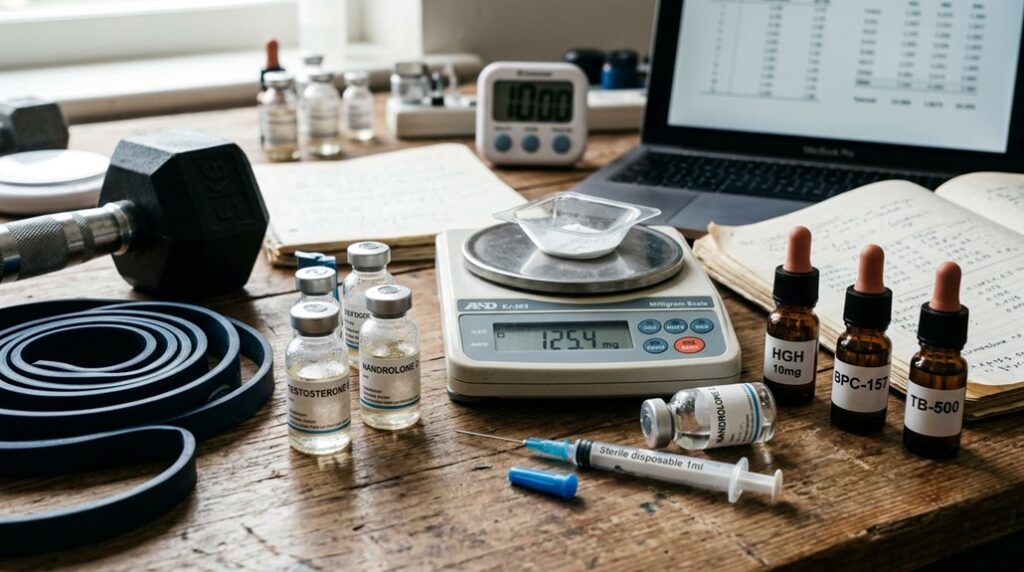
Most peptides begin producing noticeable results within two to twelve weeks, though your individual timeline depends on the specific compound you’re using, your consistency with dosing, and your particular goals—whether that’s faster recovery, improved body composition, or deeper tissue repair. GH secretagogues like ipamorelin often shift your biochemistry earlier, creating subtle changes in sleep and energy within days, while healing peptides such as BPC-157 need steady administration for one to four weeks before true repair becomes evident. Metabolic and immune-related peptides, including LL-37, typically require longer exposure to manifest meaningful outcomes. Your delivery method, dosing schedule, and disciplined adherence all shape how quickly systemic exposure accumulates, since biological signaling builds gradually regardless of urgency. Meaningful body recomposition and durable collagen remodeling generally demand three months or more of sustained use, paired with proper nutrition and resistance training. Continue exploring and you’ll discover how to track your progress through specific markers and optimize your protocol for faster, more reliable results.
TLDR
- Most peptides require 2–12 weeks for meaningful results depending on type and purpose.
- GH secretagogues shift biochemistry earlier, while healing peptides need longer timelines.
- Immediate effects occur within minutes to days via receptor activation and hormone release.
- Early benefits like recovery and sleep improve in 2–6 weeks with consistent dosing.
- Body recomposition and durable changes typically require 3 months or more.
Most Peptides Take 2–12 Weeks: Here’s Why Yours Might Differ

If you’re wondering when you’ll start seeing changes from peptide therapy, the honest answer is that most protocols require anywhere from two to twelve weeks before you notice meaningful results.
Your timeline depends on the peptide type, your health baseline, and your consistency with dosing.
GH secretagogues often show biochemical shifts earlier, while healing or metabolic peptides need longer.
Individual biochemistry and treatment goals create natural variation, so patience and adherence matter more than expecting immediate metamorphosis.
LL-37 and other immune-related peptides can influence inflammatory responses and healing timelines, which means individual outcomes may vary based on immune status and exposure to pathogens. immune function
Same-Day to One Week: Which Peptide Effects Start Immediately
You’ll notice that some peptide effects begin almost immediately, even though most people expect changes to take weeks. When you take certain compounds, receptor activation can trigger measurable responses—such as sharpened focus, appetite suppression, or improved sleep—within minutes to days, depending on which peptide you’re using and what biological system it targets. Ipamorelin, for example, can induce rapid pulsatile GH release via GHS-R1a receptors, contributing to early sleep and energy changes before longer-term body composition effects emerge GHS-R1a activation. Understanding these rapid-onset effects helps you distinguish between early receptor signaling, which happens quickly, and the slower structural changes that develop over time.
Rapid Receptor Signaling
When you administer a peptide that targets rapid receptor signaling pathways, you’re often triggering biological responses within seconds to minutes—not hours or days.
You’ll see peptide binding activate GPCRs, which immediately release hormones like insulin or growth hormone.
Second messengers such as cAMP and calcium flux emerge within minutes, creating measurable changes in secretion, ion flux, or muscle contraction through pre-formed cellular mechanisms.
Appetite and Sleep Shifts
Moving from the molecular speed of receptor signaling to effects you can actually notice, appetite and sleep represent some of the earliest subjective changes peptide users report, though the timelines differ substantially between stimulation and suppression.
You’ll feel ghrelin-based hunger spikes within 20–40 minutes, while GLP-1 appetite reduction starts in days.
Sleep improvements typically emerge over days to one week, not immediately.
Two to Six Weeks: When Recovery and Body Composition Shift
By the time you’ve completed two to six weeks of consistent peptide use, you’ll likely notice that your recovery between workouts has accelerated, your sleep feels more restorative, and your energy levels have stabilized in ways that support both training adherence and daily performance. This period also aligns with emerging evidence that peptides can influence neuroplasticity and mood regulation, potentially supporting calmer stress responses BDNF upregulation and overall cognitive resilience. While these recovery and vitality improvements often become unmistakable during this window, visible changes to your body composition—such as measurable shifts in lean mass or fat distribution—typically remain subtle or still developing, since structural tissue remodeling requires more sustained biological signaling than subjective wellness markers. This period represents a critical transition where your dosing consistency and lifestyle alignment become especially consequential, as the habits you maintain now will largely determine whether the early physiological groundwork translates into the more pronounced physique and metabolic outcomes that tend to consolidate between weeks eight and twelve.
Early Recovery Signs
Although you mightn’t see dramatic changes overnight, the two-to-six week window is where peptide therapy begins revealing its first meaningful signals—subtle shifts in how your body recovers, moves, and responds to stress that build the foundation for longer-term metamorphosis.
You’ll notice reduced soreness, improved workout recovery, and emerging energy clarity as inflammation drops and tissue repair initiates, though visible body composition changes typically lag behind these internal improvements.
Visible Physique Changes
Those early recovery improvements you’ve been tracking—less soreness, steadier energy, faster bounce-back after training—set the stage for what comes next, and around the two-to-six week mark, you’ll start noticing the first outward signs that your body is responding to peptide therapy. You may see subtle hydration and texture improvements in your skin, or a slight smoothness to your complexion, rather than dramatic size changes.
Dosage Timing Matters
When exactly should you take your peptides if you want to maximize the changes you’re starting to notice in weeks two through six? For growth hormone peptides, you’ll want to dose before bed on an empty stomach, since food and carbohydrates blunt the natural nocturnal GH pulse that drives your recovery improvements. Morning fasted dosing works as a practical alternative, though it’s slightly less effective.
For healing peptides like BPC-157, twice daily dosing provides consistent tissue-level exposure, and injecting near the injury site may enhance localized effects. A 5-days-on, 2-days-off schedule sustains therapeutic benefits while reducing overall exposure.
Three to Six Months: Peptide Results That Need the Longest Wait
Why do some of the most revolutionary peptide outcomes demand your patience across a full half-year?
You’ll find that meaningful body recomposition, substantial collagen remodeling, and durable metabolic transformation rarely appear before the three-month mark, even when early signals—improved sleep, reduced appetite, or faster workout recovery—emerge sooner. A growing body of research indicates that consistent, progressive resistance training and proper nutrition remain the foundational drivers, with peptides adding modest, context-dependent support over extended periods mechanistic signaling vs actual growth.
Why BPC-157 Works in Days While CJC-1295 Takes Weeks

Patience serves you well across a full half-year for the deepest peptide conversions, yet not every compound asks you to wait that long. BPC-157 delivers cellular and anti-inflammatory effects within hours, giving you symptom relief in 24–48 hours, though true tissue repair still demands 1–4 weeks. The regulatory and safety context surrounding BPC-157 remains experimental, so practitioners emphasize cautious interpretation of timing and outcomes FDA-approved status.
Dose, Consistency, and Delivery: What Actually Changes Your Timeline
How quickly you experience results from peptide therapy depends less on wishful thinking and more on three controllable factors: how much you take, how reliably you take it, and how it enters your body. Higher, properly prescribed doses can accelerate peptide exposure, though exceeding protocol raises side-effect risk without guaranteeing faster benefits.
Short-acting compounds like Ipamorelin, with its roughly two-hour half-life, demand precise scheduling—often twice daily—to maintain therapeutic levels, while inconsistent timing obscures whether the peptide itself is failing or your adherence is.
Subcutaneous injection dominates clinical timelines because it sustains systemic exposure over weeks, whereas special delivery systems may extend activity to twelve hours. Your protocol length must match your goal: tissue repair typically requires four to eight weeks of steady administration, while hormone-related outcomes often need eight to twelve weeks before fuller effects emerge.
Ultimately, you control your timeline most through disciplined consistency, since biological signaling accumulates gradually regardless of how urgently you seek change.
Delivery methods also shape how quickly systemic exposure builds, with certain delivery systems extending activity and potentially influencing the pace of observable results.
Are Your Peptides Working? How to Track Progress by Goal Type
Once you’ve established your dosing schedule and committed to the consistency that drives peptide therapy forward, you’ll need concrete ways to determine whether those efforts are producing measurable change. Track physical markers like skin hydration, resting heart rate, or joint mobility based on your specific goals, supplementing with blood work for hormonal and metabolic shifts at weeks 4–8. Additionally, consider monitoring cognitive tasks aligned with your aims, such as attention or memory-focused assessments, to capture potential functional improvements alongside physiological markers objective tracking.
And Finally
You now understand that peptide timelines vary significantly based on the specific compound, your individual biology, and how consistently you follow your protocol. While some effects emerge within days, most meaningful changes require weeks or months of dedicated use. Track your progress using objective metrics aligned with your goals, maintain precise dosing schedules, and consult qualified healthcare providers when results deviate from expected timelines. Patience and precision ultimately determine your success.
References
- https://primeivhydration.com/blog/peptide-therapy-results/
- https://www.seekpeptides.com/blog/articles/how-long-do-peptides-take-to-work
- https://balancedbodiesantiaging.com/how-long-does-it-take-for-peptide-therapy-to-work/
- https://www.peptidejournal.org/how-to/peptide-therapy-timeline-when-to-expect-results
- https://www.incarenow.com/how-long-do-peptides-take-to-work/
- https://glamifymedspa.com/how-quickly-does-peptide-therapy-start-working/
- https://oathresearch.com/2025/09/16/how-quickly-do-peptides-start-working-best-epic-results/
- https://peptidespower.com/2025/11/25/how-long-does-it-take-for-peptides-to-work/
- https://www.onlinepeptidedoctor.com/knowledge-base/how-long-do-peptides-take-to-work
- https://antiagingandketamine.com/how-long-do-peptides-take-to-work-understanding-results-and-realistic-timelines/