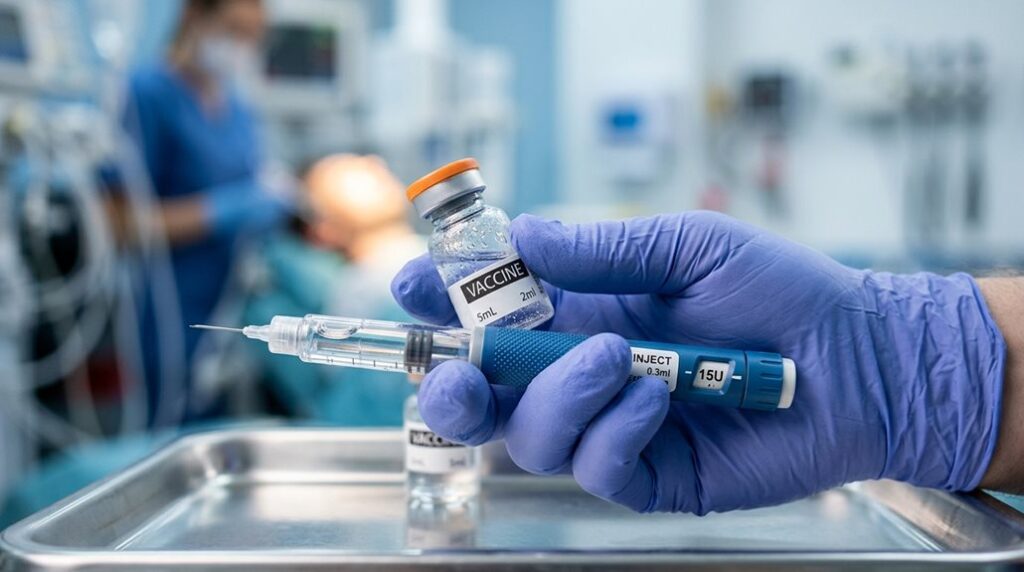
Tesamorelin, a synthetic hormone that mimics your brain’s natural growth hormone-releasing hormone, stimulates your pituitary gland to release growth hormone, which then triggers IGF-1 production and targeted breakdown of visceral fat around your abdominal organs rather than subcutaneous fat beneath your skin. In clinical trials, you’ll typically see about 15–18% reduction in deep abdominal fat over 26 weeks, though benefits fade within roughly 90 days after stopping since fat gradually returns without continued treatment. Side effects are generally mild, including injection-site reactions and joint discomfort, but you’ll need careful monitoring for blood sugar changes and must avoid use if you have active malignancies due to potential tumor growth risks. The sections ahead offer deeper guidance on whether this therapy fits your situation.
TLDR
- Tesamorelin is a synthetic GHRH analog that stimulates pituitary growth hormone release to reduce visceral fat.
- FDA-approved only for HIV-associated lipodystrophy, reducing abdominal fat by 15–18% over 26 weeks.
- Mechanism involves liver IGF-1 production and GH-mediated lipolysis targeting deep organ fat, not subcutaneous fat.
- Common side effects include injection-site reactions and joint discomfort; serious risks include glucose elevation and potential tumor growth.
- Fat regain occurs within 90 days after stopping, as benefits require continued treatment to maintain.
What Is Tesamorelin and How Does It Work?

What Is Tesamorelin and How It Works?
If you’re wondering what tesamorelin actually is and how it might affect your body, you’ll find that it’s a synthetic version of a hormone your brain normally produces. Specifically, it mimics growth hormone-releasing hormone, which your hypothalamus releases to signal your pituitary gland. When you inject tesamorelin subcutaneously, it binds to GHRH receptors, prompting your pituitary to release natural growth hormone, which then stimulates your liver to produce IGF-1, ultimately triggering lipolysis—breaking down visceral fat around your organs GHRH receptor targets.
Who Qualifies for Tesamorelin Treatment?
You qualify for tesamorelin if you’re an HIV-positive adult with lipodystrophy, specifically excess abdominal fat, since this represents the FDA-approved indication, though certain medical conditions—such as active cancer, pregnancy, pituitary disorders, or a history of malignant tumors—will exclude you from treatment. Your physician must also evaluate your glucose tolerance and cardiovascular health before prescribing, as diabetes and significant metabolic dysfunction require careful risk assessment. Regulatory status considerations and evidence gaps around pro-angiogenic therapies highlight the importance of careful patient selection and ongoing safety monitoring regulatory context. If you’re seeking tesamorelin for off-label uses like visceral fat reduction without HIV, muscle mass improvement, or metabolic health benefits, you’ll need specialist supervision from an endocrinologist or infectious disease physician who can monitor your IGF-1 levels and overall hormone balance throughout therapy.
FDA-Approved Indication
Tesamorelin, marketed under the brand name Egrifta, holds a narrowly defined place in the FDA’s regulatory structure as the only medication approved specifically for reducing excess abdominal fat in HIV-infected adults diagnosed with lipodystrophy—a condition marked by abnormal body-fat redistribution rather than generalized weight gain.
You qualify if you’re an adult with HIV whose antiretroviral therapy has caused visceral fat accumulation around your abdominal organs, not subcutaneous fat or cosmetic concerns.
The treatment targets this specific metabolic phenotype, reducing deep abdominal fat by approximately 15–18% over 26 weeks.
Medical Exclusions
While the FDA indication establishes who may receive tesamorelin, understanding who shouldn’t take it—or who requires careful evaluation before starting—is equally important for safe prescribing.
You’ll need to avoid this treatment if you have active or suspected malignancy, since growth hormone stimulation may promote tumor growth.
If you’ve got significant blood sugar problems, proceed with caution—tesamorelin can worsen glucose control and raises diabetes risk substantially.
How Tesamorelin Reduces Visceral Fat in HIV Lipodystrophy
Why does visceral fat accumulate so stubbornly in HIV lipodystrophy, and what makes tesamorelin uniquely suited to address it? You receive tesamorelin as a synthetic GHRH analog, which binds your pituitary receptors to stimulate pulsatile, natural growth hormone release rather than supplying hormone directly. This mechanism selectively targets visceral adipose tissue through GH-mediated lipolysis, reducing your abdominal fat approximately 15-20% over 26 weeks while preserving lean mass and subcutaneous fat. GHRP-6
Tesamorelin Clinical Trials: 26-Week and Long-Term Results
Clinical trials show you’ll reduce visceral adipose tissue by roughly 15% after 26 weeks, with one study reporting 24 cm² lost versus placebo.
Additionally, long-term results depend on continued treatment, as fat gains can resume after stopping therapy, but sustained use through 52 weeks helps maintain the initial gains. mechanism of action
Tesamorelin Side Effects: What to Expect

After completing a course of tesamorelin and seeing measurable reductions in visceral fat, you’ll want to understand what trade-offs accompany these benefits, since no pharmacological intervention is without its tolerability profile.
Additionally, continued attention to overall metabolic health is important, as improvements in visceral adiposity often accompany improvements in glycemic control and energy balance observed with targeted therapies. visceral fat reduction
Serious Tesamorelin Risks: Cancer, Blood Sugar, and Liver Health
Where should your attention turn once you’ve weighed the common, manageable side effects of tesamorelin? You should consider three serious, though rare, risks. First, tesamorelin raises IGF-1, which theoretically could stimulate tumor growth, so you’ll want caution with any cancer history. Second, you may see small, usually temporary blood sugar increases, warranting closer monitoring if you’re already insulin resistant. Third, liver safety is actually favorable—studies show reduced liver fat without enzyme elevations, making this less concerning than the other risks.
Tesamorelin vs. Other HIV Lipodystrophy Treatments
When you compare tesamorelin with other approaches for HIV-associated lipodystrophy, you’ll notice it stands out because it works through a distinct mechanism—stimulating your pituitary gland to release growth hormone, which then triggers specific metabolic pathways that reduce visceral adipose tissue—whereas alternatives like diet modification, exercise programs, antiretroviral switching, or surgical interventions operate through entirely different biological or behavioral pathways.
This mechanistic difference directly shapes what you can realistically expect in terms of results: tesamorelin consistently delivers measurable, imaging-confirmed reductions in deep abdominal fat over roughly six months, while lifestyle changes tend to produce more variable and less targeted body composition shifts, and surgical options address surface contour rather than the metabolically active visceral fat that poses cardiovascular risk.
Understanding these efficacy differences helps you and your healthcare provider select an approach aligned with your specific priorities, whether that’s achieving quantifiable central fat loss, avoiding daily injections, addressing underlying medication causes, or pursuing more dramatic cosmetic changes. Mechanism-based
Mechanism Comparison
Although HIV lipodystrophy presents several therapeutic angles, you’ll find that tesamorelin occupies a distinctive mechanistic niche because it doesn’t merely manage symptoms or adjust antiretroviral regimens—it directly targets the hormonal dysregulation driving visceral fat accumulation.
Unlike antiretroviral optimization, which addresses drug-induced metabolic changes, you’ll stimulate your own growth hormone release through pituitary GHRH receptors, activating lipolysis specifically in deep abdominal fat while preserving physiological pulsatile secretion patterns.
Efficacy Differences
Having examined how tesamorelin works through your body’s own growth hormone pathways, you’ll now want to understand how its results stack up against other options you might encounter for managing HIV-associated lipodystrophy.
Unlike diet, exercise, or off-label approaches, tesamorelin is FDA-approved specifically for this condition and delivers targeted, CT-measured visceral fat reduction—approximately 15%–18%—that alternatives simply haven’t matched in sturdy clinical trials.
What Happens When You Stop Tesamorelin?
If you’re considering ending tesamorelin therapy or have already stopped, you’ll want to understand exactly how your body responds to the loss of this growth-hormone-releasing factor, as the changes are neither sudden nor catastrophic but follow a predictable pattern based on the drug’s mechanism of action.
Your visceral fat will gradually return, with studies showing 30–40% regained within three months and full baseline resumption around 90 days, because the underlying metabolic drivers remain unless you’ve addressed them through lifestyle changes.
Your IGF-1 levels, which the drug elevated to produce benefits, will normalize within weeks, removing the hormonal signal that maintained your reduced abdominal fat.
The metabolic improvements you achieved—better body composition and lipid profiles—will similarly fade without ongoing treatment.
You won’t experience true withdrawal or dependence symptoms, though you might notice transient fatigue or reduced recovery; instead, you’re simply witnessing the return of your pre-treatment condition.
Any side effects you tolerated, such as injection-site reactions or joint discomfort, should resolve after stopping.
As a practical consideration, ongoing lifestyle adjustments can help sustain gains and ease the transition when stopping mechanism of action.
Tesamorelin Dosing: How to Inject Your Daily 2mg

How exactly should you administer tesamorelin once you’ve determined your daily dose?
You’ll inject 2 mg subcutaneously into your abdomen once daily, preferably at the same time each evening before bedtime on an empty stomach, rotating sites to minimize irritation.
Reconstitute the fragile powder carefully, measure accurately, and expect possible injection-site reactions, fluid retention, or glucose changes requiring monitoring.
Additionally, be aware that Tesamorelin acts by stimulating the pituitary to increase endogenous growth hormone production, which may influence lipid metabolism and body composition over time growth hormone pathways.
Frequently Asked Questions
Does Tesamorelin Improve Sleep Quality or Energy Levels?
Tesamorelin may improve your sleep quality modestly, as one study found a 5.7% objective improvement via polysomnography, though data remains limited. You might experience better energy, but this appears secondary to reduced visceral fat and metabolic improvements rather than a direct stimulant effect. The strongest, most consistent evidence supports its benefits for body composition and growth hormone elevation, not primary sleep or energy enhancement.
Can Tesamorelin Be Combined With Testosterone Therapy?
Yes, you can combine tesamorelin with testosterone therapy under medical supervision, as they work through different hormonal pathways—tesamorelin stimulates growth hormone release, while testosterone replacement addresses androgen deficiency. This pairing may offer synergistic benefits for body composition, including reduced visceral fat and improved lean mass, though you’ll need careful monitoring for glucose metabolism, hormonal balance, and cardiovascular health, since both therapies can influence insulin sensitivity and metabolic function.
Will Insurance Cover Off-Label Tesamorelin Prescriptions?
Your insurer will almost certainly deny coverage for off-label tesamorelin, since FDA approval is limited to HIV-associated lipodystrophy, meaning you’ll likely pay full retail cost—typically $800 to $4,500 monthly—unless you qualify for patient assistance programs, which can reduce your expense to roughly $50–150 if you’re eligible, though compounded alternatives, while cheaper, aren’t FDA-approved substitutes.
How Soon Will Body Composition Changes Become Visible?
You’ll typically notice body composition changes between 8 and 12 weeks, though some measurable shifts in visceral fat may appear around 4 to 6 weeks.
Your waistline will likely show the first visible difference, since tesamorelin targets deep abdominal fat rather than subcutaneous fat, meaning your scale weight mightn’t change much even as your abdominal contour improves.
Peak effects generally emerge around 3 to 6 months with consistent treatment.
Does Tesamorelin Affect Facial or Limb Fat Distribution?
Tesamorelin primarily reduces visceral abdominal fat while sparing your facial and limb subcutaneous tissue, so you’ll likely notice little change in your face, arms, or legs.
Clinical trials show approximately 15–20% visceral fat reduction over 26 weeks without significant arm, thigh, or facial fat loss.
This selectivity occurs because growth hormone’s lipolytic effects target deeper visceral stores rather than peripheral subcutaneous depots.
And Finally
You’ve explored tesamorelin’s mechanisms, benefits, and risks, and now you’re equipped to discuss this treatment with your healthcare provider. While it effectively reduces visceral fat in HIV-associated lipodystrophy, you’ll need ongoing monitoring for glucose changes and potential cancer risks. Remember that discontinuation typically leads to fat regain, so you’ll want to weigh long-term commitment against your personal health goals before starting therapy.
References
- https://www.peptideadvisors.org/peptides/tesamorelin-peptide
- https://www.ncbi.nlm.nih.gov/books/NBK548730/
- https://www.sciencedirect.com/topics/medicine-and-dentistry/tesamorelin
- https://pubmed.ncbi.nlm.nih.gov/41545261/
- https://pmc.ncbi.nlm.nih.gov/articles/PMC8243807/
- https://go.drugbank.com/drugs/DB08869
- https://www.ncbi.nlm.nih.gov/books/NBK538939/
- https://www.mayoclinic.org/drugs-supplements/tesamorelin-subcutaneous-route/description/drg-20074632
- https://peptidetreatments.com/peptides/tesamorelin
- https://pubmed.ncbi.nlm.nih.gov/18690162/