GHRP-6 and GHRP-2 are synthetic peptides that stimulate growth hormone release, but they differ in potency and effects; GHRP-2 is generally stronger, producing higher GH peaks at lower doses with milder appetite stimulation, while GHRP-6 causes more immediate hunger and a modest hormonal response. GHRP-2’s increased affinity makes it suitable for controlled study settings, whereas GHRP-6 is better for appetite-related applications. Understanding these differences can help you choose the appropriate peptide, and exploring further reveals detailed understanding on dosing and effects.
TLDR
- GHRP-2 is more potent, producing higher GH peaks at lower doses compared to GHRP-6.
- GHRP-6 induces a stronger, immediate hunger response, while GHRP-2 causes milder appetite stimulation.
- GHRP-2 elicits a greater hormonal response, including ACTH and cortisol, than GHRP-6.
- GHRP-6’s GH secretion is effective but less potent than GHRP-2’s more robust stimulation.
- GHRP-6 is preferred for appetite-related uses, whereas GHRP-2 suits controlled metabolic studies.
What Are GHRP-6 and GHRP-2? An Overview of Their Structures and Functions
Although GHRP-6 and GHRP-2 are both synthetic peptides designed to stimulate growth hormone release, they differ in their specific structures and functionalities, which influence their biological activity and potential applications.
GHRP-6 contains six amino acids, including two D-amino acids for stability, and acts as a ghrelin mimetic targeting GHS-R1a receptors, promoting GH secretion and appetite stimulation. selectivity
How Do GHRP-6 and GHRP-2 Differ in Stimulating Growth Hormone?
Both GHRP-6 and GHRP-2 stimulate growth hormone (GH) release by acting on the same receptor pathway, specifically the ghrelin receptor, GHS-R1a.
GHRP-2 is generally more potent, with higher binding affinity and producing stronger peak GH levels.
While both peptides activate similar pathways, GHRP-2’s intracellular signaling may be more selective, leading to a more resilient and consistent GH pulse.
Afamelanotide, the FDA-approved peptide, is the clinically approved sibling that demonstrates the possibility of targeted peptide therapies with safety profiles that differ from non-clinical GHRP agents. FDA-approved
GHRP-6 vs GHRP-2: Which Causes More Hunger?
GHRP-6 vs GHRP-2: Which Causes More Hunger?
When comparing GHRP-6 and GHRP-2, it’s important to recognize that GHRP-6 generally produces a stronger, more immediate hunger response, often described as intense or deep-seated.
While GHRP-2 tends to stimulate appetite in a milder, more moderate manner. This difference in appetite stimulation is closely related to their ghrelin-like effects, with GHRP-6 mimicking ghrelin more strongly.
This leads to a significant increase in food intake shortly after administration. Understanding these distinctions helps guide choices based on whether increased hunger is a desired outcome or a potential side effect to be minimized. Ghrelin-like effects
Appetite Stimulation Intensity
GHRP-6 and GHRP-2 are both peptides that stimulate appetite, but they differ markedly in the intensity of hunger they produce.
GHRP-6 generally causes much stronger hunger within 15-30 minutes, leading to significant, often intense, feelings of hunger lasting up to an hour.
In contrast, GHRP-2 induces milder, more manageable increases in appetite, with effects that are less immediate and less disruptive.
Ghrelin-Like Effects
Ghrelin-like effects refer to the capacity of certain peptides to mimic the action of the endogenous hormone ghrelin, which plays a central role in signaling hunger through its activation of the growth hormone secretagogue receptor (GHSR).
Among these, GHRP-6 causes more intense hunger than GHRP-2, producing acute, strong appetite signals, whereas GHRP-2’s effects are milder and more controlled.
How Do GHRP-6 and GHRP-2 Affect Cortisol, ACTH, and Prolactin Levels?
Both GHRP-6 and GHRP-2 stimulate the release of hormones like ACTH and prolactin.
However, GHRP-6 generally produces a more pronounced increase in cortisol levels, which can influence stress and metabolic responses.
While GHRP-2 also raises these hormones, its effects are typically milder.
This makes GHRP-2 a preferred choice when a reduced adrenal response is desired.
Understanding these differences helps guide appropriate protocol design and manage potential off-target hormonal effects effectively. Link
Differential ACTH Responses
Understanding how GHRP-6 and GHRP-2 influence hormonal responses involves examining their effects on the adrenal axis, particularly the secretion of ACTH, cortisol, and prolactin.
GHRP-2 generally produces a stronger ACTH and cortisol response, approximately 2.5–3 times baseline, compared to GHRP-6, which causes more modest elevations.
Both responses are dose-dependent, increasing with higher doses.
Prolactin Level Variations
How do GHRP-6 and GHRP-2 influence prolactin levels, and what patterns emerge in their effects on cortisol and ACTH?
Both peptides transiently raise prolactin, cortisol, and ACTH, with GHRP-2 generally causing stronger increases than GHRP-6.
Dose-dependent effects are common, and responses tend to be mild at lower doses, intensifying with higher doses, though effects typically return to baseline within hours.
Which Peptide Is More Potent and How Should You Dose Them?
Because GHRP-2 exhibits a higher affinity for the ghrelin receptor GHS-R1a, it generally demonstrates greater potency in stimulating growth hormone (GH) release compared to GHRP-6 at equivalent doses. In addition, GHRP-2 tends to achieve larger GH peaks at lower doses, with dose-response data showing a plateau around 2–3 µg/kg, offering more consistent, stronger GH pulses. GHS-R1a affinity is a key determinant of the potency differences observed between these two peptides.
Choosing Between GHRP-6 and GHRP-2: Practical Tips and Key Differences
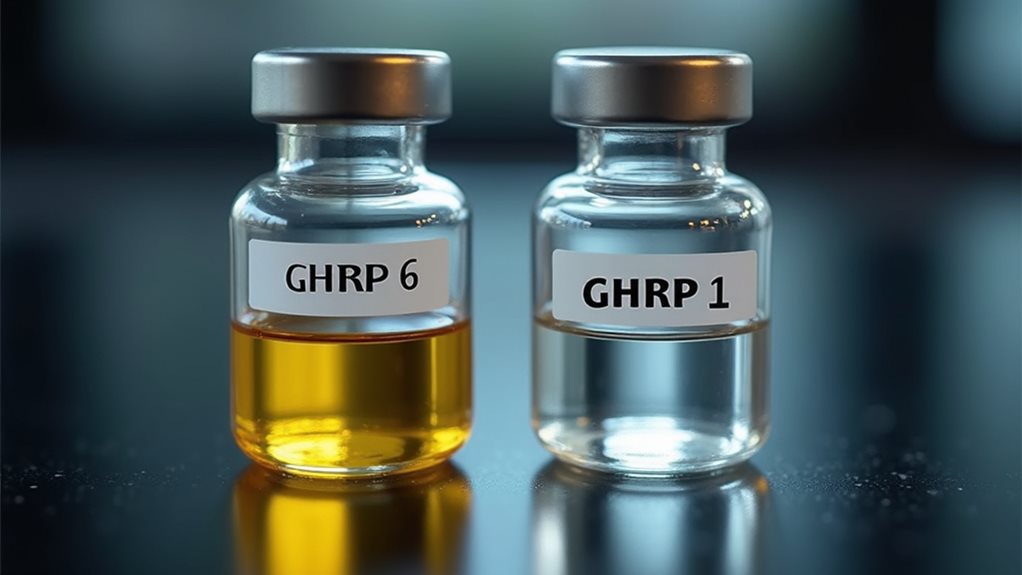
Choosing between GHRP-6 and GHRP-2 requires carefully evaluating their key differences and understanding how these variations align with your specific goals or research needs.
GHRP-6 offers stronger appetite stimulation, making it suitable for weight gain or muscle-wasting scenarios. In addition, both peptides have distinct pharmacodynamic profiles that may influence study design and outcome interpretation, particularly in relation to HF-guided dosing strategies and metabolic assessments telomerase activation and the circadian effects described for epitalon, which underscore the importance of timing in peptide-based interventions.
On the other hand, GHRP-2 provides a cleaner hormonal profile with fewer side effects, making it ideal for controlled metabolic studies or sensitive subjects.
Frequently Asked Questions
Are GHRP-6 and GHRP-2 Approved for Human Medical Use?
You should know that neither GHRP-6 nor GHRP-2 are approved for human medical use. They’re sold only as research chemicals, and there’s no regulatory approval, safety, or effectiveness data supporting their use as treatments.
Can GHRP-6 and GHRP-2 Be Safely Combined?
You should avoid combining GHRP-6 and GHRP-2, as there’s no proven safety or efficacy benefit, and doing so may increase side effects or cause receptor desensitization without enhancing growth hormone release, so medical supervision is essential.
What Are the Long-Term Safety Profiles of GHRP-6 and GHRP-2?
You should know that both GHRP-6 and GHRP-2 have limited long-term safety data. While they seem tolerated short-term, potential risks include metabolic disruptions, cardiovascular effects, and uncertain long-term consequences, so caution and medical advice are essential.
How Quickly Do GHRP-6 and GHRP-2 Produce Effects?
You’ll notice GHRP-6 and GHRP-2 produce effects quickly, typically within 15–30 minutes, with peak growth hormone release around 30–60 minutes. Their effects taper off within a few hours, requiring repeated doses for long-term benefits.
Are There Differences in Side Effects Beyond Hunger and Hormone Levels?
You’ll notice GHRP-6 causes more pronounced appetite increases and broader side effects, like fluid retention and discomfort, while GHRP-2 tends to be better tolerated with milder, transient side effects beyond hunger, such as injection site reactions.
And Finally
Understanding the differences between GHRP-6 and GHRP-2 enables you to make informed decisions customized to your specific goals. Both peptides stimulate growth hormone release but vary in their potency, appetite effects, and hormonal responses. Carefully consider their distinct profiles, dosing guidelines, and potential side effects, ideally consulting with a healthcare professional to optimize safety and efficacy. This knowledge enables you to select the most appropriate peptide for your needs, ensuring a controlled and effective approach.
References
- https://www.pinnaclepeptides.com/blog/post/ghrp-2-vs-ghrp-6-for-muscle-growth-which-peptide-delivers-better-results
- https://pubmed.ncbi.nlm.nih.gov/9096259/
- https://exploring-peptides.com/article/ghrp-2-vs-ghrp-6-whats-the-difference/
- https://luminpeptides.com/ghrp-2-vs-ghrp-6-key-differences-in-growth-hormone-stimulation-research/
- https://peptideslabuk.com/ghrp-2-vs-ghrp-6-for-research-uk-2026-ghs-r1a-receptor-selectivity-gh-amplitude-differences-and-cortisol-confound-biology/
- https://lotilabs.com/resources/ghrp-6-vs-ghrp-2/
- https://ubiehealth.com/doctors-note/ghrp-6-vs-ghrp-2-science-reality-med-next-steps-4743q2
- https://peptidepedia.org/guides/ghrp-2-vs-ghrp-6
- https://bc9.co/the-difference-between-ghrp-2-and-ghrp-6-peptides/
- https://peptpedia.org/compare/ghrp-6-vs-ghrp-2