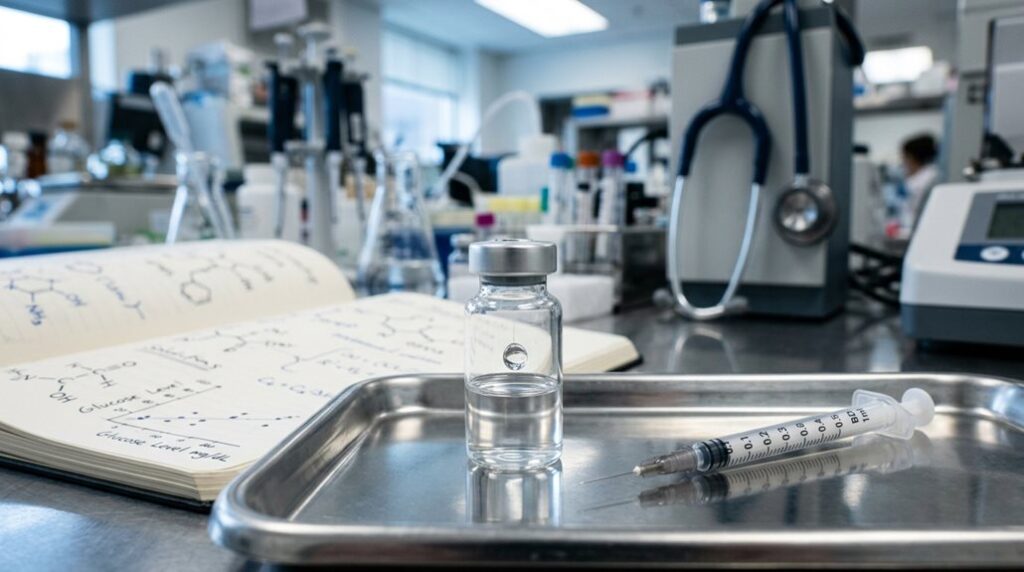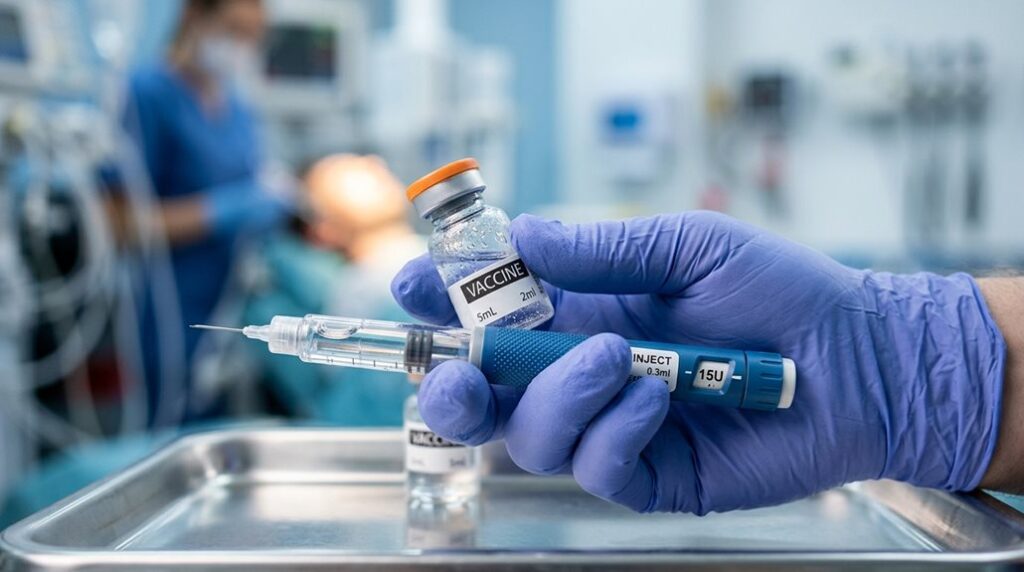
Peptide legality in the U.S. hinges on three factors: FDA approval status, your access pathway, and intended use. You’ll find clear legal ground with FDA-approved prescriptions like semaglutide or tirzepatide, which require a valid prescription from a licensed clinician. Compounded peptides from 503A pharmacies are permissible only when the specific peptide appears on the FDA’s Category 1 Bulk List, your prescriber has documented a clinical need, and the pharmacy maintains USP <797> compliance. Conversely, you’re entering enforcement risk territory with “research use” or “not for human consumption” labels, since the FDA evaluates marketing context, sales patterns, and actual use—not disclaimers alone—to determine regulatory status. Importation faces strict discretionary limits, and substances like BPC-157 or TB-500 remain inaccessible through routine compounding channels. If you proceed, you’ll discover exactly which verification steps separate legitimate therapeutic access from costly legal exposure.
TLDR
- FDA-approved peptides like semaglutide are legal prescription medications, while others remain restricted.
- Compounded peptides require valid prescriptions and 503A pharmacy compliance with bulk list status.
- “Research use only” labels do not legalize human consumption or shield from FDA enforcement.
- Online peptide purchases without prescriptions operate in a risky regulatory gray area.
- Personal importation is generally illegal unless meeting narrow FDA discretionary criteria.
How the FDA Classifies Peptides: What’s Legal and What Isn’t

Why does the FDA treat one peptide as a legal prescription drug while another lands in regulatory limbo? The answer lies in peptide-specific approval, not blanket classification. When you encounter FDA-approved peptides like semaglutide or tirzepatide, you’re looking at legal, prescribable medications, though your doctor may still use them off-label. However, if you’re considering compounded alternatives, you’ll need to verify whether the peptide sits on the FDA’s bulk drug substances list and which compounding pathway—503A or 503B—applies, since regulatory status shifts frequently, as seen when twelve peptides moved from Category 2 restriction toward potential reclassification in 2026. approval status
Which Peptides Are Actually Legal in the US?
When you’re trying to figure out which peptides you can actually obtain legally in the United States, you’ll quickly identify that the answer depends heavily on specific regulatory categories rather than any single overarching rule.
You can legally obtain semaglutide, tirzepatide, bremelanotide, tesamorelin, and insulin with valid prescriptions as FDA-approved drugs.
Some compounded peptides like sermorelin and topical GHK-Cu remain accessible through licensed 503A pharmacies when specific requirements are met.
However, you can’t legally access BPC-157, TB-500, CJC-1295, ipamorelin, or epitalon for human use through routine compounding channels regulatory status.
Can You Legally Buy Peptides Online?
Can You Legally Buy Peptides Online?
How you purchase peptides online determines whether you’re acting within the law, and the distinction between lawful and unlawful channels isn’t always obvious at first glance. You can legally buy peptides online only through licensed pharmacies with a valid prescription, particularly for FDA-approved options like semaglutide. Research-labeled products marketed without prescriptions occupy a risky gray area, since FDA enforcement targets intended use rather than disclaimers alone. Regulatory status varies by product and jurisdiction, and ongoing oversight exists for peptide therapies and ophthalmic formulations alike.
Is It Legal to Import Peptides for Personal Use?
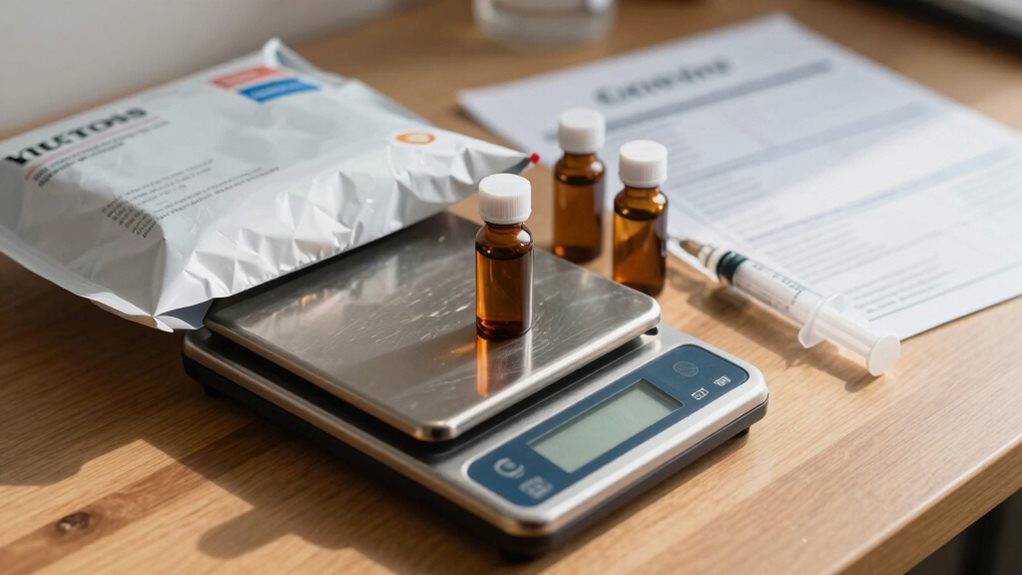
Where personal importation of peptides stands in legal terms depends heavily on which border you’re crossing and what regulatory framework governs your arrival, since the practice occupies a narrow corridor between outright prohibition and discretionary enforcement rather than any broad permission. In the U.S., you’ll find that importing peptides for personal use is technically illegal, though the FDA may exercise enforcement discretion in limited circumstances, such as when you’re carrying a 90-day supply for personal use with no intent to resell. However, this isn’t a guaranteed safe harbor—Customs can still seize your shipment, particularly if comparable FDA-approved treatments exist domestically or if the quantity suggests commercial intent. You’ll need to provide written affirmation that the product is for personal use, but compliance with the 90-day guideline doesn’t automatically make your importation lawful. Regulatory frameworks can further shape how these cases are handled under border controls and consumer protections.
Outside the U.S., you’re facing a patchwork of regulations: Canada generally prohibits importing injectable peptides without a domestic prescription, Australia restricts many research peptides as Schedule 4 substances, the UK leaves personal importation in a precarious gray zone, and some jurisdictions like the Philippines apply more lenient personal-use standards. You’re essentially navigating a system where legality hinges on specific regulatory classifications, prescription requirements, and enforcement priorities that vary dramatically by country.
What the “Not for Human Consumption” Label Really Means
You have likely encountered the phrase “not for human consumption” on peptide products, but this label represents a legal fiction rather than a guarantee of safety or compliance, since regulators evaluate the surrounding evidence of intent—including marketing materials, customer testimonials, and sales patterns—rather than relying solely on the printed disclaimer. Regulatory oversight is further limited by the fact that the designation often accompanies products marketed for laboratory or analytical purposes, not for diagnosis, treatment, or administration to people, though this status doesn’t constitute FDA approval, certification, or any assurance of pharmaceutical-grade manufacturing standards. When you see this label, you should recognize it as an indication of limited regulatory oversight and quality control, not as a protective shield against enforcement action if the actual use case suggests human consumption. context-driven modulation governs how peptides are framed and evaluated in real-world practice, underscoring the need to distinguish research use from therapeutic claims for safety and compliance reasons.
Legal Fiction Explained
Why does a peptide bottle carry a “not for human consumption” label when the seller knows, and you probably suspect, that buyers aren’t purchasing it for laboratory experiments? You’re looking at a legal fiction, a carefully constructed statement of intended use designed to position the product as a research reagent rather than an unapproved drug. This disclaimer doesn’t confer safety, quality assurance, or regulatory approval; it merely signals that the seller has categorized the peptide for analytical or preclinical work, hoping to remain outside FDA premarket requirements. However, you should understand that this label creates no protective shield if marketing materials, dosing guidance, or consumer-oriented promotions reveal actual intent for human administration. The FDA examines the full context of sales conduct, not just label language, when determining whether a product functions as an illegal drug.
Enforcement Gap Reality
How, then, does a label that seems to offer protection actually leave both buyers and sellers exposed to significant legal risk?
You must recognize that FDA examines your entire sales context—website claims, dosing language, and product pairings—not just the disclaimer.
When your marketing signals human use, the label becomes a sham, converting your “research” peptide into an unapproved drug subject to enforcement.
Research Use Only
The gap between enforcement reality and seller protection becomes clearer once you understand what “research use only” labeling actually signifies in regulatory terms. You might assume “not for human consumption” shields you legally, but FDA examines actual intended use, not printed disclaimers. When you market peptides for disease treatment or performance enhancement, federal law treats them as unapproved drugs regardless of labeling, exposing you to enforcement even with “RUO” language present.
How to Get Peptides From a Compounding Pharmacy (Legally)
If you’re seeking a peptide through legal channels, you’ll need to start by obtaining a valid prescription from a licensed healthcare provider who can document your specific medical need, since compounding pharmacies operating under Section 503A of the Federal Food, Drug, and Cosmetic Act are permitted to prepare these medications only when they’re prescribed for an individual patient’s recognized clinical indication.
You should then work with a licensed pharmacy that maintains proper sterility standards, quality-control documentation, and state board compliance, as not all compounding pharmacies are equipped to handle peptides and regulatory requirements vary depending on whether the substance is FDA-approved, appears on the compoundable bulk-substance list, or falls into a restricted category.
This pathway protects you from the legal and safety risks associated with unregulated research chemical suppliers, while ensuring that your medication is prepared under professional oversight with accountability for purity and proper formulation.
Prescription Requirements
Where exactly does the line sit between lawful access and regulatory trouble when you’re seeking compounded peptides?
You need a valid prescription from a licensed clinician who’s evaluated you, and that prescriber must hold a license in your state. The prescription must name you specifically, along with the drug, strength, and dosing directions—no anonymous or “research use” purchases qualify. Telehealth works, but only with a real prescriber-patient relationship and proper documentation. Skip any of these steps, and you’re outside legal boundaries.
503A Compliance
How exactly do you guarantee a compounding pharmacy operates within the narrow corridor of federal law when you’re seeking legitimate peptide therapy?
You must first verify the substance appears on FDA’s official 503A Bulks List in Category 1, not Category 2, and confirm your prescriber holds valid licenses in both states.
Request the pharmacy’s USP <797> compliance documentation, examine lot-specific Certificates of Analysis for API sourcing, and cross-check FDA registration status through accessdata.fda.gov before proceeding.
Licensed Pharmacies
Once you’ve confirmed a compounding pharmacy meets 503A compliance standards, you’re ready to move toward actually obtaining peptide therapy through lawful channels, which means understanding how licensed pharmacies operate within the broader regulatory landscape. You’ll need a valid prescription from a licensed clinician specifying your peptide and dosage, since state-licensed 503A pharmacies can’t legally dispense without patient-specific documentation. Verify your pharmacy through state board records before ordering, and remember that even 503B outsourcing facilities, which compound larger batches under stricter FDA oversight, still require prescriptions fitting federal compounding rules. Avoid online sellers offering injectable peptides without prescriptions—they’re operating outside lawful pharmacy practice, regardless of marketing claims.
Bringing Peptides Across Borders: International Rules for US Buyers

Why might a peptide that’s perfectly legal to purchase in one country become a customs violation the moment you carry it across a border?
You’re facing the gap between local sales law and import regulations, where FDA approval status—not packaging labels—determines legality.
Most peptides are unapproved drugs, making personal importation generally illegal unless you meet narrow discretion criteria: serious condition, no domestic alternative, three-month supply, and written personal-use affirmation. FDA approval status
What Happens if You’re Caught With Research Peptides?
Where exactly do you stand when customs officers open your package or law enforcement questions what’s in your bag? You face immediate seizure, as officials confiscate peptides when labeling, paperwork, or import details suggest unlawful possession or distribution. Even “research use only” labels won’t protect you, since they don’t override drug and import regulations.
You should also be aware that penalties and enforcement actions can vary by jurisdiction, and some agencies pursue civil as well as criminal penalties for violations involving controlled substances or regulated peptides. import regulations and the risk of confiscation are central concerns for researchers and hobbyists alike, underscoring the importance of compliance, proper licensing, and provenance documentation to avoid loss of product and legal trouble.
Peptides and Drug Testing: Athletic, Employment, and Medical Risks
Beyond the legal consequences of possession and importation, you’re probably wondering what actually happens if these substances show up in a test—whether that’s at your workplace, during athletic competition, or in a medical setting.
In sports, WADA’s high-resolution mass spectrometry detects peptides like BPC-157 and GHRP-6 at nanogram levels, triggering one-to-four-year bans, while standard employment screens ignore these compounds entirely, focusing instead on recreational drugs like opioids and amphetamines. DAC-linked pharmacokinetics
And Finally
You’ve now explored the complex regulatory landscape governing peptides, from FDA classification and legal purchasing channels to international import restrictions and practical compliance strategies. While research peptides occupy a gray area that demands careful navigation, legitimate pathways exist through compounding pharmacies and proper medical supervision. Stay informed about evolving regulations, prioritize documented therapeutic need, and consult qualified healthcare providers before acquiring these substances, ensuring your approach remains both legally sound and personally responsible.
References
- https://peptidepedia.org/guides/peptide-legality
- https://www.peptidejournal.org/legal/peptide-legality-around-the-world-global-guide
- https://peptigrity.com/blog/are-peptides-legal-regulatory-status-by-country
- https://www.peptidesdossier.com/dossiers/dea-scheduling-and-criminal-law-peptide-landscape
- https://thepeptideguides.com/guides/peptide-legality-fda-status
- https://formblends.com/research/guides/peptide-legality-regulatory-guide
- https://peptidelibrary.io/legal/are-peptides-legal-in-the-us/
- https://floridahealthcarelawfirm.com/are-peptides-legal/
- https://openloophealth.com/blog/what-peptides-are-becoming-legal-2026
- https://byrdadatto.com/banter/legal-and-compliance-considerations-for-peptides/