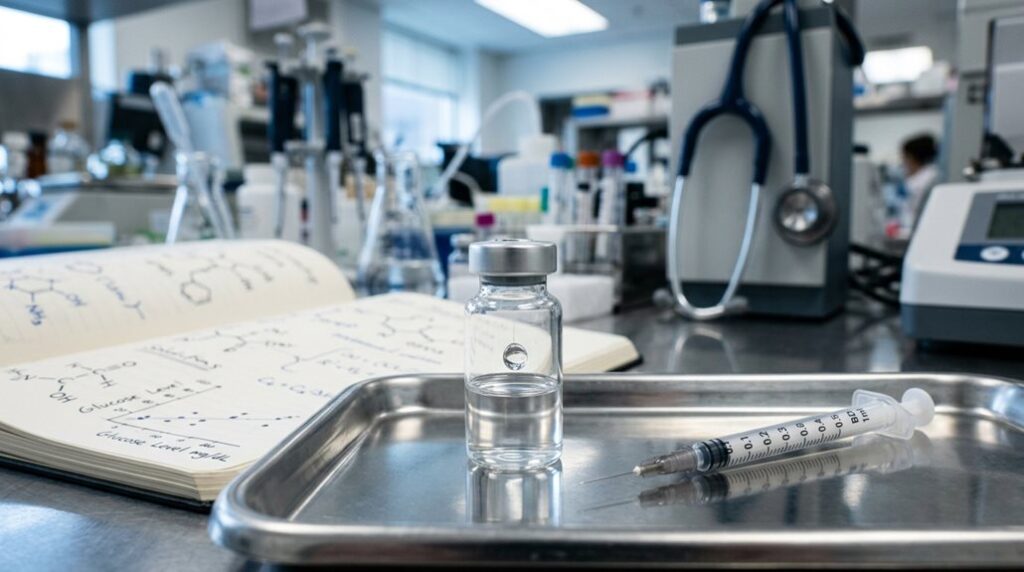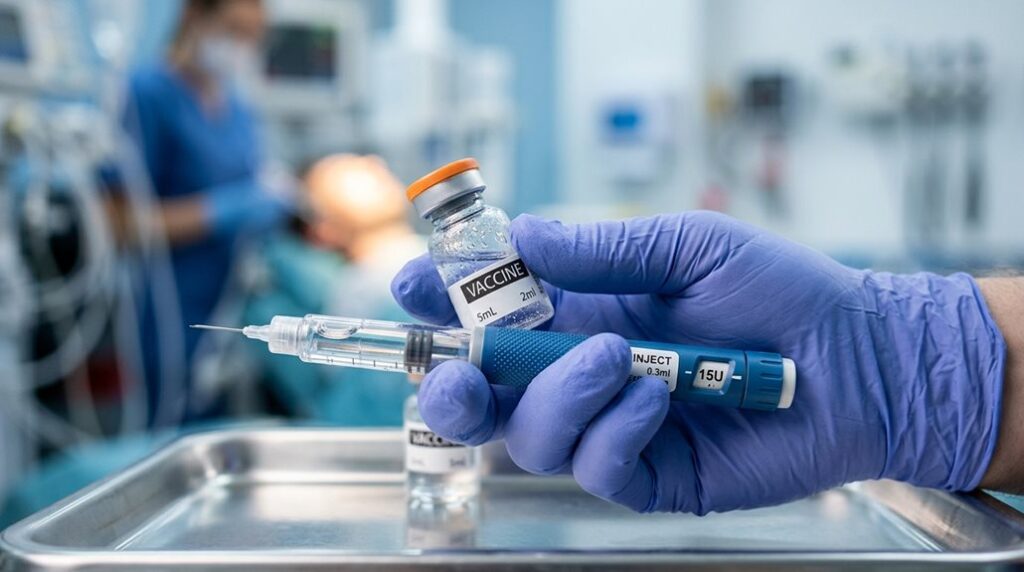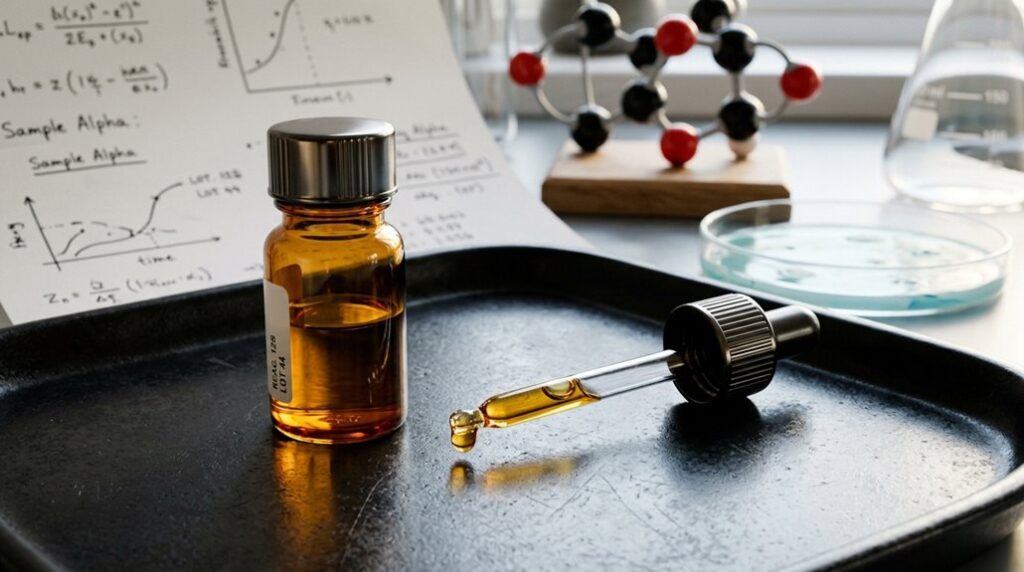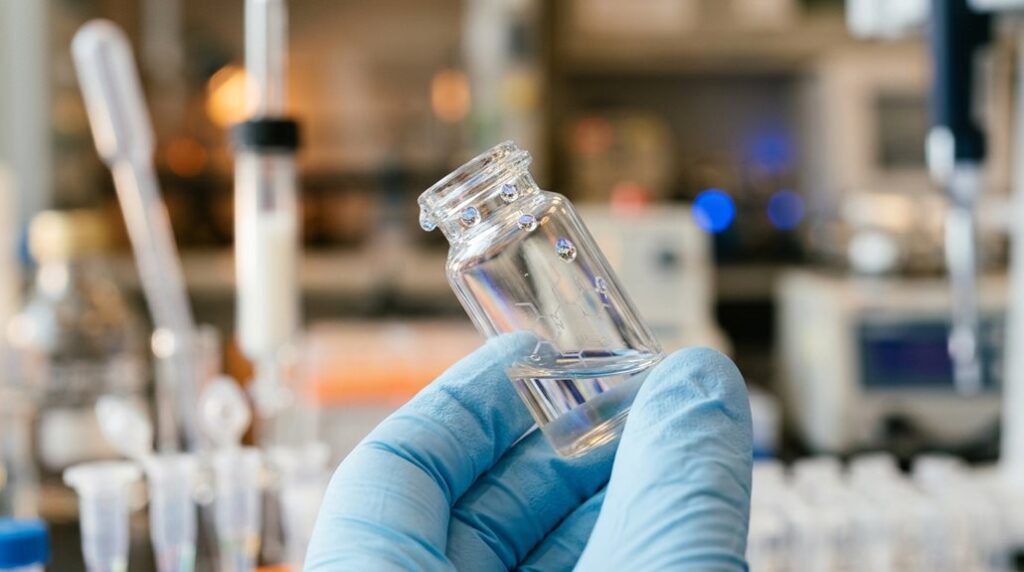
You should store lyophilized peptides at -20°C for routine long-term use or -80°C for archival preservation, keeping water content below 1% with desiccants and airtight vials. Reconstitute only when needed using sterile water or appropriate solvents, then refrigerate at 2–8°C while aliquoting into single-use portions to prevent freeze-thaw damage that reduces purity by 20–40% after three cycles. Protect from light with amber vials or foil, minimize oxygen exposure for vulnerable sequences containing cysteine, methionine, or tryptophan, and watch for discoloration or cloudiness as degradation indicators. Proper pH buffers around 5–6 slow deamidation, but temperature control and careful handling remain your most reliable safeguards for maintaining biological activity over months or years. The specifics behind each recommendation reveal why these protocols matter so much.
TLDR
- Store lyophilized peptides at -20°C for months or -80°C for multi-year archival preservation.
- Maintain water content below 1% using desiccants and airtight vials to prevent hydrolysis.
- Protect from light and oxygen using amber vials, argon/nitrogen flushing, and minimal handling.
- Reconstitute only when needed, then aliquot into single-use portions to avoid freeze-thaw damage.
- Use pH 5–6 buffers and sequence-appropriate solvents to slow deamidation and oxidation.
How Cold Should You Store Peptides? -20°C vs. -80°C Explained

When you’re deciding how cold to keep your peptide inventory, the choice between -20°C and -80°C depends on what you’re storing, how long you plan to store it, and how much protection your particular compound demands.
Store lyophilized peptides at -20°C for routine use spanning months, or select -80°C for archival preservation extending years, especially with sensitive sequences. DSIP, for example, is a research compound without approved therapeutic use, so lengthy storage stability considerations should guide archival decisions to maintain sample integrity. regulatory status
Keep Your Peptide Dry: Why Moisture Destroys Stability
You’ve chosen the right temperature for your peptide storage, but cold conditions alone won’t protect your investment if moisture finds its way into your vials.
Moisture acts as the primary catalyst for lyophilized peptide degradation, triggering hydrolysis, oxidation, and deamidation while accelerating hydrophobic peptide aggregation. Water content control is essential for preserving potency, and maintaining low moisture helps support copper peptide integrity and safe topical outcomes. Keep water content below 1% using desiccants, airtight vials, and proper equilibration techniques to preserve potency.
Block Light and Oxygen to Prevent Peptide Degradation
You’ll also want to consider the potential for peptide signaling to occur even during storage, which underscores the importance of maintaining strict stability to prevent any early, unintended degradation of signaling components therapeutic signaling.
Light Shielding Methods
Why does a peptide that looked fine yesterday seem degraded today? You’ve likely left it exposed to light, which silently damages peptide bonds through photodegradation. Shield your samples by transferring them to amber glass vials, which block UV and short-wavelength visible light below 450 nm. When amber containers aren’t available, wrap clear vials completely in aluminum foil, covering the body, top, and bottom to eliminate light leaks. Store these protected vials inside opaque secondary containers—dark boxes, bins, or cabinets—placed at the back of your refrigerator, away from door light and temperature fluctuations. During handling, work efficiently: draw doses quickly and return vials immediately to dark storage rather than leaving them on benches, especially near windows where concentrated UV exposure accelerates damage.
Oxygen Exclusion Strategies
How quickly can a peptide lose its potency when oxygen infiltrates its container? You’ll slow oxidation by purging vials with nitrogen or argon before sealing, or vacuum-sealing for shipment.
Choose borosilicate glass containers, degas buffers under reduced pressure, and prepare fresh solutions for immediate use.
Aliquot into single-use portions, store desiccated at -20°C or -80°C, and consider adding EDTA or methionine as protective antioxidants.
How Long Can You Store Lyophilized Peptides?
You can extend the shelf life of your lyophilized peptides considerably by selecting the right temperature range, though the exact duration depends on how well you control moisture and whether your peptide contains sensitive residues like cysteine or methionine. At room temperature, you’re looking at weeks to perhaps two months if the vial stays sealed, dry, and dark, while refrigeration at 2–8°C stretches that window to anywhere from several weeks up to two years for stable sequences. For archival storage, you’ll want to use -20°C for one to five years or -80°C if you need to preserve your peptide for a decade or more with minimal degradation, always remembering that airtight containers with desiccants and protection from oxygen become especially critical as storage times lengthen. Extended stability benefits from minimizing exposure to moisture and oxygen as described in best practices for peptide storage IGF-1 LR3 mechanism of extended bioactivity and ensuring proper handling to maintain bioactivity over time.
Optimal Temperature Ranges
Where exactly should you store your lyophilized peptides to preserve their integrity over time?
You’ll want to keep them at -20°C for most long-term needs, though -80°C offers superior protection for labile sequences or storage beyond 6–12 months.
For short-term holding, 2–4°C works well for days to weeks, but avoid room temperature beyond temporary exposure.
Moisture Control Methods
Why does moisture pose such a critical threat to lyophilized peptides, even when they’re already dried? Moisture uptake accelerates degradation, reduces effective peptide content, and compromises chemical stability, particularly for hygroscopic sequences that absorb atmospheric water readily.
You must store peptides in hermetically sealed vials with desiccants, handle them briefly at room temperature after equilibration, and maintain residual moisture below 3%—ideally 1–2%—for years of stable storage at −20°C or colder.
Sequence-Specific Longevity
How long can you reasonably expect your lyophilized peptides to remain potent depends far less on arbitrary expiration dates than on the specific molecular characteristics of each sequence you’re handling.
You’ll find that simple, stable sequences maintain >95% purity for 2–5+ years at -20°C, while complex or reactive peptides may degrade within weeks even under identical conditions, making sequence assessment essential before establishing your storage timeline.
When and How to Reconstitute Your Peptide
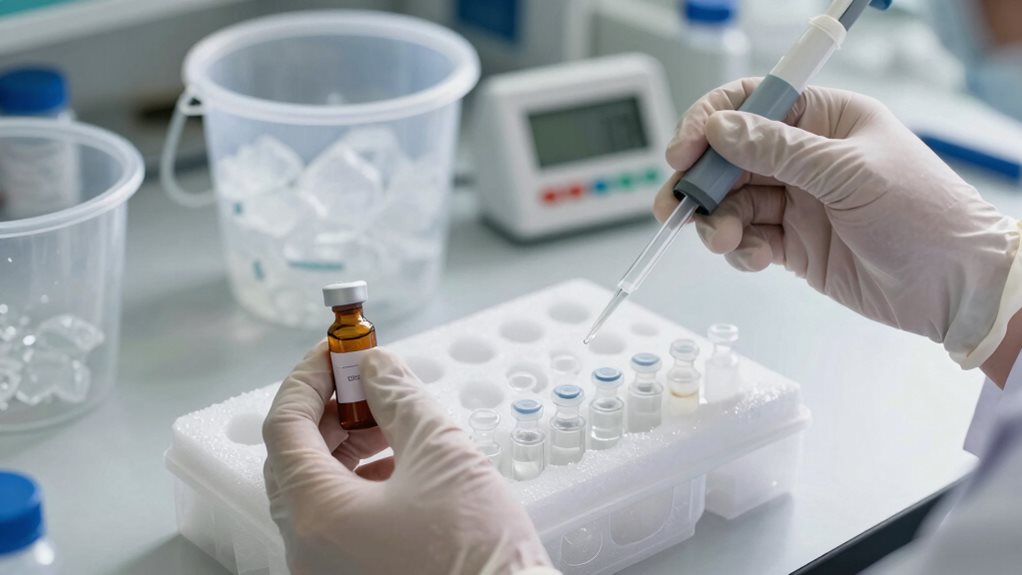
Whether you’re preparing a peptide for the first time or refining your laboratory workflow, you’ll find that reconstitution marks a critical transition point—one that demands careful timing and deliberate technique to preserve the integrity of your material.
You’ll want to keep your peptide lyophilized at -20°C until immediate use, since moisture and handling accelerate degradation. Before mixing, allow both vial and solvent to reach room temperature for 15–30 minutes, preventing condensation and ensuring efficient dissolution.
When adding solvent, inject slowly along the glass wall over 15–30 seconds, avoiding direct streams onto the powder that cause foaming. Dissolve through gentle swirling rather than shaking, waiting 3–15 minutes for clarity.
Once reconstituted, label immediately with name, concentration, date, and solvent, then refrigerate at 2–8°C upright and protected from light, aliquoting to prevent freeze-thaw damage.
Which Solvent to Use for Your Peptide Sequence
Selecting the appropriate solvent for your peptide isn’t merely a matter of convenience—it’s a decision that hinges directly on your sequence’s chemical character, and getting it right means the difference between a stable, usable solution and a vial of aggregated, inactive material.
You’ll start with sterile water for short, hydrophilic peptides, but when your sequence carries a positive charge, reach for 0.1% acetic acid instead.
Negatively charged peptides respond better to mild bases like ammonium hydroxide.
For hydrophobic or neutral sequences, you’ll need organic solvents—DMSO works best for very hydrophobic peptides, while DMF suits those containing cysteine.
Should these fail, chaotropes like 6 M guanidine-HCl or 8 M urea will rescue even the most stubborn sequences.
GHK-Cu and BPC-157 represent distinct peptide research areas with different practical considerations: GHK-Cu is notable for metal-chelation and tissue repair signaling, while BPC-157 is discussed for regenerative and anti-inflammatory applications, informing how researchers approach solvent choice and handling for stability and activity. peptide stability
Why pH 5–6 Extends Peptide Solution Shelf Life
Once you’ve dissolved your peptide in an appropriate solvent, you’re faced with another decision that’ll shape how long your solution remains viable: the pH of your buffer.
You’ll want to aim for pH 5–6, since this mildly acidic range slows common degradation pathways like deamidation that accelerate in alkaline conditions. However, you shouldn’t rely on pH alone—pair this buffer choice with sterile filtration, aliquoting, and freezing at -20°C for your best defense against oxidation, microbial contamination, and the sequence-specific vulnerabilities of cysteine, methionine, and tryptophan residues. Maintaining proper storage conditions also supports overall peptide stability by reducing freeze-thaw damage and preserving functional integrity peptide stability for researchers conducting long-term studies.
Divide Into Single-Use Aliquots to Avoid Freeze-Thaw Damage
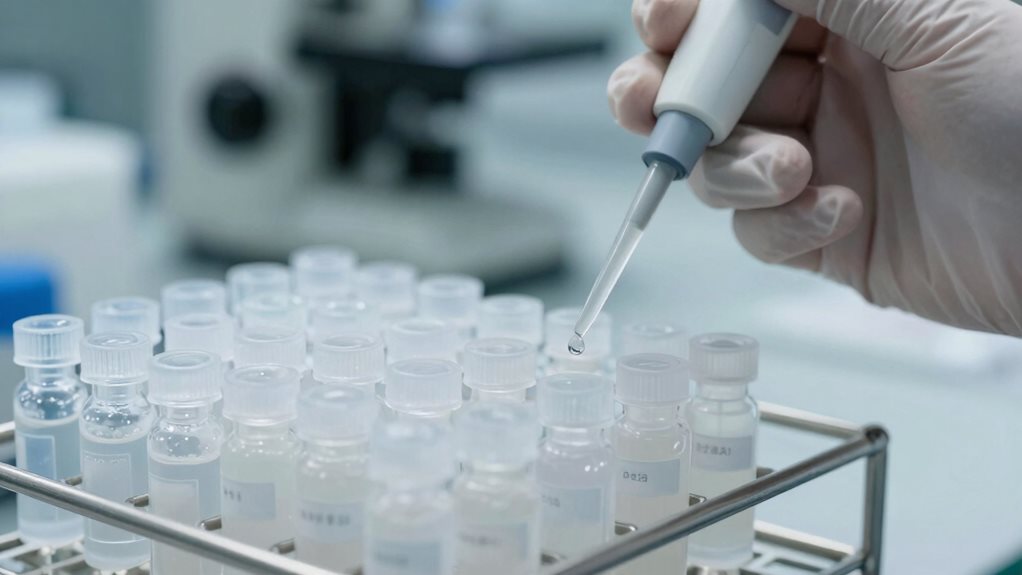
You can protect your peptides from degradation by dividing reconstituted solutions into small, single-use aliquots before freezing, which ensures each portion is thawed only once rather than subjected to repeated freeze-thaw cycles that cause ice-crystal damage, pH shifts, and concentration changes. Pulsatile delivery preserves receptor sensitivity and mimics natural GnRH rhythm hormonal pulsatility.
Freeze-Thaw Risks
How can you protect your peptides from the silent damage that occurs each time a frozen sample warms and refreezes?
Every freeze-thaw cycle exposes your peptides to ice crystal formation, which mechanically disrupts molecular structure, and freeze concentration effects, which create damaging high-salt zones.
Studies confirm that three or more cycles reduce purity by 20-40%, making single-use aliquoting essential for preserving biological activity.
Aliquoting Best Practices
The most reliable defense against freeze-thaw damage begins with a simple division: splitting your reconstituted peptide into single-use aliquots immediately after preparation, so you’ll never need to thaw the same vial twice.
Match each aliquot’s volume to your experimental needs, using sterile, low-binding tubes you’ll freeze promptly at -20°C or colder.
Label clearly with peptide ID, concentration, date, and solvent, then track inventory to minimize handling.
Store tightly sealed, light-protected, and thaw only what you’ll consume in one session.
How to Tell If Your Peptide Has Degraded
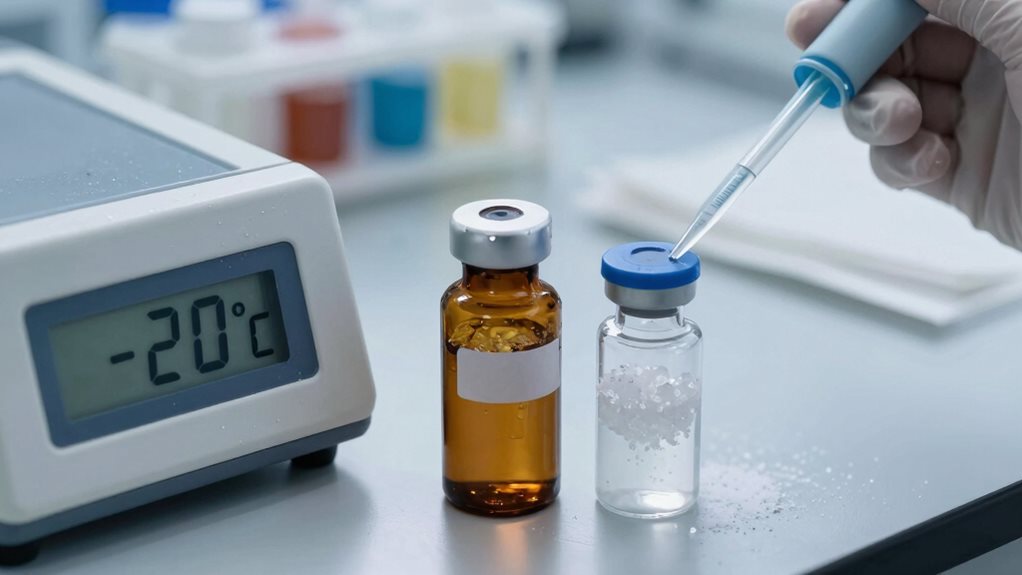
Whether you’re working with a recently acquired peptide or one that’s been stored for months, recognizing the early warning signs of degradation can save you from failed experiments and inconsistent results.
Inspect your reconstituted solution for discoloration, cloudiness, visible particles, crystallization, or oily surface films, and examine lyophilized powder for yellow or brown coloration, caking, clumping, or wet appearance that indicates moisture damage. Given the regulatory and safety context around BPC-157, ensure you source from reputable suppliers to minimize quality-control issues and verify storage instructions align with the product’s stability profile and any relevant anti-doping considerations. stability and supplier quality
Give Extra Care to Peptides With Cysteine, Methionine, or Tryptophan
Your peptide’s stability hinges on its amino acid makeup, and if you’re working with cysteine, methionine, or tryptophan residues, you’ll need to take additional precautions that other sequences simply don’t require.
Store these peptides lyophilized at −20 °C under argon or nitrogen to limit oxidation, protect tryptophan from light using amber vials or foil, and avoid DMSO, freeze-thaw cycles, and high pH solutions that accelerate degradation.
Incorporating Melanotan II Studies on pigmentation and mechanism provide context for understanding how certain amino acids influence stability and activity, informing careful handling of related peptides.
And Finally
By following these storage and handling protocols, you’ll protect your peptide investment and guarantee reliable experimental results. Proper temperature control, moisture exclusion, and pH management aren’t merely best practices—they’re essential safeguards against degradation that can compromise your research. Remember that peptides containing cysteine, methionine, or tryptophan demand particular vigilance, while single-use aliquots eliminate damaging freeze-thaw cycles. With attentive care, your peptides will remain stable and bioactive throughout their intended shelf life.
References
- https://www.jpt.com/blog/store-peptides/
- https://biolongevitylabs.com/research/peptide-stability-handling-storage/
- https://nibsc.org/science_and_research/virology/cjd_resource_centre/available_samples/peptide_library/peptide_storage.aspx
- https://bluewellpeptides.com/peptide-storage-best-practices-for-stability-and-longevity/
- https://www.peptide.com/resources/storage-and-handling-of-peptides/
- https://www.genscript.com/peptide_storage_and_handling.html
- https://intercom.help/dripdok/en/articles/9549955-storage-of-unmixed-lyophilized-peptides
- https://www.bachem.com/knowledge-center/handling-and-storage-guidelines-for-peptides/
- https://www.youtube.com/watch?v=9Vjbq3qjaFw
- https://peptideclock.com/guides/peptide-storage-complete