Your immune system produces LL-37, a 37-amino-acid antimicrobial peptide that fights bacteria, fungi, and viruses by disrupting their membranes while also promoting wound healing and regulating inflammation. You benefit from its dual role as both shield and immune modulator, though its narrow safety window means therapeutic doses sit uncomfortably close to levels that can damage your own cells or trigger excessive immune responses. At ~1–10 µM, you get antimicrobial effects, but cytotoxicity risks emerge between ~13–25 µM, making careful dosing essential. No FDA-approved product exists yet, so your access remains limited to research protocols while scientists work on delivery systems to improve stability and precision. If you want to understand how context determines whether this peptide helps or harms, the details ahead will clarify what patients and researchers must weigh before considering its use.
TLDR
- LL-37 is a 37-amino-acid antimicrobial peptide derived from hCAP-18 with cationic, amphipathic structure.
- It kills microbes by inserting into lipid bilayers to form pores and disrupting membrane integrity.
- Benefits include antimicrobial protection, immune cell recruitment, wound healing promotion, and biofilm disruption capabilities.
- Safety concerns include narrow therapeutic window, with cytotoxicity to human cells beginning at 13–25 µM concentrations.
- No FDA-approved LL-37 drug exists; use remains investigational through research protocols or specialized compounding pharmacies.
What Is LL-37 and How Does It Work?

Understanding the body’s frontline defenses requires a closer look at molecules like LL-37, a peptide that serves as one of your innate immune system’s most versatile weapons. You produce this 37-amino-acid molecule, cleaved from the precursor hCAP-18, primarily in neutrophils and epithelial cells. Its cationic, amphipathic structure lets you target microbial membranes through electrostatic attraction, inserting into lipid bilayers to form pores, disrupt integrity, and cause lysis—unlike conventional antibiotics that attack specific enzymes. antimicrobial and immunomodulatory LL-37 demonstrates concentration-dependent effects, being antimicrobial at lower concentrations and cytotoxic at higher ones, highlighting its nuanced role in host defense.
How Does LL-37 Help Your Immune System and Heal Wounds?
How exactly does a single peptide manage to both fight invaders and mend your tissues? LL-37 acts as your body’s antimicrobial shield, killing bacteria, fungi, and viruses while neutralizing harmful bacterial products like LPS. It recruits immune cells through chemotactic signaling, bridging your innate and adaptive defenses.
Simultaneously, it reduces excessive inflammation, promotes wound healing through angiogenesis and cell migration, and disrupts biofilms that delay recovery.
Can LL-37 Cause Inflammation? Understanding the Immune Paradox
Why does a peptide hailed for its healing powers sometimes fuel the very inflammation it’s supposed to control?
LL-37 acts as an immunomodulator, meaning its effects depend entirely on context. In some settings, it binds self-DNA and activates TLR7/8/9, driving interferon production and autoimmune inflammation seen in psoriasis and lupus. Moreover, LL-37 can influence cytokine balance by modulating Th1/Th2 responses in stressed or diseased states, further shaping inflammatory outcomes cytokine balance modulation. Yet it can also block TLR4 signaling, neutralize LPS, and promote resolution through FPR2 pathways.
Your tissue environment, disease state, and microbial presence determine whether LL-37 amplifies or suppresses inflammation—an immune paradox that reflects its sophisticated, context-dependent role rather than a fixed inflammatory or anti-inflammatory identity.
What Are LL-37’s Side Effects and Safety Limits?
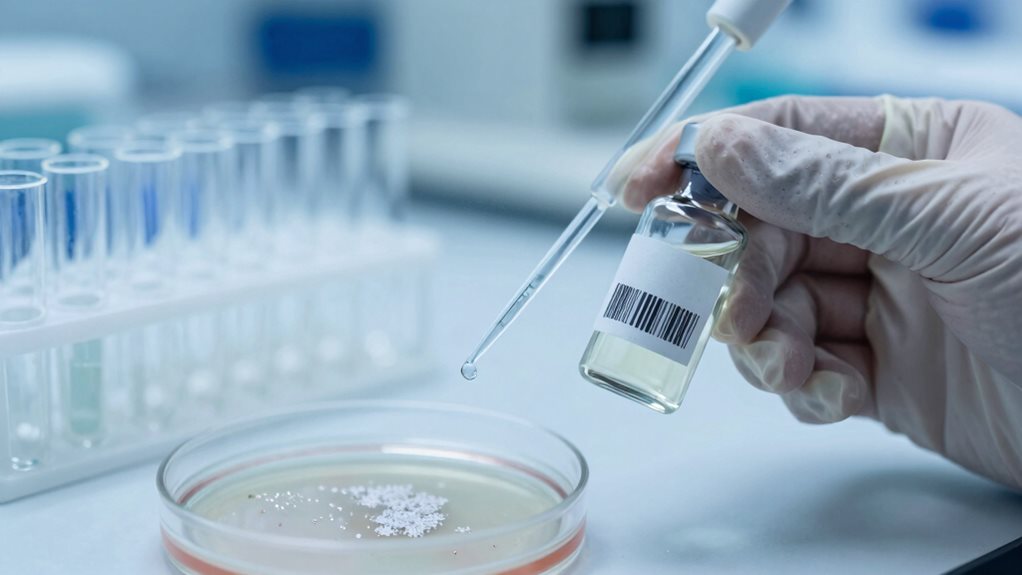
You need to understand that LL-37’s safety profile depends heavily on concentration, since this peptide can damage your own cells when levels climb too high, a risk that stems from its natural ability to disrupt membranes.
Additionally, dosing precision is crucial to prevent cytotoxicity and unintended immune overstimulation that can worsen inflammation rather than resolve it. Immune modulation can be affected if the dose is not carefully controlled, underscoring the need for supervised therapeutic planning.
Cytotoxicity Thresholds
At what point does a molecule that defends against infection turn into a threat to your own cells? LL-37’s antimicrobial effects appear at roughly 1–10 µM, yet cytotoxicity to your cells may begin between 13–25 µM in some studies, though other reports describe damage—including cell shrinkage, membrane injury, and apoptosis—already within that 1–10 µM range, depending on your cell type and experimental conditions.
Membrane Damage Risks
The membrane-disruptive power that makes LL-37 effective against pathogens also creates its most significant safety concern, as this same mechanism can damage your own cells when concentrations climb too high.
You face concentration-dependent risks, with membrane permeabilization reported at 1–10 µM in human cells.
Your safety margin narrows because antimicrobial and cytotoxic ranges overlap, though cholesterol in your membranes provides some protection compared to bacterial targets.
Immune Overstimulation Concerns
How might LL-37’s immune-activating properties become a double-edged sword? While you want immune support, excessive activation can trigger inflammation, type I interferon signaling, and mast cell responses, potentially worsening autoimmune-prone conditions like psoriasis, lupus, or rosacea.
Though theoretical risks exist, documented cases of LL-37 inducing new autoimmune disease remain absent.
You should approach higher doses cautiously, particularly if you have inflammatory disorders, and monitor for persistent flu-like symptoms, flushing, or irritation that might signal overstimulation requiring dose adjustment.
Is LL-37 Available as a Treatment? Clinical Trials and Access
You’re looking at LL-37 as a potential option, but you should understand that it remains investigational rather than a standard treatment you can readily obtain. As of now, no FDA-approved drug product exists, meaning any clinical use occurs through research protocols or specialized compounding pharmacies rather than conventional prescriptions.
While trials in wound healing, cancer, and antiviral applications have shown some promising signals, the overall evidence base is still early-stage, with small studies and mixed results that haven’t yet established LL-37 as a proven therapy for routine medical practice. clinical trials remain exploratory, and access is typically limited to research settings rather than routine care.
Clinical Trial Status
When considering whether LL-37 might become part of your treatment options, you’ll want to understand exactly where this peptide stands in the development pipeline—because, despite promising laboratory research spanning nearly two decades, its path to routine clinical use remains incomplete.
As of April 2026, no FDA approval exists for any indication, and no international regulatory body has authorized exogenous therapeutic use. You’re looking at a compound available solely through compounded prescriptions from licensed providers and 503A compounding pharmacies, not as a standard commercial drug.
The most advanced human data comes from topical wound-healing trials, including a completed phase IIb venous leg ulcer study in Poland and a small diabetic foot ulcer trial, yet these remain early-phase efforts insufficient for marketing authorization.
Research Access Only
Although you may encounter LL-37 mentioned in scientific literature and online discussions about peptide therapeutics, it’s essential to understand that this compound remains firmly in the research access category rather than approved clinical medicine. You won’t find FDA-approved products, standardized dosing, or established treatment protocols, since access is limited to clinical trials, specialized compounding with prescriptions, or research suppliers—none of which guarantee safety or efficacy for personal use.
What’s Next for LL-37 Development?
Where might LL-37 research lead in the coming years? You’re seeing regulatory agencies evaluate new formulations, including liposomal encapsulation and nanoparticle delivery systems that protect against degradation while enhancing tissue penetration.
A potential study area is how liposomal encapsulation can improve LL-37 stability and delivery in diverse tissue environments.
Should You Consider LL-37? Key Takeaways for Patients and Researchers
As research momentum builds for advanced delivery systems and expanded therapeutic applications, you’re likely wondering whether LL-37 warrants serious consideration for your own health needs or research priorities. If you experience recurrent infections, slow-healing wounds, or compromised barrier immunity, this peptide offers promising antimicrobial and immunomodulatory benefits worth discussing with your physician. In exploring LL-37, clinicians should also stay mindful of the balance between potential benefits and the risk of inflammatory or irritant reactions, particularly in individuals with sensitive or compromised immune systems, where careful patient selection is essential. LL-37
Frequently Asked Questions
Does LL-37 Work Against Antibiotic-Resistant Superbugs?
Yes, LL-37 shows promise against antibiotic-resistant superbugs, though clinical proof remains limited. You’ll find strong lab evidence: it kills resistant *Pseudomonas*, *Staphylococcus*, and *Acinetobacter* strains, disrupts tough biofilms, and penetrates host cells where bacteria hide. Its membrane-targeting mechanism, which physically ruptures bacterial walls, helps it evade typical resistance pathways. However, you’re still looking at preclinical data—proteolytic instability and potential toxicity pose real barriers you’ll need researchers to solve before this becomes a viable treatment.
Can LL-37 Be Taken Orally or Only Applied Topically?
You can take LL-37 orally, but it won’t reach your bloodstream effectively since stomach enzymes break it down, leaving less than 2% bioavailability; oral use mainly suits localized gut effects, while topical application works well for skin and wound healing with stronger clinical support, and subcutaneous injection remains the only reliable route for systemic exposure.
How Does LL-37 Compare to Prescription Antibiotics?
You’ll find LL-37 works differently than prescription antibiotics, since it disrupts microbial membranes rather than targeting specific enzymes, which helps it kill drug-resistant bacteria and break down biofilms where conventional antibiotics often fail. It achieves greater than 4 log reduction in *S. aureus* biofilms compared to less than 1 log for standard drugs, though it isn’t FDA-approved, costs more, and faces challenges with stability and physiological activity.
Is LL-37 Found Naturally in Healthy Human Bodies?
Yes, you naturally produce LL-37 throughout your body as part of your innate immune defenses. Your neutrophils store this antimicrobial peptide in granules, while your skin, respiratory tract, gastrointestinal lining, and reproductive tissues generate it constitutively. Derived from the hCAP-18 precursor through proteolytic cleavage, LL-37 serves as a first-line barrier defender without requiring external administration, though infection or injury typically amplifies its expression beyond baseline healthy levels.
Can LL-37 Supplements Boost Immune Function Safely?
You shouldn’t rely on LL-37 supplements as a proven, safe immune enhancer, since strong clinical evidence in humans is lacking. While research shows immune-modulating potential in lab and animal studies, these don’t guarantee the same effects or safety in you. LL-37 can actually promote inflammation and harm healthy cells at certain doses, making its risks unclear without more rigorous trials.
And Finally
You’ve explored LL-37’s dual nature as both defender and potential provocateur, recognizing how this antimicrobial peptide strengthens immunity while sometimes triggering inflammation. You now understand its experimental status, safety considerations, and the careful balance researchers must strike. Whether you’re a patient awaiting approved therapies or a scientist advancing peptide research, you’ll approach LL-37 with informed caution, appreciating its promise without overlooking its complexities. Stay updated; this field evolves rapidly.
References
- https://pmc.ncbi.nlm.nih.gov/articles/PMC11893641/
- https://www.imrpress.com/journal/fbl/26/11/10.52586/5029
- https://peptidesociety.org/wp-content/uploads/2018/06/LL-37-Monograph.pdf
- https://web.stanford.edu/group/barronlab/PubPdfs/2024/Between good and evil Complexation of the human cathelicidin LL-37 with nucleic acids.pdf
- https://pmc.ncbi.nlm.nih.gov/articles/PMC7246396/
- https://pubmed.ncbi.nlm.nih.gov/41270816/
- https://revolutionhealth.org/blogs/news/peptide-therapy-ll-37
- https://www.frontiersin.org/journals/immunology/articles/10.3389/fimmu.2013.00143/full
- https://superpower.com/guides/ll-37
- https://pmc.ncbi.nlm.nih.gov/articles/PMC11350787/