Thymalin is a natural peptide complex derived from calf thymus glands that supports immune health by promoting T-cell development, regulating gene expression, and enhancing immune responses, especially important for aging or immunocompromised individuals. It works at the cellular level by penetrating cell nuclei to influence DNA and histones, supporting cell proliferation and repair. Generally safe with mild side effects like injection site reactions, it has been shown in research to improve immune function and reduce disease severity. Exploring further will provide more thorough understanding into its full potential.
TLDR
- Thymalin, derived from calf thymus, supports immune function by promoting T-cell development and restoring immune balance.
- Its peptides penetrate cell nuclei, regulate gene expression, and modulate chromatin, influencing immune cell proliferation and differentiation.
- Benefits include immune enhancement in aging, improved disease recovery, and potential reduction of COVID-19 mortality.
- Side effects are mild and temporary, such as injection site reactions; contraindicated in autoimmune or hypersensitive individuals.
- Extensive research confirms Thymalin’s efficacy in boosting immunity and managing chronic conditions, with recommended administration protocols.
What Is Thymalin and How Does It Support Immune Health?
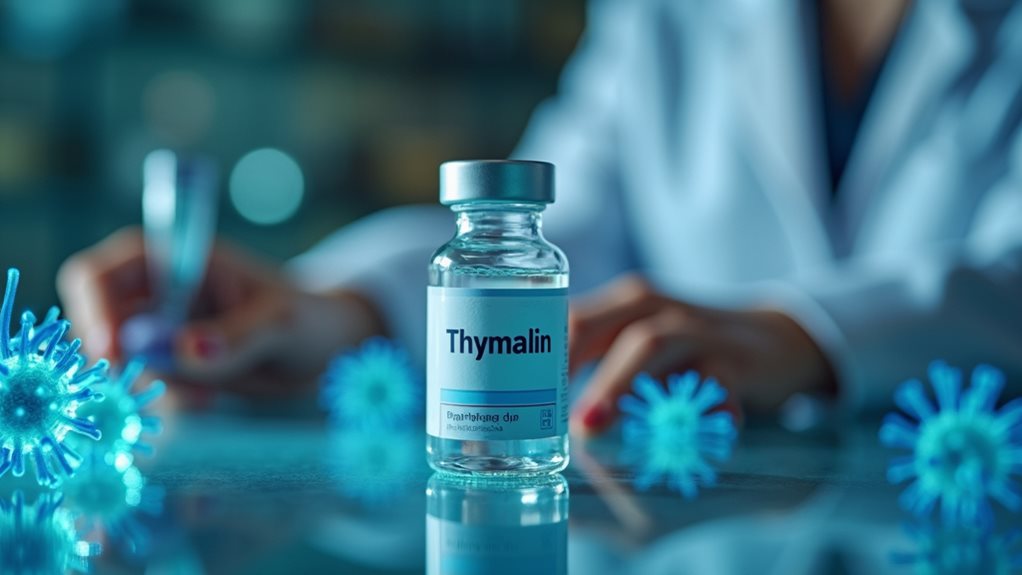
Thymalin is a biologically active peptide complex derived from the thymus gland of young calves. It plays a significant role in supporting immune health by stimulating the function of this essential organ. It contains peptides that mimic natural thymic components, promoting T-cell development, restoring immune balance, and enhancing immune responses. This is especially beneficial in aging or immunocompromised individuals, thereby strengthening overall immune defenses. Thymosin Alpha-1 is another peptide often studied for immune support, illustrating the broader impact of peptide-based approaches on immune function.
How Does Thymalin Work at the Cellular Level?
At the cellular level, Thymalin exerts its effects primarily through its short peptides, such as EW, KE, and EDP. These peptides penetrate the nucleus and nucleolus, where they bind double-stranded DNA and histone proteins. This interaction regulates gene expression by modifying chromatin accessibility, supporting cellular proliferation, differentiation, and apoptosis. Ultimately, this influences immune function and cellular repair processes. Epigenetic modulation can also influence chromatin remodeling and transcriptional regulation in immune cells chromatin accessibility.
What Are the Main Benefits of Thymalin for Aging and Chronic Conditions?
As research increasingly highlights the benefits of immune system optimization in aging populations, Thymalin stands out for its capacity to restore and enhance immune function, particularly in older individuals or those with chronic health conditions. It improves immune surveillance, delays cellular aging, supports tissue regeneration, and reduces disease symptoms, offering an all-encompassing approach to health maintenance and age-related condition management. Thymosin alpha-1 may modulate immune responses through effects on T-cell activity and cytokine signaling, contributing to a more balanced immune environment immune modulation.
Is Thymalin Safe? Potential Side Effects and Precautions?
Thymalin is generally considered safe for most users, with the majority of mild side effects being temporary and manageable, such as injection site reactions and slight discomfort.
However, certain groups, including individuals with autoimmune diseases, pregnant women, or those with weakened immune systems, should exercise caution or avoid use due to potential risks or insufficient safety data.
To guarantee safety, it’s important to use pharmaceutical-grade preparations, adhere to recommended dosages, and consult with a healthcare professional before beginning treatment, especially if you have underlying health conditions or are pregnant.
Additionally, safety data gaps mean that ongoing monitoring and individualized risk assessment are prudent when considering Thymalin in populations with immune-related concerns. Thymalin safety
Common Mild Reactions
Although Thymalin is generally considered safe for most users, it can cause mild, temporary reactions that are important to recognize and understand.
Common responses include injection-site redness, minor swelling, tenderness, and transient discomfort that resolve within hours to days without intervention.
Systemic effects like fatigue, low-grade fever, or lymphadenopathy may occur but are typically short-lived and indicate immune activation rather than toxicity.
Contraindications and Risks
Are there specific circumstances under which Thymalin may pose risks or be unsafe for use? Yes, individuals with active autoimmune diseases, severe organ impairments, acute infections, or hypersensitivity to thymic peptides should avoid it.
Concurrent use with immunosuppressants or in certain populations like pregnant or breastfeeding women requires caution or medical supervision to prevent adverse effects.
Usage During Pregnancy
The safety of using Thymalin during pregnancy remains uncertain due to a lack of thorough research and clinical data. No studies in humans or animals assess its safety in pregnant or breastfeeding individuals.
Official guidelines contraindicate its use. Its immunomodulatory mechanism could theoretically interfere with fetal immune development.
What Does Clinical Research Say About Thymalin’s Effectiveness?
Clinical research provides persuasive evidence supporting Thymalin’s effectiveness across various health conditions, demonstrating its potential to enhance immune function, reduce disease severity, and improve patient outcomes.
Thymogen and related thymic peptides are studied for immune modulation and regenerative effects, with proposed mechanisms including immune cell maturation and restoration of immune balance. immune modulation
Studies show it halves COVID-19 hospital mortality, accelerates immune recovery, and decreases mortality in elderly populations.
It also reduces risks of respiratory and cardiovascular diseases, confirming its broad therapeutic and geroprotective benefits.
How Should You Use Thymalin for Best Results?
To achieve the best results with Thymalin, it’s crucial to follow proper administration methods, dosing protocols, and handling procedures.
Use intramuscular or subcutaneous injections, rotate sites, and maintain correct needle gauge.
Adhere to recommended doses, treatment durations, and cycle timing.
Store the peptide properly, and monitor for side effects, ensuring safety and ideal immune system support.
Additionally, familiarize yourself with regulatory classifications and the factors that influence peptide availability and approval to make informed decisions about research use and compliance regulatory classifications.
Frequently Asked Questions
Can Thymalin Be Used Alongside Other Immune-Modulating Treatments?
You can generally use thymalin with other immune-modulating treatments, but avoid combining it with immunosuppressants or during autoimmune flares. Always consult your healthcare provider to verify compatibility and prevent potential interactions or adverse effects.
Are There Any Long-Term Risks Associated With Thymalin Use?
Long-term risks of thymalin use are still uncertain because studies don’t extend beyond six months. You should monitor for autoimmune changes or immune dysregulation over extended periods, especially if using it continuously for years.
How Does Thymalin Affect Autoimmune Disease Progression?
Thymalin slows autoimmune disease progression by balancing T-cell responses, reducing inflammation, and promoting immune regulation. It helps prevent self-reactive T cell production, lowers cytokine levels, and supports immune system healing, potentially improving symptoms and long-term outcomes.
Is Thymalin Effective for Children With Immune Deficiencies?
Yes, thymalin can be effective for children with immune deficiencies. It promotes T-cell maturation, improves immune responses, and has shown clinical benefits like infection reduction, immune normalization, and faster recovery, especially in pediatric respiratory and thymic conditions.
What Are the Differences Between Thymalin and Other Thymic Peptides?
You’ll notice that thymalin is a naturally derived polypeptide complex with multiple peptides affecting gene expression, while other peptides like thymosin alpha-1 are single, synthetic, with specific, well-studied mechanisms. They differ in origin, structure, and clinical validation.
And Finally
Thymalin offers a promising approach to supporting immune function and addressing age-related decline, backed by emerging research and a well-understood mechanism of action at the cellular level. While generally considered safe when used appropriately, it’s essential to follow recommended dosages and consult healthcare professionals, especially if you have underlying health conditions. By understanding its benefits, potential risks, and proper usage, you can make informed decisions that optimize your health outcomes with this peptide therapy.