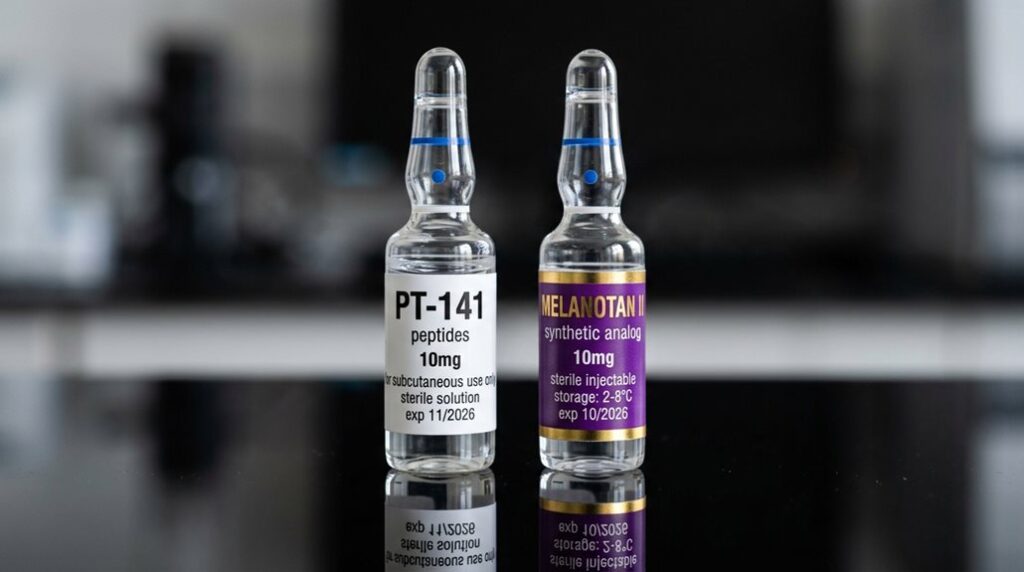
Cagrilintide and semaglutide are both injectable medications that support weight loss through different mechanisms: cagrilintide promotes satiety by delaying gastric emptying, while semaglutide activates GLP-1 receptors to reduce hunger and extend fullness. Semaglutide has a more established safety and efficacy profile, but early studies suggest cagrilintide offers comparable results with fewer gastrointestinal side effects. Combining these drugs may enhance outcomes, and understanding their benefits helps guide personalized treatment plans, with more details available as you investigate further.
TLDR
- Cagrilintide promotes satiety by delaying gastric emptying, while semaglutide decreases hunger via GLP-1 receptor activation.
- Semaglutide has a more extensive, well-established evidence base for weight loss compared to cagrilintide.
- Cagrilintide may cause fewer gastrointestinal side effects than semaglutide in early trials.
- Combination therapy (CagriSema) enhances weight loss by targeting multiple pathways.
- Long-term safety data are more robust for semaglutide; cagrilintide is still under investigation.
How Do Cagrilintide and Semaglutide Help With Weight Loss?

Both cagrilintide and semaglutide support weight loss through distinct but complementary mechanisms that target appetite regulation and energy intake.
Cagrilintide promotes satiety by acting on brain pathways and delays gastric emptying, reducing food consumption.
Semaglutide works through GLP-1 receptors, decreasing hunger and prolonging fullness, which together help lower overall calorie intake essential for weight management.
Which Drug Is More Effective for Losing Weight?
When evaluating the effectiveness of cagrilintide and semaglutide for weight loss, current evidence indicates that the combination of both drugs, known as CagriSema, consistently demonstrates superior results compared to either medication alone. A newer insight from trial data suggests that triple-agonist regimens targeting GLP-1, GIP, and glucagon pathways can yield greater and more durable weight loss than GLP-1–only therapies alone. CagriSema shows greater percentage and absolute weight loss over 20–68 weeks, making it the most effective option for significant, sustained weight reduction.
What Are the Main Safety Concerns of These Medications?
Understanding the main safety concerns associated with cagrilintide and semaglutide is essential for making informed decisions about their use in weight management.
Common issues include gastrointestinal symptoms like nausea and diarrhea, injection-site reactions, and potential gallbladder complications.
Serious adverse events are rare but require monitoring, especially in long-term use, with safety data more established for semaglutide.
In research, clinicians also evaluate long-term safety data and how patients with varied medical histories may respond to these therapies.
How Do Their Side Effects Compare?

While cagrilintide and semaglutide share similarities in gastrointestinal side effects, they also have notable differences affecting tolerability.
Cagrilintide often causes injection-site reactions, such as redness and itching, which are less common with semaglutide.
Both drugs can induce nausea, vomiting, diarrhea, and constipation, especially during dose escalation, but these symptoms typically diminish as your body adjusts over time.
Additionally, research notes that injection-site reactions are more frequently observed with cagrilintide compared to semaglutide.
Who Should Consider Using Cagrilintide or Semaglutide?
Determining whether cagrilintide or semaglutide is appropriate for you depends largely on your specific health profile, weight-loss goals, and any underlying medical conditions. If you need significant weight reduction, especially beyond what semaglutide alone offers, combination therapy may be suitable. Those with obesity-related complications or diabetes might benefit from therapies customized to glycemic control and metabolic risk reduction. twincretin approach
What Clinical Evidence Supports Their Use?
What clinical evidence supports the use of cagrilintide and semaglutide as effective treatments for obesity and related conditions?
For cagrilintide, early trials show comparable weight loss to semaglutide, with fewer gastrointestinal side effects, though data are limited.
Semaglutide has a larger, more established evidence base, demonstrating significant weight loss and glycemic control, especially when combined with cagrilintide, which enhances overall effectiveness.
Cagrilintide and semaglutide both act on metabolic pathways to reduce appetite and support weight management, with ongoing research exploring long-term outcomes and tolerability. Needle-free peptide delivery
How Do These Treatments Fit Into Overall Obesity Management?

Cagrilintide and semaglutide are increasingly recognized as important components within the broader strategy of pharmacologic weight management for adults with overweight or obesity. They serve as higher-efficacy options, often combined with lifestyle interventions. In addition, understanding how these agents interact with metabolic pathways can help tailor treatments to individual needs and metabolic profiles receptor differences.
Will Combination Therapy Become the Future Standard?
While combination therapy shows promise for achieving greater weight loss and improved metabolic parameters, it also raises concerns about increased side effect risks, particularly gastrointestinal discomfort, which is common with both agents.
Tesamorelin and Sermorelin differ in their mechanisms of action and how they influence the growth hormone axis, which can inform their safety and potential applications in metabolic health. growth hormone pathways
Enhanced Efficacy Potential
The promising results from combining cagrilintide with semaglutide suggest that combination therapy could become the new standard in obesity and diabetes treatment.
It consistently demonstrates superior efficacy compared to monotherapy. This approach achieves greater weight loss, improves metabolic markers, and targets multiple mechanisms simultaneously.
These factors indicate a potential for more effective, all-encompassing management of these conditions in the future.
Increased Side Effect Risks
Combining medications such as cagrilintide and semaglutide offers promising improvements in treating obesity and diabetes, but it also introduces increased risks of side effects that warrant careful consideration.
Gastrointestinal issues like nausea, vomiting, and diarrhea are common, often mild or transient.
Yet serious adverse events, injection-site reactions, and other non-GI effects such as fatigue and gallbladder problems also occur more frequently, highlighting the importance of monitoring safety.
Frequently Asked Questions
Are Cagrilintide and Semaglutide Approved for Use in All Countries?
You should know that neither cagrilintide nor semaglutide is approved for use in all countries. Cagrilintide remains investigational and limited to clinical trials, while semaglutide is regionally approved, with approval status varying depending on the country and specific product.
How Do Dosing Schedules Differ Between Cagrilintide and Semaglutide?
You’ll find cagrilintide has flexible, research-based weekly dosing with gradual increases, while semaglutide follows a more standardized, clinical schedule, gradually escalating over weeks to a fixed maintenance dose, making semaglutide’s schedule more predictable and consistent.
Can These Medications Be Combined With Other Weight-Loss Treatments?
You can combine cagrilintide and semaglutide, especially in research settings, but combining them with other weight-loss drugs isn’t well-established yet. More studies are needed to confirm safety and effectiveness for broader use.
What Are the Long-Term Effects of Using Cagrilintide or Semaglutide?
You should know that semaglutide has more established long-term safety data, including cardiovascular benefits, while cagrilintide’s long-term effects are less certain due to limited evidence beyond 68 weeks, mainly focused on gastrointestinal tolerability.
How Do Costs Compare Between Cagrilintide and Semaglutide Treatments?
You’ll find semaglutide costs around $1,349–$1,500 monthly, while research cagrilintide ranges from $200–$400. Combined CagriSema might cost more than semaglutide alone, but availability and pricing vary based on sources and access.
And Finally
Understanding the differences between cagrilintide and semaglutide enables you to make informed decisions about weight management options. Both medications have demonstrated effectiveness, yet their safety profiles and suitability vary based on individual health conditions. Consulting with a healthcare professional guarantees personalized guidance, considering their clinical evidence and potential side effects. As research advances, combination therapies may emerge as promising strategies, but careful evaluation remains essential for safe and effective obesity treatment.
References
- https://pubmed.ncbi.nlm.nih.gov/41834765/
- https://www.acc.org/Latest-in-Cardiology/Journal-Scans/2025/07/02/14/43/REDEFINE-1-and-REDEFINE-2
- https://www.news-medical.net/news/20250623/Cagrilintide-and-semaglutide-together-drive-record-weight-loss-in-global-trial.aspx
- https://thepeptidecatalog.com/articles/cagrilintide-vs-semaglutide
- https://pubmed.ncbi.nlm.nih.gov/42207966/
- https://www.gastroenterologyadvisor.com/news/combining-cagrilintide-with-semaglutide-amplifies-weight-loss-outcomes/
- https://www.the-innovation.org/article/doi/10.59717/j.xinn-med.2025.100150
- https://pubmed.ncbi.nlm.nih.gov/40544432/
- https://pmc.ncbi.nlm.nih.gov/articles/PMC11642503/
- https://www.2minutemedicine.com/significant-body-weight-reduction-with-cagrilintide-semaglutide-therapy/