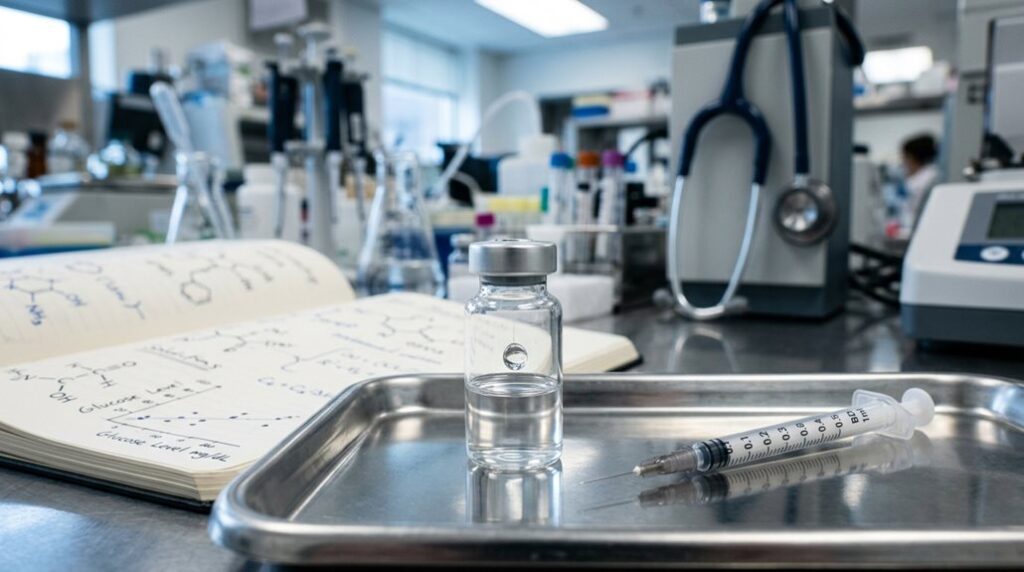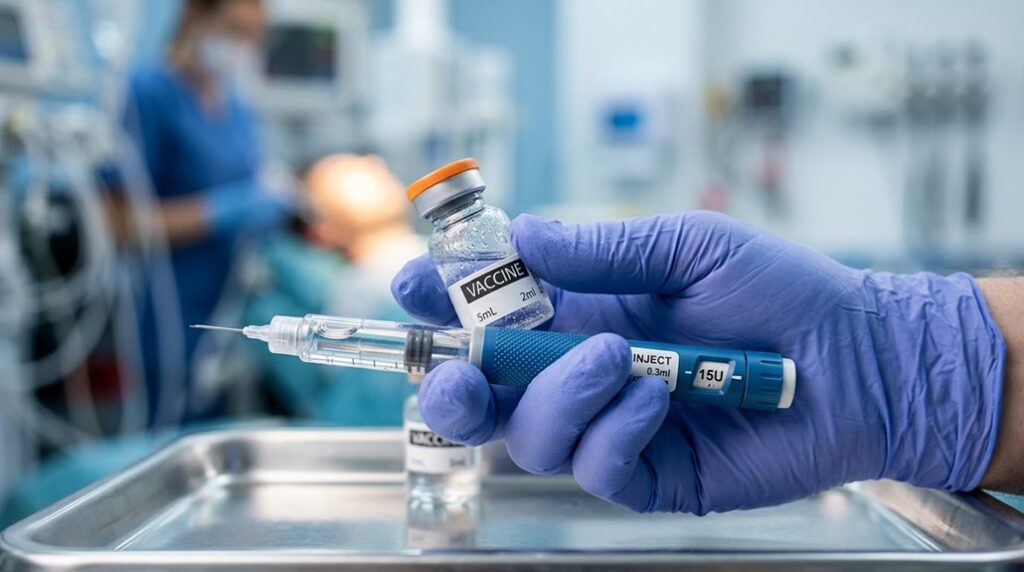
Research shows that peptides can support post-surgical recovery by promoting tissue repair, reducing inflammation, and enhancing immune responses, which may lead to faster healing and better tissue regeneration. Specific peptides stimulate cell growth, improve blood vessel formation, and modulate inflammation, while antimicrobial peptides help prevent infections. Although promising, these therapies require careful evaluation, as ongoing studies aim to confirm their safety and effectiveness. Continuing provides deeper understanding into how peptides could optimize healing outcomes.
TLDR
- Peptides like BPC-157 and Thymosin Beta-4 promote tissue repair, angiogenesis, and accelerated wound healing post-surgery.
- Growth hormone secretagogues (e.g., Sermorelin) support tissue regeneration and recovery by stimulating GH production.
- Antimicrobial peptides show potential in preventing infections and promoting healing through bacterial membrane disruption.
- Peptides can reduce inflammation and muscle loss, aiding in faster recovery and preservation of tissue integrity.
- Ongoing research emphasizes understanding peptide mechanisms to optimize their safety and effectiveness in post-surgical healing.
What Are Peptides and How Do They Help Post-Surgery Healing?
Peptides are short chains of amino acids that serve as fundamental building blocks for larger proteins and play critical roles in biological processes, particularly during tissue repair and healing. They function as signaling molecules, immune modulators, or contributors to protein formation. Tesamorelin and Sermorelin are growth hormone-releasing peptides that stimulate the pituitary gland to produce and release human growth hormone (GH), influencing growth hormone pathways and downstream effects on metabolism, tissue repair, and body composition. peptide therapy
Types of Peptides Studied for Surgical Recovery
When exploring options to support recovery after surgery, understanding the different types of peptides under study can help you make informed decisions about their potential benefits. receptor interactions are just one part of how these compounds can influence healing, along with cellular signaling pathways and downstream biological responses. These include BPC-157, which promotes tissue repair and angiogenesis; Thymosin Beta-4, associated with cell migration and healing; GHK-Cu, focused on skin and scar remodeling; Thymosin Alpha-1, supporting immune modulation; and growth hormone secretagogues, aimed at preserving muscle mass during recovery.
How Do Peptides Promote Wound Closure and Tissue Repair
Peptides support wound closure and tissue repair primarily by activating cells such as keratinocytes and fibroblasts, which are essential for re-epithelialization and collagen production. This leads to stronger and more resilient tissue.
They also promote the formation of new blood vessels through angiogenesis, ensuring that healing tissues receive adequate oxygen and nutrients. This accelerates recovery.
Additionally, peptides modulate inflammation and enhance antimicrobial defenses, helping to reduce infection risk and create a balanced environment conducive to efficient healing.
Cellular Activation and Migration
Cellular activation and migration are fundamental processes that underpin effective wound healing and tissue repair.
Specific peptides can deeply influence these mechanisms by engaging receptor signaling pathways. They activate receptors like EGFR, promoting keratinocyte and fibroblast movement, cytokine production, and adhesion.
These actions collectively accelerate wound closure, enhance tissue regeneration, and support the structural integrity needed for successful recovery.
Enhancing Angiogenesis Processes
Enhancing angiogenesis is a fundamental component of effective wound healing and tissue repair, particularly in post-surgical recovery where rapid and complete wound closure is essential.
Peptides promote this process by upregulating VEGF and other signals, activating endothelial cells, and supporting capillary formation. These mechanisms facilitate improved oxygen and nutrient delivery, accelerating tissue regeneration and strengthening the healing response.
Modulating Inflammation Response
How do peptides facilitate wound closure and tissue repair through the modulation of inflammation? They regulate the inflammatory response by promoting macrophage polarization toward healing phenotypes.
They reduce excess cytokines like TNF-α and IL-6, and support immune cell recruitment that coordinates debris clearance and tissue rebuilding. This balanced regulation shortens inflammation duration, accelerates epithelialization, and enhances overall wound healing efficiency.
Are Antimicrobial Peptides Effective in Preventing Surgical Infections?
Antimicrobial peptides (AMPs) have shown broad-spectrum antibacterial activity, including effectiveness against resistant bacteria, making them promising candidates for preventing surgical infections.
Antimicrobial peptides have demonstrated mechanisms that involve disrupting bacterial membranes and interfering with biofilm formation, which may complement existing infection prevention strategies.
While laboratory and animal studies provide strong evidence for their ability to disrupt bacterial membranes and biofilms, clinical data remains limited, with only a few human trials exploring their use in surgical settings.
Despite their potential, challenges such as stability, delivery methods, and regulatory approval currently slow their widespread adoption in routine infection prevention.
Efficacy in Infection Prevention
The question of whether antimicrobial peptides (AMPs) are effective in preventing surgical infections is increasingly relevant as researchers investigate alternatives to traditional antibiotics, particularly in settings where resistance diminishes the efficacy of conventional drugs.
Studies show AMPs have broad-spectrum activity, rapidly kill bacteria, inhibit biofilm formation, and can be delivered locally via coated sutures or implants, offering promising, though still developing, options for infection prevention.
Clinical Evidence and Trials
Despite the promising laboratory evidence supporting the potential of antimicrobial peptides (AMPs) to prevent surgical infections, the clinical evidence base remains limited and somewhat fragmented.
Human trials are scarce, often focus on topical applications or infected wounds rather than routine prophylaxis.
Many candidate peptides are still in early development stages, with safety and efficacy data needing further validation before widespread clinical use.
Can Peptides Help Preserve Muscle and Reduce Tissue Loss
Emerging evidence suggests that certain peptides may help preserve muscle and reduce tissue loss after surgery, but the strength of this evidence varies by peptide type and application. Growth-hormone–related peptides and short peptide nutrition show potential by supporting muscle protein synthesis and rapid amino acid delivery. However, more rigorous clinical trials are needed to confirm these benefits and determine ideal protocols. PEG-MGF is a pegylated version of MGF studied for extended half-life and muscle repair signaling, but research on its safety, efficacy, and long-term risks in humans remains limited and warrants careful evaluation. extended half-life considerations and signaling pathways associated with MGF deserve cautious interpretation when translating preclinical findings to clinical practice.
How Do Peptides Modulate Inflammation and Support Immune Response
Peptides play a significant role in modulating inflammation and supporting immune responses during post-surgical recovery. They help to create a balanced environment that promotes healing while preventing complications. They reduce excessive inflammation by lowering pro-inflammatory mediators, shift macrophages toward repair states, and recruit immune cells to fight infection. All of these actions occur while maintaining necessary early inflammation for tissue repair. Additionally, certain immune-regulating peptides influence cytokine signaling pathways to fine-tune the immune response during healing, aligning defense with tissue regeneration. Macrophage polarization influences the shift toward pro-repair phenotypes and helps coordinate tissue remodeling.
Should You Consider Peptide Therapy After Surgery? Risks and Future Outlook
Considering the current state of research and clinical practice, whether you should pursue peptide therapy after surgery depends on several important factors, including the type of procedure performed, your health status, and your medical team’s guidance.
While promising, most peptides lack comprehensive human safety data, and off-label use carries risks like hormonal shifts or interactions.
Careful medical consultation is essential, and understanding how peptide therapies may influence tissue repair pathways and inflammation-related mechanisms can inform decision-making tissue repair pathways.
Frequently Asked Questions
Are There Any Approved Peptide Treatments Specifically for Post-Surgical Recovery?
No, there are no FDA-approved peptide treatments specifically for post-surgical recovery. You should view any peptide use in this situation as experimental or off-label, and always discuss it with your healthcare team before considering it.
What Are the Potential Side Effects of Using Peptides After Surgery?
You might experience injection-site reactions, mild systemic symptoms like headache or fatigue, water retention, blood sugar changes, or wound healing delays. Rarely, allergic reactions or serious complications can occur, especially if product quality or safety guidelines aren’t followed.
How Long Does It Take to See Benefits From Peptide Therapy Post-Surgery?
You might notice early benefits like reduced pain and improved mobility within 7–10 days, but full recovery usually takes 4–12 weeks, depending on your surgery type, tissue involved, and adherence to your post-op care and rehabilitation.
Can Peptides Replace Traditional Postoperative Care Methods?
Peptides can’t replace traditional postoperative care because there’s no strong evidence they effectively support wound healing or recovery. You should continue following established protocols like wound care, antibiotics, and mobilization, while considering peptides only as experimental adjuncts.
What Are the Regulatory Considerations for Peptide Use in Surgical Patients?
You need to guarantee peptides aren’t FDA-approved for surgical use, follow compounding rules, obtain proper prescriptions, document sourcing and dosing, and recognize the legal risks of off-label, unregulated use—always prioritize patient safety and regulatory compliance.
Final Note
Peptides offer promising potential to enhance post-surgery recovery by promoting tissue repair, reducing infection risk, and modulating inflammation. While current research suggests benefits, it’s crucial to consult healthcare professionals before considering peptide therapy, as individual responses vary and long-term safety data remain limited. Staying informed about ongoing studies will help you make educated decisions. Ultimately, integrating peptides into recovery strategies should be approached cautiously, prioritizing evidence-based practices and personalized medical guidance to guarantee safe and effective healing.
References
- https://academic.oup.com/asj/advance-article/doi/10.1093/asj/sjag020/8439116?guestAccessKey=
- https://pmc.ncbi.nlm.nih.gov/articles/PMC12650420/
- https://pmc.ncbi.nlm.nih.gov/articles/PMC12828160/
- https://pmc.ncbi.nlm.nih.gov/articles/PMC12753158/
- https://pmc.ncbi.nlm.nih.gov/articles/PMC11468004/
- https://journals.sagepub.com/doi/10.1177/20417314241280359
- https://journals.physiology.org/doi/full/10.1152/ajpcell.00080.2022
- https://journaloei.scholasticahq.com/article/160177-emerging-peptide-therapies-in-orthopaedics-evidence-safety-and-perioperative-implications
- https://lpi.oregonstate.edu/mic/health-disease/skin-health/peptides