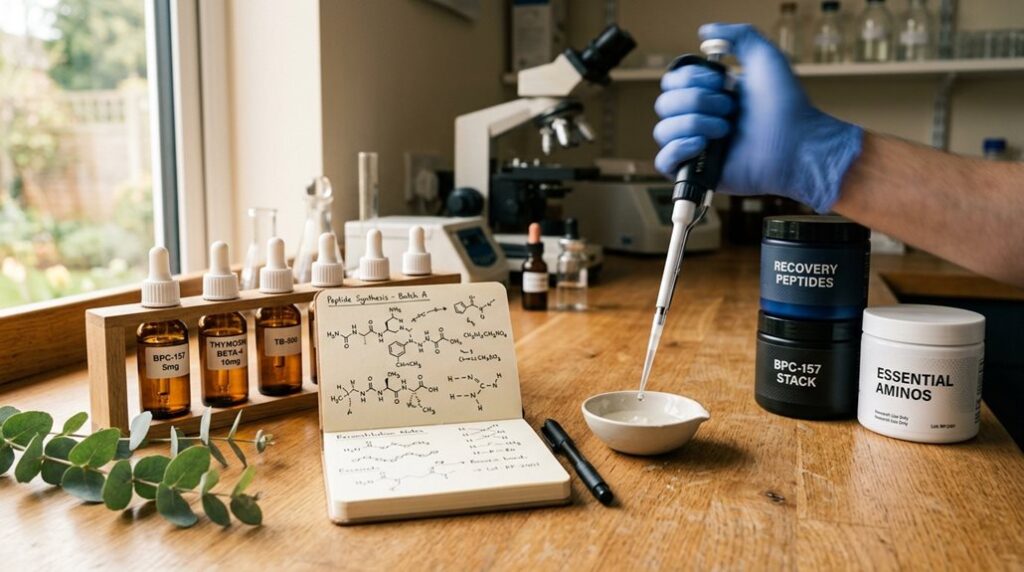
Peptides stimulate your skin’s ability to produce collagen and improve elasticity by signaling fibroblasts to generate new matrix components, such as collagen, hyaluronic acid, and essential extracellular matrix proteins. Topical peptides work locally to hydrate and support skin structure, while oral peptides supply building blocks systemically, gradually enhancing firmness and resilience over weeks. The effectiveness depends on formulation, application, and your skin condition, and staying informed will help you select the best options for your goals.
TLDR
- Peptides stimulate dermal fibroblasts to produce collagen, hyaluronic acid, and extracellular matrix components, enhancing skin firmness.
- Topical peptides (e.g., signal peptides) provide localized hydration and collagen support, visible in 8-12 weeks.
- Oral peptides promote systemic collagen synthesis and skin hydration, with results appearing after several weeks of consistent use.
- Peptide formulations’ stability and delivery methods significantly impact their effectiveness in boosting skin elasticity.
- Safe, well-formulated peptide products can improve skin resilience, texture, and reduce wrinkles over time.
How Do Peptides Boost Skin’s Collagen and Elasticity?

Peptides enhance skin’s collagen and elasticity primarily by signaling dermal fibroblasts, which are specialized cells responsible for producing collagen, hyaluronic acid, and other extracellular matrix components that maintain skin structure and resilience.
These small bioactive fragments stimulate fibroblast activity, increasing collagen synthesis and supporting repair pathways.
Ultimately, this leads to improved skin firmness, thickness, and overall texture over time.
What’s the Difference Between Oral and Topical Peptides for Skin Benefits?
When comparing the benefits of oral versus topical peptides for skin health, it’s essential to understand that each targets different mechanisms and offers unique advantages.
Oral peptides are absorbed systemically, promoting collagen synthesis, hydration, and barrier function through measurable improvements over weeks.
Topical peptides primarily act at the skin surface, providing localized hydration and texture, but their effects are more product-specific and less consistent.
Systemic delivery can influence not only collagen production but also overall skin resilience by supporting cellular signaling pathways beyond the surface. systemic peptide delivery
Which Peptide Types and Formulations Are Most Effective?
Understanding which peptide types and formulations are most effective requires examining their specific mechanisms of action and application methods.
Topical peptides, such as signal peptides and collagen fragments, directly stimulate collagen synthesis and improve skin structure.
Meanwhile, oral collagen supplements aim to provide building blocks from within, though their effectiveness depends on proper dosing and bioavailability.
Variability in peptide composition, formulation stability, and delivery systems can influence results, making it essential to choose products backed by scientific evidence and designed to target your specific skin concerns.
The safety and regulatory status of Melanotan I vs. Melanotan II provides context for evaluating peptide-based options, especially when considering any peptide therapy or cosmetic applications. Afamelanotide
Topical Peptide Potency
Although the effectiveness of topical peptides varies depending on their specific type and formulation, certain peptides have accumulated substantial scientific support for their skin-boosting benefits.
Palmitoyl pentapeptide-4 (pal-KTTKS) and GHK-Cu demonstrate consistent improvements in collagen synthesis, skin thickness, and elasticity.
Creams and serums, especially those with enhanced skin penetration, are most effective when applied twice daily.
Oral Collagen Dosing
Determining which peptide types and formulations are most effective for oral collagen supplementation involves examining the scientific evidence surrounding various products and their bioactive components.
Hydrolyzed collagen peptides, especially low-molecular-weight and dipeptide-rich formulations like Pro-Hyp and Hyp-Gly, show consistent skin benefits.
Doses of approximately 2.5 to 5 grams daily are effective, with formulation quality and duration—typically at least 12 weeks—being key factors for maximum results.
Peptide Composition Variability
Different peptide types and formulations vary considerably in their effectiveness for supporting skin elasticity and collagen synthesis, making it essential to understand their distinct mechanisms and applications.
Signal peptides like Pal-KTTKS stimulate fibroblasts to produce collagen and elastin.
Copper peptides support extracellular matrix repair.
Neurotransmitter-inhibitor peptides relax muscles to reduce wrinkles.
Enzyme-inhibitor and carrier peptides primarily preserve existing collagen and deliver essential trace elements.
How Long Does It Take to See Results From Peptides?
You can typically expect to see early signs of hydration improvements within about four weeks of consistent peptide use.
While noticeable enhancements in skin elasticity and collagen support generally take between eight and twelve weeks.
The rate of improvement can vary based on the specific peptide formulation and how the body metabolizes the compound biological processes involved in collagen synthesis.
The timeline for visible results depends on several factors, including the formulation of the peptides, your baseline skin condition, and how strictly you adhere to daily supplementation.
Understanding these variables can help set realistic expectations and guide your approach to achieving best skin health over time.
Timeline for Visible Changes
The timeline for visible changes resulting from peptide supplementation varies depending on the specific skin improvements sought and the duration of consistent use.
Typically, hydration improvements can appear around week 4, with subtle structural changes.
Noticeable elasticity gains often emerge between 8 to 12 weeks, while visible wrinkle reduction generally occurs after 12 weeks, reflecting gradual, cumulative effects.
Effective Duration of Use
Understanding how long it takes to see meaningful results from peptide supplementation involves considering several factors, including the specific skin improvements targeted and the consistency of use.
Typically, noticeable changes like hydration occur within 4 to 8 weeks.
Improvements in elasticity, firmness, and collagen density generally become evident between 8 and 12 weeks, with longer durations enhancing sustained benefits.
Factors Influencing Results
Multiple factors influence the timeline for observing results from peptide supplementation, making it important to take into account individual differences and specific conditions when evaluating progress.
Hydration improvements may appear as early as four weeks, while changes in elasticity and collagen density typically emerge around 8–12 weeks.
Variables such as age, baseline skin condition, dosage, formulation, and study design also notably affect how quickly visible benefits become apparent.
Are Peptides Safe and Well Tolerated for Skin Use?
When considering the safety of topical peptides for skin application, evidence consistently indicates they’re generally well tolerated and pose minimal risk of adverse effects when used as directed. Clinical reviews show little to no irritation or systemic toxicity, with rare allergic reactions, especially when formulated properly. While short-term studies support their safety, long-term effects require further research, particularly for sensitive individuals. melanin modulation is among the peptide-related mechanisms explored, with findings suggesting minimal systemic impact in typical topical use.
How to Choose the Best Peptide Products for Your Skin Goals
Choosing the right peptide product begins with understanding how different formulations can influence their effectiveness in achieving specific skin goals. Leave-on products like serums and moisturizers are preferred because they allow prolonged contact, essential for peptides to stimulate collagen and elasticity. Labels showing peptides near the top and supporting ingredients help identify high-quality options aligned with your targeted skin concerns. N-Acetyl Semax is a modified peptide that offers a different stability profile compared to Semax, which can influence how long it remains effective in topical or other formulations. peptide stability ensures that the product maintains its active form during use and storage.
Frequently Asked Questions
Can Peptides Help With Skin Aging Caused by Sun Damage?
Peptides can help improve sun-damaged skin by supporting collagen production, enhancing elasticity, and reducing roughness. While they offer mild to moderate benefits, they don’t fully reverse UV damage, so always pair them with sun protection.
Are There Differences Between Synthetic and Natural Peptide Sources?
You’ll notice that synthetic peptides offer consistent, precisely designed sequences for targeted skin benefits, while natural peptides vary based on source and extraction methods, providing broader but less predictable effects. Both can support collagen and skin elasticity.
How Do I Know if a Peptide Product Is High Quality?
You can tell a peptide product is high quality if it lists specific peptides in the active ingredients, at effective concentrations, with proper pH, stable packaging, third-party testing, and clear evidence backing its claims. Watch for signs of degradation too.
Do Peptides Work for All Skin Types and Tones?
Peptides are generally well tolerated by most skin types and tones because they’re low-irritation ingredients. While they often improve brightness and evenness, individual results vary, and they may be especially beneficial for sensitive skin and skin of color.
Can Peptides Improve Skin Firmness Beyond Anti-Aging Effects?
Peptides can improve skin firmness beyond anti-aging, but results vary. They stimulate collagen, hyaluronic acid, and fibroblast activity, leading to increased elasticity, hydration, and thickness, especially with consistent use of oral collagen or topical signal peptides.
Final Note
In conclusion, selecting the appropriate peptide product involves understanding their mechanisms, formulations, and your specific skin goals. While peptides are generally safe and well-tolerated, consistent use over several weeks is necessary to observe meaningful improvements in skin elasticity and collagen production. By carefully evaluating product ingredients, delivery methods, and your skin’s unique needs, you can effectively incorporate peptides into your skincare routine, ensuring a scientifically informed approach that promotes healthier, more resilient skin over time.
References
- https://link.springer.com/article/10.1007/s44403-026-00046-3?error=cookies_not_supported&code=791f362d-3e28-4b8c-81a6-d245bc1853eb
- https://link.springer.com/article/10.1007/s44403-026-00046-3?error=cookies_not_supported&code=9d98071e-392a-490a-bca1-c0381d8d163b
- https://www.frontiersin.org/journals/medicine/articles/10.3389/fmed.2026.1618306/full
- https://pmc.ncbi.nlm.nih.gov/articles/PMC6981886/
- https://onlinelibrary.wiley.com/doi/full/10.1111/jocd.71041
- https://pmc.ncbi.nlm.nih.gov/articles/PMC13505773/
- https://onlinelibrary.wiley.com/doi/10.1111/jocd.71041
- https://lpi.oregonstate.edu/mic/health-disease/skin-health/peptides
- https://pmc.ncbi.nlm.nih.gov/articles/PMC7041324/
- https://link.springer.com/article/10.1007/s44403-026-00046-3?error=cookies_not_supported&code=e955b6cc-8799-4de3-a320-39f3e68d3eff