Peptide patents are essential for protecting innovations like unique sequences, manufacturing processes, formulations, and delivery methods, encouraging investment in drug development. These patents cover a range of claims, from the peptide molecule itself to its therapeutic uses, and support advances such as structural modifications like cyclic and stapled peptides. The development pipeline involves stages from target identification to clinical trials, with patent strategies shaping market competition and regulatory decisions. Continued exploration will reveal how these elements influence the changing terrain of peptide therapeutics.
TLDR
- Peptide patents protect sequences, formulations, and delivery methods, incentivizing innovation in drug development.
- The development pipeline includes target identification, peptide design, synthesis, preclinical, and clinical testing.
- Structural modifications like cyclization and stapling enhance peptide stability and therapeutic efficacy.
- Patent claims cover molecule composition, therapeutic uses, and delivery systems, shaping market exclusivity.
- Regulatory and patent challenges involve navigating overlapping claims, patent thickets, and approval standards.
What Are Peptide Patents and Why Do They Matter?
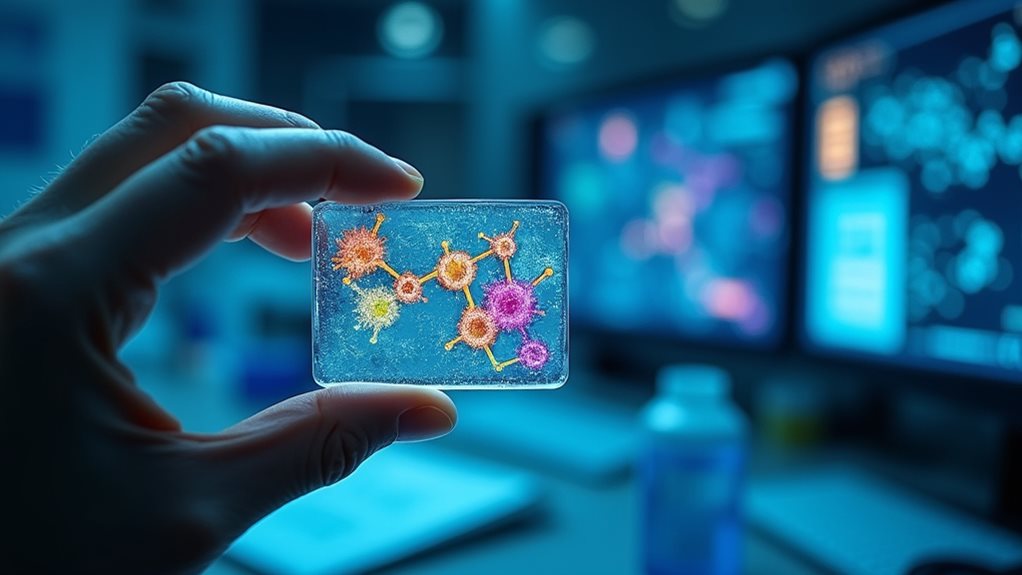
Peptide patents are legal protections granted to inventors that cover specific innovations related to peptide-based medicines, including their sequences, manufacturing methods, formulations, and therapeutic uses.
These patents protect not just the peptide molecules but also analogs, conjugates, and delivery systems.
They help secure exclusive rights, encouraging investment, and advancing development by safeguarding technical innovations beyond the natural peptide structure.
The regulatory landscape for peptides also shapes timing and scope of patentability, as well as the ability to bring peptide therapies to market. research and development
Key Types of Peptide Patent Claims and Their Significance
Understanding the key types of peptide patent claims is essential for protecting innovations throughout the drug development process, as each claim type serves a specific strategic purpose.
Composition-of-matter claims, for example, cover the peptide itself and are vital for establishing broad exclusivity.
Method-of-treatment claims focus on the therapeutic use, securing market rights for specific indications.
Additionally, formulation and delivery claims safeguard the specialized systems and methods needed to optimize peptide stability and administration.
All of these collectively enhance a patent portfolio’s strength and commercial potential.
Peptides are often defined by their sequence and structural features, which can influence both patent scope and regulatory considerations peptide sequence within therapeutic development.
Medicinal Preparation Claims
Medicinal preparation claims form a crucial part of peptide patent strategies because they directly protect the dosage form and formulation aspects of peptide drugs. These aspects are often key to successful commercialization.
These claims typically cover pharmaceutical compositions with peptides, excipients, stabilizers, or delivery systems. They help block formulation-around attempts and secure broad protection for the drug’s final, stable, and effective form.
Therapeutic Activity Claims
Therapeutic activity claims are a vital component of peptide patent strategies because they directly establish the functional utility of a peptide in treating specific diseases or conditions.
These claims link a peptide to clinical indications, often focusing on inflammation, degeneration, or infection, and can be broad or narrow.
They help translate finding into actionable medical exclusivity, supporting drug development and patent protection.
Formulation and Delivery Claims
Formulation and delivery claims are critical components of peptide patent strategies because they establish the specific methods and compositions used to administer peptides.
These claims help protect innovative approaches that enhance drug stability, bioavailability, and controlled release.
They often cover oral formulations, stability-enhancing excipients, controlled-release systems, excipient compositions, and targeted delivery methods.
This comprehensive coverage ensures thorough patent protection of delivery innovations.
Main Innovation Areas Protected by Peptide Patents
Peptide patents primarily focus on protecting innovations that enhance the stability, delivery, and targeting capabilities of peptide-based drugs, reflecting the diverse challenges associated with developing these molecules into effective therapeutics.
These include sequence modifications to improve activity and resistance, structural changes to prevent degradation, delivery systems for better absorption, and targeting strategies for precise tissue or cellular localization, ensuring therapeutic efficacy and stability.
Stages of the Peptide Drug Development Pipeline

The stages of the peptide drug development pipeline encompass a series of carefully coordinated steps, beginning with target identification, where understanding disease biology guides the selection of promising peptide mechanisms.
This process also requires careful attention to peptide stability and storage conditions to ensure that therapeutic candidates retain integrity throughout development, including considerations for environmental factors such as temperature and handling practices. peptide stability
Target Identification Strategies
Target identification is a critical initial step in the peptide drug development pipeline, serving as the foundation upon which subsequent stages such as validation, binding confirmation, and lead optimization are built.
You use diverse methods, including disease genetics, literature mining, multi-omics datasets, and functional pathway analysis, to uncover and validate relevant targets.
This process ensures that the targets are biologically actionable and suitable for peptide-based therapeutic development.
Peptide Design and Synthesis
Designing and synthesizing peptides are essential steps in developing peptide-based drugs, requiring a combination of strategic planning and precise execution. You begin with sequence design, optimizing for stability and binding, often incorporating non-natural amino acids or cyclization.
Solid-phase peptide synthesis then produces the chain efficiently, with modifications like cyclization, stapling, and terminal functionalization enhancing stability, permeability, and pharmacokinetic properties.
Preclinical and Clinical Testing
Preclinical and clinical testing represent vital phases in the development of peptide-based drugs, serving to verify safety, efficacy, and pharmacological properties before human administration.
You evaluate safety, mechanism of action, absorption, and toxicity in laboratory and animal studies.
Then progress through phased human trials to confirm safety, determine ideal doses, and establish efficacy, guiding your pathway toward regulatory approval and clinical use.
Trends in Peptide Patent Activity and Market Insights
Recent trends in peptide patent activity reveal a significant increase in filings, particularly around high-potential peptide classes like GLP-1 receptor agonists, dual-agonists, and next-generation analogs. This rise is driven by strong commercial interests targeting cardiometabolic diseases and obesity. This rising activity reflects market growth, technological innovation, and strategic focus on delivery methods, maintaining a vibrant, competitive environment for peptide therapeutics. A notable development is the growing attention to needle-free peptide delivery technologies, which bolster the appeal of peptide drugs by improving patient experience and adherence. needle-free delivery advances are increasingly shaping both patent strategies and market access considerations.
How Patent Strategies Extend Peptide Therapeutic Lifecycles
Understanding how patent strategies can extend the lifecycle of peptide therapeutics is essential for maintaining competitive advantage and maximizing product value in the pharmaceutical industry. In addition, stability profiles like those observed with N-Acetyl Semax can influence regulatory considerations and patentability for modified peptides such as N-Acetyl Semax.
Challenges and Opportunities in Oral Peptide Delivery Patents

Developing patents for oral peptide delivery presents a uniquely challenging environment, primarily because peptides face significant barriers to absorption when administered orally.
Low oral bioavailability, often below 1%, results from enzymatic degradation and poor permeability.
Patents focus on formulation strategies like coatings, permeation enhancers, and chemical modifications, aiming to overcome barriers while balancing safety, stability, and reproducibility, despite regulatory constraints.
Enabling oral delivery still hinges on understanding peptide stability in the gastrointestinal tract and strategies to protect peptides from proteolytic enzymes bioavailability and to enhance intestinal permeation.
How Patent Landscape Shapes Competitive Advantage in Peptides
The terrain of peptide patents plays an essential role in shaping a company’s competitive advantage by establishing legal boundaries that influence research, development, and commercialization strategies.
Broad composition-of-matter claims block competitors from identical peptides, while layered protections like formulation, process, and use patents extend exclusivity.
These protections support premium pricing and help steer through crowded fields, ultimately strengthening a company’s market position.
Recent Advances in Cyclic and Stapled Peptide Patents
Recent patent filings indicate a significant increase in activity surrounding cyclic peptides, reflecting their growing importance in drug development. Structural constraints, such as cyclization, enhance stability and resistance to degradation, making these peptides more suitable for therapeutic applications. This surge in patent activity aligns with broader trends toward peptide-based therapeutics that exploit enhanced pharmacokinetic properties and target specificity. emerging peptide applications
Rising Cyclic Peptide Activity
As the scenery of peptide therapeutics continues to evolve, you can observe that innovative patent activity in cyclic and stapled peptides is rapidly broadening, reflecting substantial progress in their development and application.
Cyclic peptides now target diverse therapeutic areas, including radionuclide delivery, antiviral agents, and receptor modulators, with detailed claims emphasizing specific sequences, conjugation methods, and functional uses.
This demonstrates a clear move toward targeted, adaptable drug exploration.
Structural Constraints Improve Stability
Have you ever considered how structural constraints can dramatically enhance the stability of peptide-based therapeutics?
By incorporating cyclic structures, stapling, or disulfide bonds, you reduce conformational flexibility, improve resistance to enzymatic degradation, and increase thermal and chemical stability.
These approaches extend peptide half-life, improve pharmacokinetics, and support better drug delivery, making them essential innovations in peptide drug development.
Therapeutic Development Focus
Advances in cyclic and stapled peptide patents reveal a strategic shift toward developing highly targeted and multifunctional therapeutics, reflecting the increasing sophistication of peptide drug design.
You see ongoing focus on oncology, immune modulation, and drug delivery, with innovations in conjugates, intracellular targeting, and infection control.
These developments demonstrate a move toward versatile, precision medicines for complex diseases.
Regulatory and Patent Challenges in Developing Peptide Drugs

Developing peptide drugs presents a complex terrain of regulatory and patent challenges that require careful guidance to guarantee successful market entry. You must traverse patent-eligibility issues, overlapping claims, and frequent thickets that complicate IP rights.
Regulatory classification varies depending on structure and source, affecting approval standards, evidence requirements, and market exclusivity. All of these factors demand strategic planning and a detailed understanding.
Future Trends in Peptide Patent Innovation
What’re the emerging pathways for innovation in peptide patenting, and how might these shape the future terrain of drug exploration?
Advances like AI-guided design, patenting algorithm-generated sequences, and optimization methods are expanding patent scope. Incretin receptor targeting remains a key area in peptide therapeutics, with dual-action approaches informing broader patent strategies and potential competitive advantages. Innovations in delivery methods, such as oral and non-invasive formulations, along with constrained and cyclic peptides, will drive new patent strategies and competitive advantages.
Frequently Asked Questions
How Do Peptide Patent Strategies Influence Clinical Trial Design?
Your peptide patent strategies steer clinical trial design by focusing on specific sequences, formulations, and indications, which determine trial endpoints, patient populations, dosing routes, and durations, ultimately shaping development pathways and extending market exclusivity.
What Role Do Patents Play in Peptide Manufacturing Process Innovations?
Patents drive peptide manufacturing innovations by protecting new synthesis methods, process efficiencies, and platform technologies. They encourage investment, prevent copying, and enable companies to develop scalable, efficient, and high-quality production processes essential for commercial viability.
How Do Patent Filings Differ Between Therapeutic and Delivery System Innovations?
You’ll find therapeutic patents focus on the peptide’s structure and efficacy, while delivery system patents emphasize how the drug reaches the target, often covering carriers, targeting, and release mechanisms, making them broader but potentially easier to challenge.
Are There Patent Challenges Specific to Peptide Cyclic and Stapled Modifications?
You face patent challenges with cyclic and stapled peptides due to crowded prior art, enablement barriers, and narrow novelty. Detailed disclosures on synthesis, structure, and use are essential to overcoming obstacles and securing strong, defensible patent protection.
How Does Global Patent Law Impact Peptide Drug Development and Commercialization?
Global patent law impacts your peptide drug development by creating regional differences in protection, enforcement, and timing. You must steer through varied laws, file strategically, and plan synchronized launches to maximize exclusivity and avoid infringement across multiple jurisdictions.
Final Note
Understanding the terrain of peptide patents is essential for steering the vibrant field of drug development. By grasping key patent types, innovation areas, and the regulatory environment, you can better anticipate market trends and protect intellectual property effectively. Staying informed about recent advances, such as cyclic and stapled peptides, will help you identify emerging opportunities. Ultimately, a strategic approach to peptide patents enhances your ability to innovate, compete, and contribute responsibly within this changing pharmaceutical sector.
References
- https://www.patsnap.com/resources/blog/rd-blog/stapled-peptide-therapeutics-patent-landscape-patent-landscape/
- https://www.patsnap.com/resources/blog/rd-blog/glp-1-and-incretin-peptide-therapeutics-patent-landscape/
- https://www.patsnap.com/resources/blog/rd-blog/protein-and-peptide-therapeutics-patent-landscape-patent-landscape/
- https://www.patsnap.com/resources/blog/articles/peptide-drug-pipeline-stapled-cyclic-cpp-conjugates/
- https://pmc.ncbi.nlm.nih.gov/articles/PMC10609221/
- https://www.perlego.com/book/1244388/peptide-therapeutics-strategy-and-tactics-for-chemistry-manufacturing-and-controls-pdf
- https://www.patsnap.com/resources/blog/rd-blog/cell-free-synthesis-of-cyclic-peptide-therapeutics-patent-landscape-patent-landscape/
- https://www.tandfonline.com/doi/full/10.2147/DDDT.S597087
- https://www.patsnap.com/resources/blog/rd-blog/sustained-release-depot-peptide-formulation-engineering-patent-landscape-patent-landscape/
- https://www.patsnap.com/resources/blog/rd-blog/cell-penetrating-peptide-therapeutic-cargo-delivery-patent-landscape-patent-landscape/