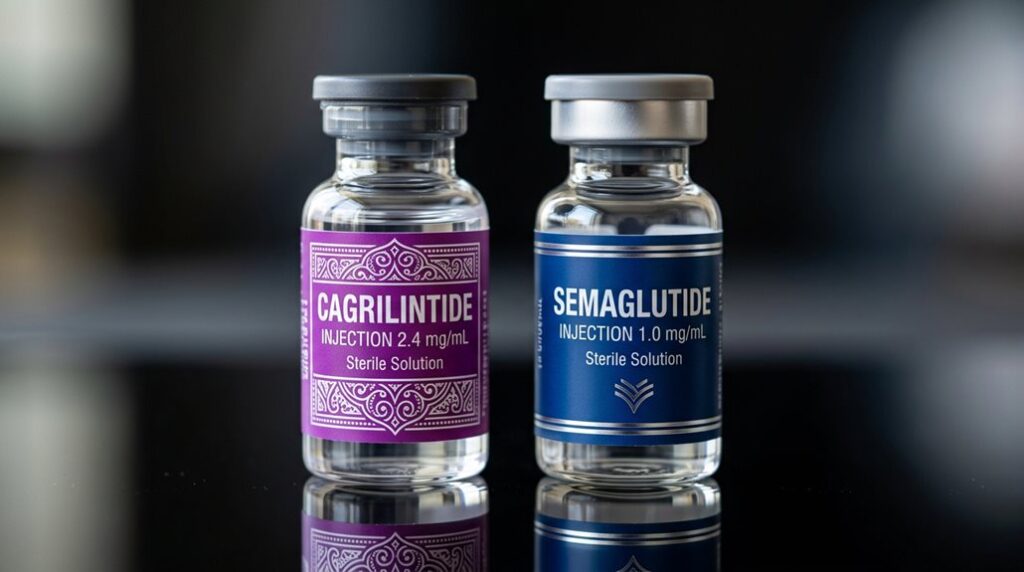
When you’re deciding between semaglutide and tirzepatide, clinical trials show tirzepatide typically delivers greater results, with average weight loss of 20.2% compared to semaglutide’s 13.7% and faster blood sugar control, reaching HbA1c below 7% in about 8 weeks versus 12 weeks. Both medications require weekly subcutaneous injections, gradual dose increases to minimize nausea, and carry similar gastrointestinal side effects, though tirzepatide’s “twincretin” mechanism—activating both GLP-1 and GIP receptors—appears to drive its superior metabolic outcomes. Your specific health goals, tolerance for injections, and whether you prefer an oral option (semaglutide’s Rybelsus for diabetes) will ultimately shape which medication fits your situation, and the following sections break down each factor to help you choose with confidence.
TLDR
- Tirzepatide achieves greater weight loss (20.2%) than semaglutide (13.7%) via dual receptor activation.
- Tirzepatide reduces A1C faster, reaching targets in 8–12 weeks versus 12–16 weeks.
- Tirzepatide lowers A1C by 2–2.5 percentage points compared to semaglutide’s 1–2 points.
- Both drugs cause GI side effects, though tirzepatide reports them less frequently.
- Semaglutide offers oral and injectable options; tirzepatide is injection-only weekly dosing.
Which Drug Wins for Weight Loss?
In the SURMOUNT-5 trial, participants taking tirzepatide lost 20.2% of their body weight on average, compared to 13.7% with semaglutide, representing roughly 22.8 kg versus 15.0 kg. dual receptor activation contributes to the greater weight loss observed with tirzepatide, reflecting its twincretin mechanism that combines GIP and GLP-1 receptor effects.
Blood Sugar Control: How They Stack Up
When you compare how quickly and effectively these medications lower blood sugar, you’ll notice that both semaglutide and tirzepatide deliver meaningful A1C reductions, though the dual-action tirzepatide consistently produces larger drops—often reaching 2–2.5 percentage points versus semaglutide’s typical 1–2 points—while also helping more patients hit stringent targets like A1C below 6.5%. cardiovascular protection and faster glycemic control are additional considerations, with head-to-head trials showing tirzepatide lowers fasting glucose and post-meal spikes more aggressively, giving you steadier daily readings and more time spent in your target range. Ultimately, your choice may hinge on how urgent your A1C goals are, as tirzepatide’s superior performance in reaching near-normal levels could delay or prevent the need for insulin, whereas semaglutide remains a strong, well-established option with robust long-term outcome data.
A1C Reduction Comparison
How do semaglutide and tirzepatide actually compare when you’re looking to bring your blood sugar under control? Clinical trials show tirzepatide reduces HbA1c by 2.01% to 2.30% across doses, while semaglutide 1 mg achieves 1.86%. The 15 mg tirzepatide dose produces the greatest reduction, and even tirzepatide 5 mg outperforms semaglutide. Both drugs help most patients reach target A1C levels below 7%, though tirzepatide does so more consistently.
Glycemic Control Speed
Beyond how much these medications lower your A1C, you’re probably wondering how quickly you’ll see your blood sugar numbers improve.
Clinical data show tirzepatide reaches HbA1c targets faster than semaglutide, with median time to under 7% at 8.1 versus 12 weeks, and under 6.5% at 12.1 versus 15.7 weeks, giving you measurable advantage within months.
Diabetes Outcomes Data
The evidence comparing these two medications’ effects on blood sugar control is extensive, and you’ll find that head-to-head trials consistently favor tirzepatide for HbA1c reduction.
In SURPASS-2, tirzepatide’s highest dose lowered HbA1c by 2.30% versus semaglutide’s 1.86%, with all tirzepatide doses proving statistically superior.
Real-world data reinforce this pattern, showing 1.3% average HbA1c reduction with tirzepatide versus 0.9% with semaglutide after twelve months.
Side Effects Compared: What to Actually Expect
You’ll likely experience some gastrointestinal effects when starting either medication, since nausea, vomiting, and digestive discomfort affect many patients—though tirzepatide tends to produce these symptoms less frequently than semaglutide in clinical trials.
Understanding how to manage these effects, from meal timing to gradual dose increases, can make the difference between abandoning treatment and achieving your health goals.
Let’s break down what the data actually shows about GI symptoms and compare practical strategies that help you tolerate each drug more comfortably.
GI Symptoms Breakdown
How do these two medications actually feel in your body when it comes to stomach-related side effects? You’ll likely experience nausea with both, though semaglutide may cause more vomiting at higher doses.
Diarrhea affects roughly 15–30% of users, while constipation tends to be more common with semaglutide.
Bloating, reflux, and abdominal pain can occur during dose escalation but usually improve over time.
Tolerance Strategies Compared
Managing side effects from semaglutide or tirzepatide begins with understanding that your body adapts gradually, which means strategic dose adjustments can make the difference between tolerable discomfort and treatment discontinuation. You can slow titration from four to eight weeks, reducing early nausea. If you’re switching between these drugs, you’ll restart at the lowest dose regardless of prior exposure, waiting five to seven days to minimize overlapping effects.
Doses, Schedules, and the Oral Option
Whether you’re beginning treatment or considering a switch between medications, understanding how semaglutide and tirzepatide are dosed and administered is essential for safe, effective use.
You’ll start semaglutide at 0.25 mg weekly, escalating every four weeks toward 2.4 mg, while tirzepatide begins at 2.5 mg weekly, advancing toward 15 mg, and both require subcutaneous injection, though semaglutide offers Rybelsus, an oral daily alternative for diabetes management, on-demand dosage progression can vary based on individual response and tolerability.
How These Medications Work Differently

At the molecular level, you’ll find that semaglutide and tirzepatide differ in ways that directly shape their clinical effects, even though both belong to the incretin mimetic class and ultimately lower blood glucose and body weight.
Semaglutide activates only the GLP-1 receptor, while tirzepatide is a dual agonist, engaging both GLP-1 and GIP pathways simultaneously. This two-receptor mechanism gives tirzepatide broader metabolic signaling, which translates to stronger glucose control and greater average weight loss in comparative studies.
Both drugs suppress appetite, slow gastric emptying, and work in a glucose-dependent manner, yet their distinct engineering—GLP-1 backbone versus GIP backbone—creates measurable differences in energy expenditure and fat oxidation over time. GLP-1 receptor
Which One Fits Your Situation
How do you decide between two powerful medications when both lower blood sugar and body weight, yet differ in their mechanisms, their average results, and their real-world track records?
If your priority is maximum weight loss or rapid metabolic change, tirzepatide often delivers higher average reductions, though semaglutide offers proven cardiovascular benefits and longer familiarity.
Your choice depends on which goals matter most, what your insurance covers, and how quickly you need results. GLP-1 receptor agonist
Frequently Asked Questions
Can I Switch Between These Medications Easily?
You can switch between semaglutide and tirzepatide, but it requires planning rather than a simple swap. Since these drugs work differently—semaglutide targets GLP-1 receptors, while tirzepatide activates both GIP and GLP-1—there’s no direct dose conversion. Your clinician will typically start you at a low dose of the new medication, often 0.25 mg for semaglutide or 2.5 mg for tirzepatide, then titrate upward. If you’re tolerating treatment well, you may switch on your next scheduled injection day; however, if you’ve experienced nausea or vomiting, a brief washout period of one to two weeks is usually recommended. Medical supervision ensures your transition is safe and individualized.
Do These Drugs Affect Muscle Mass Differently?
Both drugs can reduce your muscle mass, but primarily as a consequence of weight loss itself rather than direct muscle toxicity.
Tirzepatide often causes greater total weight loss, which can translate into larger absolute lean-mass reductions, though the proportion of muscle lost is typically similar between medications.
You can minimize muscle loss by maintaining adequate protein intake and incorporating resistance training, regardless of which drug you’re taking.
Are They Safe During Pregnancy or Breastfeeding?
Neither semaglutide nor tirzepatide is considered safe during pregnancy, so you’ll need to stop these medications before conception or immediately upon discovering you’re pregnant, since animal studies suggest risks including birth defects and pregnancy loss, though human data remain limited.
For breastfeeding, semaglutide appears unlikely to affect your infant based on very small studies showing undetectable levels in milk, while tirzepatide lacks sufficient data, warranting caution and discussion with your healthcare provider.
How Much Do They Cost Without Insurance?
Without insurance, you’ll pay roughly $998–$1,865 monthly for brand-name semaglutide (Ozempic, Wegovy, Rybelsus) and about $1,000–$1,119 for tirzepatide (Mounjaro, Zepbound), though Zepbound’s direct-pay program drops to $349–$499.
Compounded versions of either drug can cost $129–$499, but these aren’t FDA-approved. Prices vary by dose, pharmacy, and whether you use manufacturer discount programs.
Can I Drink Alcohol While Taking These Medications?
Yes, you can drink alcohol while taking semaglutide or tirzepatide, though moderation is essential.
Neither medication has a direct alcohol interaction or FDA prohibition, but alcohol can worsen nausea, vomiting, and dizziness—especially during early treatment or dose increases.
You should eat before drinking, stay hydrated, limit yourself to moderate amounts, and avoid binge drinking, which raises risks of dehydration and low blood sugar, particularly if you have diabetes.
And Finally
You’ve now seen how semaglutide and tirzepatide compare across the measures that matter most for your health, and while both medications offer substantial benefits for weight management and glucose control, your individual medical history, tolerance for side effects, and specific treatment goals will ultimately guide the selection process alongside your healthcare provider’s expertise.
Neither drug represents a universal solution, but with informed discussion and careful monitoring, you’re well-positioned to identify the therapy that aligns most closely with your needs.
References
- https://obesitymedicine.org/blog/tirzepatide-vs-semaglutide-a-comprehensive-comparison-for-providers/
- https://www.peptidejournal.org/compare/semaglutide-vs-tirzepatide-complete-comparison
- https://formblends.com/articles/glp1-hub/semaglutide-vs-tirzepatide-complete-head-to-head-comparison-2026
- https://www.drugs.com/medical-answers/tirzepatide-semaglutide-how-compare-3576410/
- https://pmc.ncbi.nlm.nih.gov/articles/PMC12263181/
- https://jamanetwork.com/journals/jamainternalmedicine/fullarticle/2821080
- https://health.usnews.com/best-diet/medication/articles/semaglutide-vs-tirzepatide
- https://www.healthline.com/health/tirzepatide-vs-semaglutide#tirzepatide-vs-semaglutide
- https://saxonmd.com/blog/tirzepatide-vs-semaglutide/
- https://pmc.ncbi.nlm.nih.gov/articles/PMC11153294/