The history of peptide therapy begins with the landmark isolation of insulin in 1921, which marked the first successful use of peptides as treatments and paved the way for ongoing scientific progress. Over time, advancements shifted from animal-derived sources to recombinant DNA technology in 1978, enabling large-scale, consistent production. Today, peptide drugs are expanding beyond diabetes into therapeutic areas like cancer and immune diseases, with ongoing innovations promising even broader applications for future healthcare.
TLDR
- Insulin’s isolation in 1921 marked the beginning of peptide therapeutics and demonstrated their clinical potential.
- The development of recombinant DNA technology in 1978 revolutionized peptide production, ensuring safety and large-scale availability.
- Peptide therapeutics initially focused on endocrinology but expanded to diverse disease pathways, including metabolic and immune diseases.
- Advances in peptide design, screening, and synthesis techniques have accelerated development and improved drug stability and delivery.
- Today, over 80 peptide-based drugs are approved, with ongoing research expanding their applications across multiple medical fields.
How Peptide Therapy Began With Insulin

Have you ever wondered how modern peptide therapies began? In 1921, researchers at the University of Toronto isolated insulin from pancreatic tissue, marking the start of peptide-based treatments. This finding demonstrated that a pancreatic peptide could treat metabolic diseases like diabetes. The successful use of insulin in humans in 1922 established a precedent for developing other peptide therapeutics, revolutionizing medicine. peptide therapies
Key Scientific Milestones in Peptide Structure
Advances in understanding the molecular structure of peptides have considerably shaped peptide science, beginning with the identification of the peptide bond and the synthesis of the first dipeptides.
A newer line of research highlights that PEGylated growth factors like PEG-MGF are explored to extend biological half-life and enhance signaling for muscle repair, though clinical application remains limited by safety and regulatory considerations extended half-life.
From Animal Sources to Recombinant Insulin
Initially, insulin production relied heavily on extracting the hormone from animal sources, primarily from the pancreases of cows and pigs, which required extensive purification to remove contaminants. Leveraging dual incretin insights from tirzepatide, modern peptide therapies also illustrate how targeting multiple gut hormone receptors can enhance metabolic regulation and therapeutic outcomes. dual incretin concept highlights how simultaneous receptor engagement can influence glycemic control and weight management, informing broader peptide therapy development. Advances in biotechnology, particularly recombinant DNA technology, revolutionized this process by enabling the large-scale synthesis of human insulin in laboratory settings, thereby overcoming supply limitations and purity concerns associated with animal-derived insulin.
This shift not only improved drug consistency and safety but also marked a significant milestone in the development of modern peptide therapies.
Animal-Derived Insulin Sources
How did reliance on animal sources shape early insulin therapy, and what obstacles did this approach present? Using bovine and porcine pancreases, early insulin production depended on animal tissues.
This reliance limited supply, caused variability, and sometimes triggered allergic reactions due to differences from human insulin. Despite purification advances, supply shortages and inconsistent quality remained significant barriers until recombinant methods emerged.
Biotechnology’s Impact on Production
The development of biotechnology revolutionized insulin production, shifting from animal tissues to genetic engineering methods like recombinant DNA. This approach, exemplified by Genentech’s 1978 production of identical human insulin using *E. coli*, enabled large-scale, consistent manufacturing, improved purity, and reduced dependence on biological tissues.
It marked a significant advancement, establishing biotech as the foundation for modern peptide therapy.
Expanding Uses of Peptide Drugs Beyond Diabetes
As research advances and clinical experience grows, the applications of peptide drugs have considerably expanded beyond their traditional use in endocrinology and diabetes management.
From peptide signaling has emerged as a key mechanism by which peptide therapeutics influence diverse disease pathways, enabling more precise targeting of cellular responses and facilitating personalized treatment approaches.
Advances in Peptide Synthesis and Delivery Methods

Recent advances in peptide synthesis and delivery methods have considerably enhanced the efficiency, precision, and versatility of producing therapeutic peptides. These developments enable researchers and clinicians to develop more complex and customized treatments. Techniques like automated solid-phase synthesis, chemical modifications such as cyclization and PEGylation, and nanocarrier systems like liposomes and hydrogels improve peptide stability, targeting, and administration. These innovations support the development of innovative, effective therapies. Additionally, researchers are increasingly exploring injectable and oral peptide approaches to address bioavailability and absorption challenges, driven by a growing understanding of formulation strategies and the need for patient-friendly delivery options. bioavailability
Overcoming Stability and Absorption Challenges
To improve peptide therapies, it’s essential to address the significant challenges posed by their instability and poor absorption in the gastrointestinal tract. Strategies focused on enhancing peptide stability involve protecting them from enzymatic degradation and harsh pH conditions. While improving oral absorption requires overcoming barriers like low epithelial permeability and mucus layers. Introducing peptide analogs with chemical modifications can further enhance resistance to proteases and extend half-life, aligning with innovations in stability and selectivity that researchers pursue to refine original molecules. peptide stability
Enhancing Peptide Stability
Enhancing peptide stability involves a complex approach that addresses the inherent vulnerability of peptides to enzymatic degradation and poor absorption in biological systems.
Techniques like chemical modifications—such as D-amino acid substitution, N-terminal acetylation, backbone modifications, and conjugation strategies—help prevent enzymatic attack, prolong circulation, and improve therapeutic efficacy.
These modifications make peptides more resistant to breakdown and easier to deliver effectively.
Improving Oral Absorption
Why does oral absorption of peptides remain a significant challenge in drug delivery? The main obstacle is gastrointestinal permeability, where tight junctions limit paracellular transport.
Barriers like mucus and enzymes degrade peptides. Strategies focus on permeation enhancers, enzyme inhibitors, and carrier systems, often combining these approaches in integrated platforms to improve stability, transport, and absorption efficiency.
The Current Peptide Therapeutics Pipeline
What does the current terrain of peptide therapeutics reveal about ongoing innovation and development efforts? It shows a strong pipeline, with over 100 candidates in active development, many in preclinical stages, and several late-stage drugs under FDA review. The trend toward combining multiple peptide mechanisms in a single therapy is a growing research direction, reflecting interest in synergistic effects and expanded therapeutic reach through combination strategies. This environment emphasizes diversification across therapeutic areas and a focus on long-acting, oral, and conjugate delivery methods, reflecting continuous progress and expanding possibilities.
Future Trends in Peptide Research and Development
Advancements in peptide research are increasingly driven by innovative computational and experimental platforms that expand the possibilities for therapeutic exploration and development. Techniques like AI-guided design, high-throughput identification methods, and improved delivery systems enable faster, more precise creation of stable, targeted peptides. These approaches support exploring previously inaccessible proteins and streamline manufacturing, ultimately broadening the scope of peptide-based therapies. The integration of AI-driven models can accelerate target prioritization and optimize peptide sequences at scale, while automated, high-throughput screening accelerates validation and iteration. AI-guided design and data-driven optimization are transforming how researchers navigate the peptide landscape.
The Impact and Future of Peptide Medicine
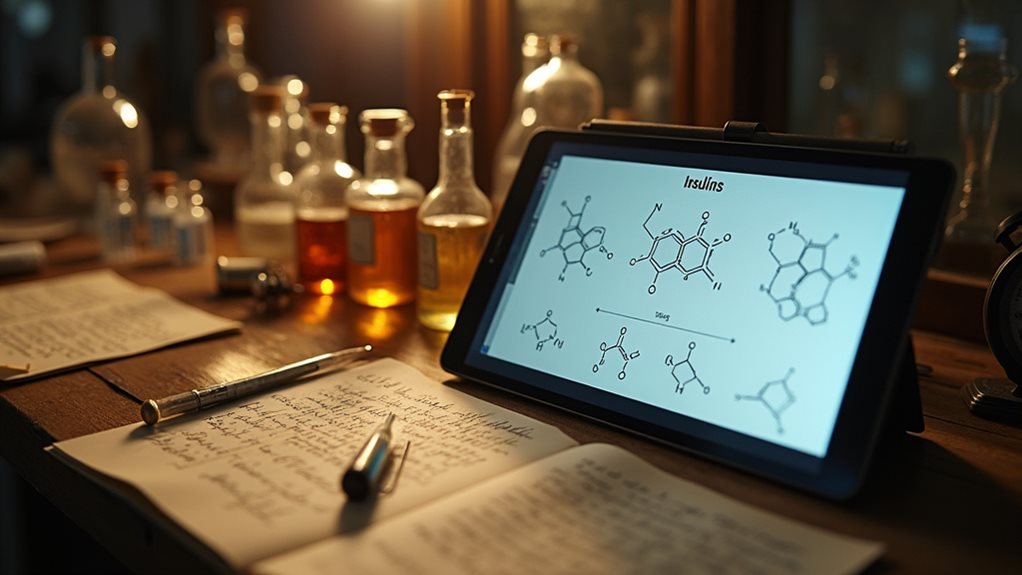
Peptide medicine has already demonstrated a significant impact on the treatment of major diseases, revolutionizing healthcare approaches and improving patient outcomes across a wide range of conditions.
With over 80 approved drugs and a pipeline exceeding 550 candidates, peptides offer targeted, safe, and versatile options.
Future growth, driven by advances in biotechnology, promises expanded applications in metabolic, cancer, and immune therapies.
New research tools and clinical studies continue to advance our understanding of peptide activity, safety, and therapeutic potential peptide characterization.
Frequently Asked Questions
How Do Peptide Drugs Differ From Small Molecule Medications?
You’ll find peptide drugs larger and more complex than small molecules, often targeting extracellular receptors with high specificity. They usually require injections, have stability issues, and are harder to synthesize, unlike smaller, orally available medications.
What Are the Main Challenges in Developing Oral Peptide Therapies?
You face challenges like gastrointestinal degradation, poor permeability, and formulation issues, which drastically lower oral bioavailability. These factors make it difficult to develop reliable, effective oral peptide therapies that can replace injections and guarantee consistent patient outcomes.
How Has AI Influenced Modern Peptide Drug Discovery?
AI has revolutionized peptide drug discovery by enabling data-driven design, expanding novel sequence creation, optimizing target interactions, and accelerating development timelines, which makes identifying and refining effective therapeutic peptides faster, more precise, and less reliant on trial-and-error processes.
What Are the Most Promising New Areas for Peptide Therapeutics?
You should focus on oncology, neurology, and immunology, as these areas show great promise. Peptides are advancing in targeted cancer treatments, crossing the blood-brain barrier, and modulating immune responses, opening new therapeutic possibilities beyond traditional applications.
How Do Peptide Drugs Target Intracellular Pathways?
You can target intracellular pathways with peptide drugs by designing cell-penetrating peptides or using receptor-binding strategies that influence signaling from the cell surface, modulating pathways like calcium mobilization, enzyme activity, or protein interactions inside the cell.
Final Note
Understanding the history and ongoing advancements in peptide therapy highlights its developing role in medicine, from insulin’s discovery to innovative treatments targeting diverse conditions. As research continues to address challenges related to stability, absorption, and delivery, you can expect further expansion of peptide-based drugs. Staying informed about these developments enables you to appreciate the potential of peptide medicine to improve health outcomes, while recognizing the importance of ongoing scientific progress in shaping effective, safe therapies for the future.
References
- https://pmc.ncbi.nlm.nih.gov/articles/PMC12154100/
- https://link.springer.com/article/10.1134/S1068162022020157?error=cookies_not_supported&code=88f5b68a-106a-4b3c-8718-2acd94b64d6a
- https://chemie.univie.ac.at/fileadmin/user_upload/f_chemie/aktuelles_news/dateien/2023_Muttenthaler_Trends_in_peptide_drug_discovery.pdf
- https://pmc.ncbi.nlm.nih.gov/articles/PMC10330351/
- https://www.mdpi.com/1422-0067/26/11/5131
- https://www.peptidejournal.org/reference/timeline-of-peptide-discovery-from-insulin-to-glp-1
- https://med.stanford.edu/news/insights/2026/08/peptides-what-does-the-science-say.html
- https://www.nature.com/articles/s41392-022-00904-4
- https://www.cell.com/trends/biochemical-sciences/fulltext/S0968-0004(25)00024-6
- https://pmc.ncbi.nlm.nih.gov/articles/PMC12750180/