You’re comparing two distinct pathways: CJC-1295 mimics your natural growth hormone-releasing hormone, binding pituitary receptors to amplify signals with sustained, broader pulses, especially when paired with its DAC modification for days-long elevation, while Ipamorelin activates ghrelin receptors to generate sharp, rapid spikes that peak within 45–60 minutes and resolve quickly. If you prioritize convenience and prolonged metabolic support, CJC-1295 suits your needs, but if you value cleaner, pulsatile release with minimal cortisol or prolactin impact, Ipamorelin fits better, and many find combining both exploits GHRH-GHRP synergy for enhanced results. What follows breaks down how each mechanism aligns with specific goals like fat loss, sleep quality, and dosing frequency.
TLDR
- Ipamorelin triggers faster GH release (20–30 min onset) versus CJC-1295’s slower, sustained elevation.
- CJC-1295 with DAC provides days-long signaling; Ipamorelin delivers short, sharp pulses.
- Ipamorelin minimally affects cortisol and prolactin, offering a cleaner hormonal profile.
- CJC-1295 excels for fat loss and anti-aging; Ipamorelin suits rapid recovery and sleep.
- Combined use exploits GHRH/GHRP synergy, amplifying GH output three- to five-fold.
CJC-1295 vs Ipamorelin: Which One Fits Your Goals?
When you’re evaluating CJC-1295 against Ipamorelin, you’re really asking which pattern of growth hormone support aligns with what you’re trying to achieve, since these two peptides operate through distinctly different mechanisms that suit different priorities. If fat loss tops your list, Ipamorelin’s shorter, pulse-like GH release typically fits better as a standalone choice, whereas CJC-1295’s sustained elevation suits anti-aging and lean-mass goals requiring steadier hormone signaling. For recovery and sleep, you’ll find Ipamorelin favored for its quick bursts, though CJC-1295 offers longer-lasting support that some prefer for convenience. A combined GHRH-GHRP approach can deliver synergistic effects exceeding either peptide alone, making it the strongest option when maximizing body composition matters most to you. sustained elevation
How They Trigger Growth Hormone Differently
CJC-1295 mimics growth hormone-releasing hormone, binding to GHRH receptors on your pituitary’s somatotroph cells to amplify GH signaling with broader, sustained pulses—especially when paired with DAC. Pulsatile GnRH-like dynamics in Kisspeptin-10 illustrate how timing and rhythm matter for downstream hormonal release, so the choice between CJC-1295 and Ipamorelin also reflects a balance between pulse amplitude and frequency pulsatile delivery. Ipamorelin, however, activates ghrelin receptors (GHS-R1a), triggering sharp, rapid GH spikes within 30–45 minutes. You’re essentially choosing between amplitude and frequency: CJC-1295 makes each pulse larger, while ipamorelin creates more pulses.
Which Peptide Works Faster?
Ipamorelin generates a measurable growth hormone increase within 20 to 30 minutes of injection, delivering a sharp, pronounced pulse that typically peaks around 45 to 60 minutes and resolves within 90 to 120 minutes, making it the clear winner for rapid onset, while CJC-1295’s extended signaling can sustain effects for days when using DAC formulations sustained signaling.
Onset Speed Comparison
Which peptide delivers results sooner is a question that matters when you’re planning injection timing around workouts, sleep, or daily schedules. Ipamorelin initiates growth hormone release within 20–40 minutes, peaking at 40–60 minutes post-injection. CJC-1295 without DAC begins around 30 minutes, with peak levels at 1–2 hours. The DAC-modified version delays onset substantially, starting at 2–4 hours and peaking at 4–6 hours. For rapid response, ipamorelin clearly outpaces both CJC-1295 formulations, though practitioners often combine peptides to merge quick onset with extended duration.
Peak Release Timing
Understanding when each peptide reaches its maximum effect helps you align your dosing with the specific outcomes you’re targeting, whether that’s an acute uplift before training or sustained uplift overnight.
Ipamorelin delivers a rapid, pulse-like peak within minutes, giving you immediate GH release.
CJC-1295 with DAC builds gradually, peaking at 2–4 hours but maintaining elevated levels for days.
Noticeable Effects Timeline
Although individual responses vary considerably, most users find that Ipamorelin produces the first subjective changes sooner than CJC-1295, largely because its mechanism triggers an immediate growth hormone pulse—peaking around 0.7 hours after injection—whereas CJC-1295 with DAC builds gradually over 2–4 hours and sustains elevated levels for days.
You’ll likely notice improved sleep within 1–2 weeks, followed by recovery benefits at 2–4 weeks, while visible body changes require 4–8 weeks of consistent use.
Match the Peptide to Your Goal: Fat Loss, Sleep, or Muscle
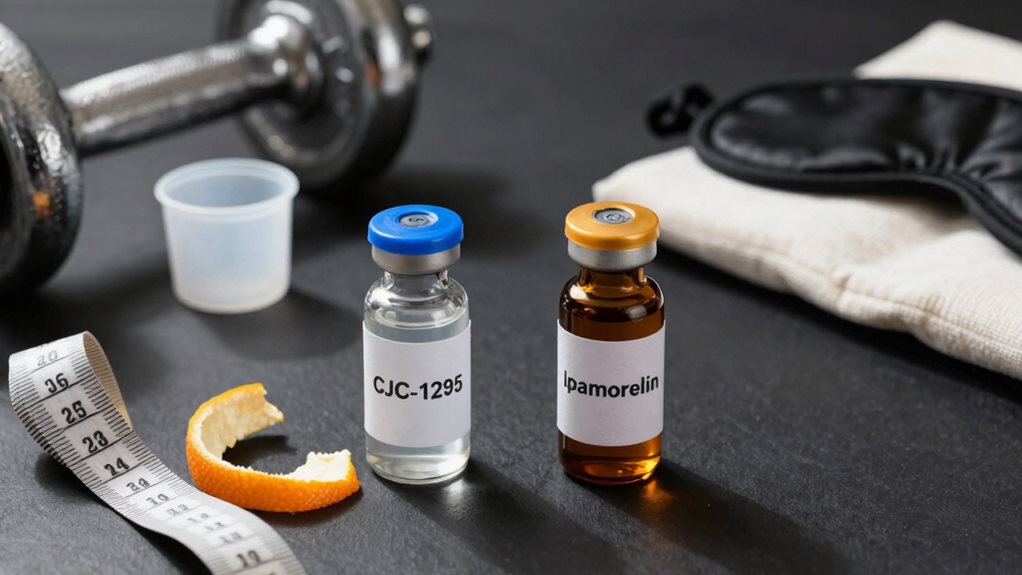
If you’re prioritizing fat loss, you’ll need to weigh Ipamorelin’s rapid growth hormone pulses—which can jumpstart your metabolism quickly—against its appetite-stimulating effects, since ghrelin receptor activation might undermine your calorie control; meanwhile, if sleep quality is your primary concern, CJC-1295’s longer-lasting growth hormone elevation tends to deliver deeper, more restorative rest that supports recovery and overall metabolic health. growth hormone The combined approach can address both goals simultaneously, though you’ll want to monitor how your hunger and energy respond to each peptide. Your specific circumstances—whether you’re cutting aggressively, struggling with insomnia, or balancing multiple objectives—will ultimately determine whether you choose one peptide or the synergistic stack.
Fat Loss Focus
How does growth hormone signaling actually translate into measurable fat loss when you’re choosing between these two peptides? CJC-1295 drives this process directly, stimulating your pituitary to release growth hormone that mobilizes stored fat through lipolysis, especially visceral fat.
Research shows 1–3 kg reductions over 12–24 weeks when combined with diet and training. Ipamorelin supports this effect by enhancing GH pulsatility, but CJC-1295 remains your primary fat-loss tool.
Sleep Quality Priority
When you’re prioritizing sleep quality above all else, Ipamorelin emerges as the clear choice over CJC-1295, though understanding why requires looking at how each peptide interacts with your body’s natural growth hormone rhythms. Take Ipamorelin 30–60 minutes before bed to enhance slow-wave sleep through a short, naturalistic pulse. You’ll notice deeper rest within 2–4 weeks, without daytime sedation. CJC-1295 works better as a recovery partner, not your primary sleep tool.
Side Effects Compared: Which Is Gentler on Your Body?
Why do some people tolerate one peptide better than the other, and what should you actually expect when weighing CJC-1295 against ipamorelin? In practice, both commonly cause injection-site reactions—pain, redness, and swelling—that are typically mild and short-lived. You’ll likely notice fluid retention, headaches, and flushing with either compound, since both elevate growth hormone. While ipamorelin is often described as gentler, direct comparisons are lacking, so your individual response matters most. Additionally, the long-term safety data remain limited for either peptide, and regulatory status means these use patterns are experimental rather than medically sanctioned in many jurisdictions. albumin anchor
Daily or Weekly Dosing: The Convenience Factor
Where convenience is concerned, you’ll find a striking difference between these two peptides, one that often shapes the entire experience of your protocol. Additionally, consider how receptor signaling and desensitization risks observed with growth-related peptides may influence a long-term dosing strategy receptor signaling and the importance of supervision.
Should You Stack CJC-1295 and Ipamorelin Together?
Perhaps you’re wondering whether combining these two peptides into a single protocol offers genuine advantages over using either one alone, and the short answer is that many practitioners consider them complementary rather than redundant. CJC-1295 amplifies pulse amplitude as a GHRH analog, while Ipamorelin increases pulse frequency through ghrelin receptor activation. Together, they create a more resilient yet physiologically natural growth hormone profile. This synergy may support recovery, body composition, and sleep without the risks associated with continuous exogenous GH exposure. growth hormone stimulation
Cortisol and Prolactin: Where These Peptides Differ
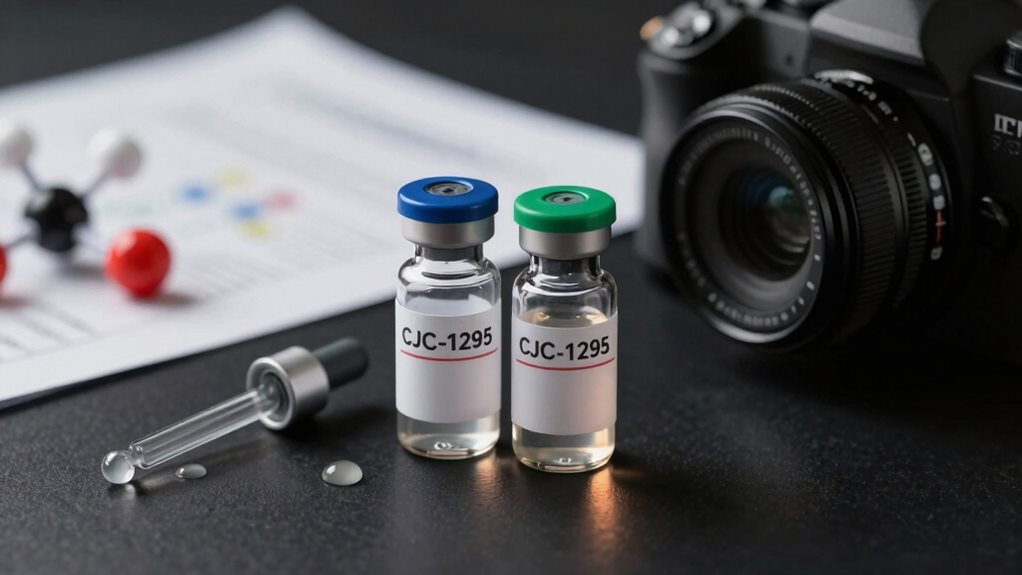
When you stack CJC-1295 with Ipamorelin, you’re combining two distinct pituitary pathways, and this difference in mechanism becomes especially important if you’re concerned about stress hormones or prolactin. Ipamorelin, acting through the ghrelin receptor, has documented minimal impact on cortisol and prolactin, unlike older secretagogues. This combination can support nuanced regulatory signaling without universally elevating stress-related hormones, aligning with the concept of immunomodulation through targeted receptor pathways immune modulation concept. CJC-1295 shows similarly low off-target effects, though ipamorelin’s cleaner profile is more explicitly established in research.
Make Your Choice: CJC-1295, Ipamorelin, or Both?
Make Your Choice: CJC-1295, Ipamorelin, or Both?
How you prioritize your goals ultimately determines which peptide—or combination—deserves your attention, so let’s walk through the decision framework that separates a solo CJC-1295 protocol from an Ipamorelin-only approach, and finally from the synergistic pairing that many experienced users consider optimal. For example, understanding the roles of GHRH and GHRP in stimulating growth hormone release helps you tailor the plan to your goals and timing, including how GHRH/GHRP synergy can influence baseline elevation and pulsatile secretion. If you value convenience and sustained IGF-1 elevation for lean mass and metabolic support, CJC-1295 alone delivers prolonged signaling with less frequent dosing. When cleaner, pulsatile GH release matters more—perhaps for recovery, sleep quality, or fat loss with minimal hormonal spillover—Ipamorelin stands apart as your targeted option. For maximal stimulation, combine both peptides to exploit GHRH/GHRP synergy, achieving baseline elevation plus natural pulses that research suggests may increase GH output three- to five-fold versus either peptide in isolation.
Frequently Asked Questions
Do These Peptides Require Refrigeration?
Yes, you’ll need to refrigerate both CJC-1295 and Ipamorelin after reconstitution, keeping them at 2°C to 8°C to maintain stability and prevent degradation. Store unreconstituted lyophilized powder frozen at -20°C for long-term preservation, but never freeze reconstituted solutions, as freeze-thaw cycles damage peptide structure. Use reconstituted products within 14 to 30 days, protect them from light, and handle aseptically to ensure safety and efficacy.
Can Women Use CJC-1295 or Ipamorelin Safely?
You can use these peptides, but you’ll need medical supervision and careful monitoring since long-term safety data in women remains limited. You should avoid them entirely if you’re pregnant, breastfeeding, or planning pregnancy, as fetal and infant effects are unknown. Your physician should check your growth hormone, IGF-1, and fertility hormones before and during treatment, particularly because elevated IGF-1 carries theoretical cancer risks and may affect ovarian function.
Will Peptides Show up on Drug Tests?
Standard workplace and DOT drug tests won’t detect peptides like CJC-1295 or Ipamorelin, as these panels target common drugs, not growth hormone secretagogues.
However, you’ll face detection in sports or military anti-doping programs, where specialized labs use mass spectrometry to identify these prohibited substances directly.
Detection windows vary—Ipamorelin clears within hours, while CJC-1295 may linger slightly longer—so your risk depends entirely on who’s testing you and their methods.
How Long Until Results Become Noticeable?
You’ll notice better sleep and recovery within 1–2 weeks, while visible body changes typically emerge around 4–8 weeks, assuming consistent dosing alongside proper training and nutrition.
More substantial fat loss and muscle tone usually appear by 8–12 weeks, with peak transformations developing at 3–6 months.
Are These Peptides Legal to Purchase?
You can legally purchase these peptides for research purposes from vendors that label them “not for human consumption,” though you should verify your supplier’s compliance carefully.
However, buying them for personal use without a prescription violates federal law, as neither CJC-1295 nor ipamorelin holds FDA approval.
If you’re seeking them for therapeutic purposes, you’ll need a licensed clinician and a compounding pharmacy operating under specific regulatory exemptions, though FDA restrictions on compounding are developing.
And Finally
You’ve seen how CJC-1295 and Ipamorelin serve different purposes, with one providing sustained growth hormone release through its extended half-life and the other offering a more selective, rapid pulse that minimizes unwanted hormonal side effects. Your choice depends on whether you prioritize convenience, specific physiological outcomes, or a combination approach. Many practitioners find that stacking both compounds creates synergistic benefits, though you’ll want to monitor your response carefully and adjust accordingly.
References
- https://tucsonwellnessmd.com/ipamorelin-vs-cjc-1295-which-peptide-is-better/
- https://www.peptideeffect.com/compare/cjc-1295-vs-ipamorelin
- https://www.seekpeptides.com/ipamorelin-vs-cjc-1295
- https://swolverine.com/en-gb/blogs/blog/cjc-1295-vs-ipamorelin-the-ultimate-growth-peptide-stack-for-fat-loss-recovery-and-performance
- https://evolvemedgroup.com/ipamorelin-vs-cjc-1295/
- https://www.peptidesciences.com/peptide-research/ipamorelin-vs-cjc-1295
- https://sanctuarywellnessinstitute.com/peptide-therapy/cjc-1295-vs-ipamorelin.php
- https://orynpeptides.com/nl/learn/ipamorelin-vs-cjc-1295
- https://peptpedia.org/compare/cjc-1295-vs-ipamorelin
- https://www.peptides.org/cjc-1295-and-ipamorelin/