To support testosterone production, peptides like kisspeptins (notably kisspeptin-54) are effective because they activate the hypothalamic-pituitary-gonadal axis by stimulating GnRH release, which then enhances LH and promotes testosterone synthesis. Variants differ in their duration, with longer-acting peptides offering sustained effects. Delivery methods like intranasal administration can provide rapid responses, while injections offer prolonged support. Understanding these mechanisms and options can help optimize natural hormone regulation, and exploring further details can provide more thorough guidance.
TLDR
- Kisspeptin peptides (kisspeptin-54 and kisspeptin-10) stimulate GnRH and LH release, promoting natural testosterone production.
- Longer-acting variants like kisspeptin-54 provide sustained hormonal stimulation compared to shorter-acting peptides.
- Intranasal delivery offers rapid LH and testosterone boosts within hours, while injections support prolonged effects.
- Peptides supporting mitochondrial health, such as SS-31, enhance cellular resilience and may indirectly boost testosterone synthesis.
- Peptides that activate the hypothalamic-pituitary-gonadal axis are more effective for testosterone support than growth hormones or other peptide types.
What Are Peptides and How Do They Support Testosterone?
Peptides are short chains of amino acids that serve as critical signaling molecules within the body, influencing various physiological processes by transmitting information between cells. They act as hormones or hormone-releasing factors, particularly affecting the hypothalamic-pituitary-gonadal axis, which regulates reproductive hormones. Epitalon and thymosin alpha-1 are two examples studied for potential longevity and immune-modulating effects, respectively, though their evidence bases and mechanisms differ. Longevity research supports that these peptides may influence aging processes and immune function in different ways.
How Does Kisspeptin Help Boost LH and Testosterone Levels?
Kisspeptin plays a vital role in stimulating the hypothalamic pathways that control reproductive hormone production by binding to specific receptors on GnRH neurons, which triggers the release of gonadotropin-releasing hormone. This process leads to an increase in the secretion of luteinizing hormone (LH) from the pituitary gland, which then acts on the testes to promote testosterone synthesis. While the effects on testosterone are typically slower and smaller compared to LH, these mechanisms collectively support the body’s natural hormone regulation, making kisspeptin a promising avenue for testosterone support. Additionally, mitochondrial signaling molecules can influence systemic metabolic and reproductive health through neuroendocrine pathways, including pathways that regulate GnRH neuron activity mitochondrial peptides.
Stimulates Hypothalamic Pathways
Activating the hypothalamic pathways that regulate reproductive hormones is a crucial step in supporting endogenous testosterone production. This process is primarily driven by signaling molecules that influence the release of gonadotropin-releasing hormone (GnRH).
Kisspeptin neurons stimulate GnRH secretion, increasing pulsatile LH release, which then signals the testes to produce testosterone. Making kisspeptin a key upstream regulator of this hormonal pathway.
Increases Gonadotropin Release
When signaling pathways within the hypothalamus are activated, they stimulate the release of gonadotropin-releasing hormone (GnRH).
This GnRH then prompts the anterior pituitary to secrete gonadotropins such as luteinizing hormone (LH).
Kisspeptin enhances this process by rapidly increasing LH levels, both acutely and over sustained periods.
Ultimately, this supports testosterone production through central hormonal regulation.
Enhances Testosterone Production
Central to enhancing testosterone levels is how kisspeptin stimulates the hypothalamic-pituitary-gonadal (HPG) axis, activating GnRH neurons that trigger the reproductive hormone cascade.
This leads to a rapid increase in LH, which supports testosterone production mainly through stimulating the testes. While effects on testosterone are modest and variable, this pathway is essential for restoring or elevating endogenous hormone levels.
Kisspeptin-10 vs. Kisspeptin-54: Which Is More Effective?
Although both kisspeptin-10 and kisspeptin-54 bind the same receptor, KISS1R, their effectiveness varies because of differences in stability and pharmacokinetics.
Kisspeptin-54’s longer half-life allows for more sustained hormone stimulation, making it generally more effective in vivo.
Conversely, kisspeptin-10 produces rapid, short-term responses but is less suitable for prolonged effects.
A consideration for safety and study design is how peptide stability and potential immunogenicity can influence observed responses and tolerability in experimental models. pharmacokinetics
Can Intranasal or Subcutaneous Peptides Rapidly Increase Testosterone?

The speed at which peptides can influence testosterone levels largely depends on their method of delivery and their specific class, with some peptides capable of inducing rapid hormonal responses.
Intranasal peptides, such as kisspeptin-54, have shown evidence of quickly stimulating gonadotropin release within hours, but this response remains limited to small studies and is primarily linked to upstream hormonal pathways.
In contrast, subcutaneous injections tend to produce more gradual increases over one to two weeks, offering a practical approach for sustained stimulation but without the immediate effect seen with intranasal methods.
Afamelanotide approval Melanotan I (Afamelanotide) is the FDA-approved sibling of Melanotan II, offering a safety and regulatory context that informs how researchers evaluate related peptide therapies and their potential for hormonal modulation.
Rapid Hormone Response
Peptides such as kisspeptin can induce a rapid hormonal response, with evidence suggesting they’ve the potential to increase testosterone levels shortly after administration.
Intranasal kisspeptin quickly stimulates gonadotropin release, leading to a rise in testosterone, especially at higher doses.
Subcutaneous kisspeptin also triggers short-term increases through pituitary stimulation, highlighting peptides’ capacity for fast hormonal effects.
Delivery Method Impact
Can the method of delivery considerably influence how quickly peptides can raise testosterone levels? Yes, intranasal routes enable rapid absorption, often producing measurable hormonal changes within hours, especially with kisspeptin or testosterone gel.
Subcutaneous injections, while effective for sustained hormone release over days, generally don’t induce immediate testosterone spikes, reflecting different pharmacokinetic profiles suited for various therapeutic goals.
Pros and Cons of Using Peptides to Enhance Testosterone

While peptides offer a promising approach to supporting testosterone levels by stimulating the body’s own hormone signaling pathways, they come with both advantages and limitations that merit careful consideration.
They may promote natural hormone production and preserve fertility, but their effects are modest, inconsistent, and less reliable than testosterone therapy.
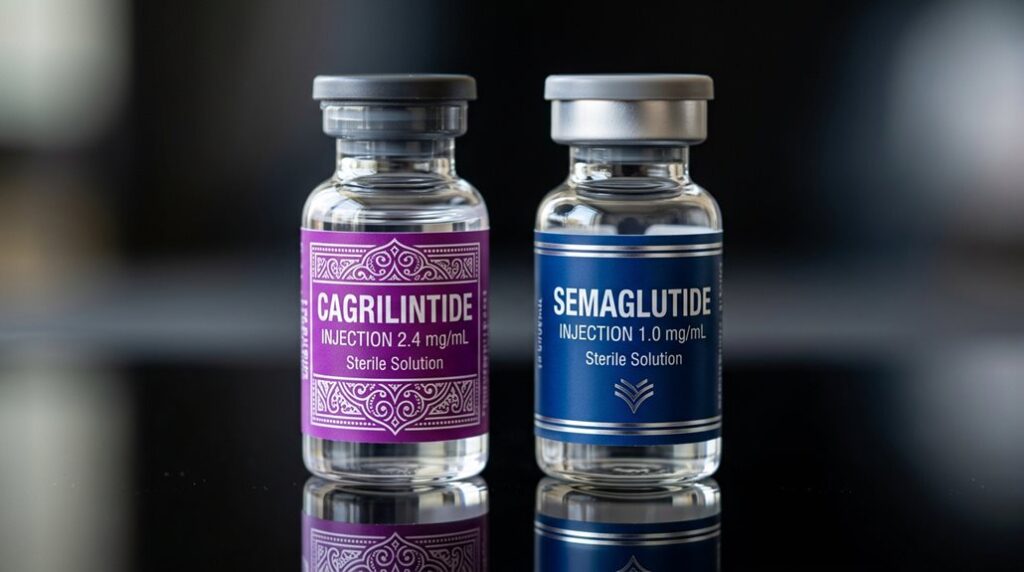
Long-term safety and product quality also remain areas of concern, and research on amylin analogs like cagrilintide as part of weight-management strategies highlights the complexity of combining metabolic pathways with endocrine outcomes. amylin analogs
Growth Hormone Secretagogues vs. Kisspeptins: Which Are Better for Testosterone?
When comparing growth hormone secretagogues and kisspeptins as options for supporting testosterone levels, it’s important to understand that each operates through distinct pathways with different implications.
Kisspeptins directly stimulate the hypothalamic-pituitary-gonadal axis, increasing LH and testosterone, making them more biologically relevant for testosterone support.
Growth hormone secretagogues primarily influence growth hormone and tissue growth rather than direct testosterone production.
What Does the Latest Research Say About Peptides for Testosterone Support?
Recent research into peptides for testosterone support emphasizes their potential to influence the hypothalamic-pituitary-gonadal (HPG) axis, primarily through mechanisms that stimulate reproductive hormone signaling rather than direct testosterone production. Kisspeptin and gonadorelin can induce modest, acute increases in testosterone by activating upstream signaling pathways, although long-term efficacy and safety require further investigation. Understanding mitochondrial health and energy pathways can also intersect with how systemic signaling supports reproductive function, particularly as cellular energy status can impact hormone signaling networks SS-31 and mitochondrial-targeted approaches may influence cellular resilience in steroidogenic tissues.
Frequently Asked Questions
Are Peptides Safe for Long-Term Testosterone Therapy?
Peptides for testosterone support lack extensive long-term safety data, so their safety isn’t well established. You should consult a healthcare professional before use, especially since prescription testosterone therapy involves ongoing monitoring, unlike most peptides which are less studied.
How Do Individual Differences Affect Peptide Response?
Your genetic makeup, hormone levels, age, body composition, and health conditions all influence how you respond to peptides. These factors determine receptor sensitivity, conversion rates, and overall effectiveness, making personalized protocols essential for peak testosterone support.
Can Peptides Replace Traditional Testosterone Replacement Therapy?
Peptides can’t fully replace TRT because they mainly stimulate your body’s own hormone production, which is less predictable and less potent than directly replacing testosterone. TRT remains the more reliable option for treating confirmed hypogonadism symptoms effectively.
What Are the Potential Side Effects of Peptide Use?
You might experience side effects like injection-site reactions, headaches, gastrointestinal issues, water retention, or mood changes. Serious risks include allergic reactions, immune responses, and long-term health concerns, especially with unregulated products or improper use.
Are There Approved Medications Using Peptides for Testosterone Support?
There are no FDA-approved medications using peptides specifically for testosterone support. While some peptides like hCG are approved for other conditions, they’re not approved for broad testosterone enhancement, so rely on medically supervised testosterone replacement therapies instead.
Final Note
Understanding the roles of peptides like kisspeptin and growth hormone secretagogues in supporting testosterone levels offers meaningful perspectives into potential treatment options. While research indicates promising results, individual responses vary, and it’s essential to consult healthcare professionals before considering peptide use. By staying informed about the latest scientific developments and carefully evaluating the pros and cons, you can make educated decisions to support hormonal health safely and effectively.
References
- https://pmc.ncbi.nlm.nih.gov/articles/PMC3380939/
- https://www.research.ed.ac.uk/en/publications/exploring-the-pathophysiology-of-hypogonadism-in-men-with-type-2-/
- https://pmc.ncbi.nlm.nih.gov/articles/PMC3232613/
- https://academic.oup.com/ckj/article/19/8/sfag238/8747574
- https://pmc.ncbi.nlm.nih.gov/articles/PMC7216047/
- https://academic.oup.com/ejendo/article/195/2/206/8750900
- https://pubmed.ncbi.nlm.nih.gov/42549827/
- https://www.thelancet.com/journals/ebiom/article/PIIS2352-3964(25)00133-1/fulltext
- https://pmc.ncbi.nlm.nih.gov/articles/PMC6038494/
- https://pubmed.ncbi.nlm.nih.gov/16174713/