Peptide therapy costs vary widely, with monthly expenses in clinics ranging from $100 to over $1,500, depending on protocol complexity, peptide types, and treatment duration. Initial consultations and lab tests add further charges, often between $100 and $600 for assessments and $200 to $500 for labs. Telehealth options usually cost less than in-person visits due to lower overhead, and sourcing influences pricing based on legal and supply factors. Continue exploring to understand how to optimize your budget and safety considerations.
TLDR
- Clinic costs for peptide therapy range from $100 to over $1,500 monthly, depending on protocol complexity and duration.
- Single-peptide protocols generally cost between $150 and $800, with all-inclusive programs exceeding $10,000 over several months.
- Telehealth options tend to be 15% to 40% cheaper than in-person clinics due to lower overhead and operational costs.
- Additional expenses include consultation fees, lab testing ($200-$500 initially), and ongoing monitoring, influencing total treatment costs.
- Costs vary based on peptide type, source, regulatory environment, and whether the program involves multiple peptides or intensive protocols.
What Are Typical Costs for Peptide Therapy in Clinics and Research?
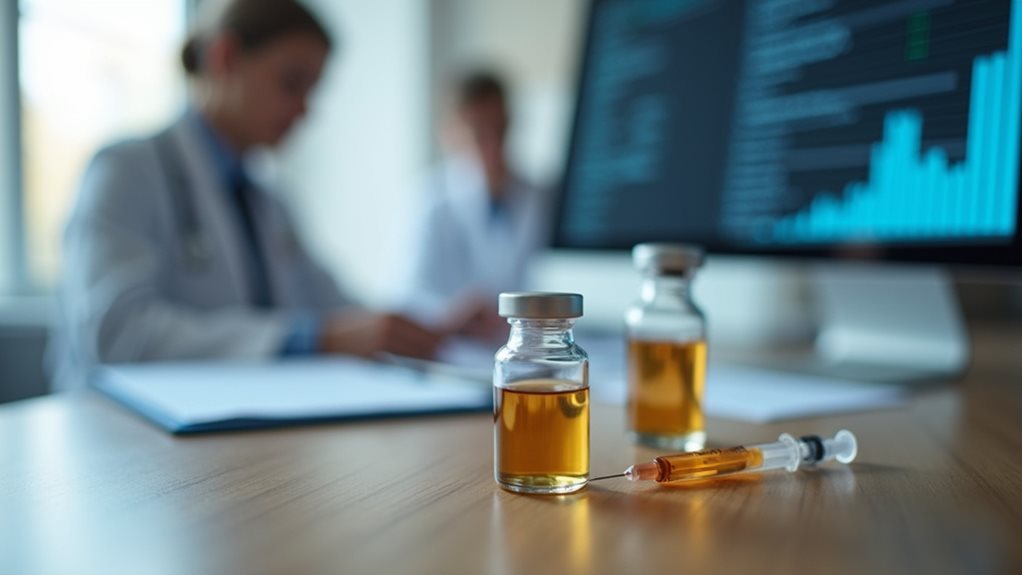
Understanding the typical costs associated with peptide therapy requires recognizing the variability based on several factors, including the type of peptides used, the complexity of the treatment protocol, and whether the procedure occurs in a clinical or research setting.
In clinics, monthly costs generally range from $100 to over $1,500.
Single-peptide protocols typically cost around $150 to $800.
All-inclusive programs can reach $10,000 or more over several months.
Animal studies in peptide research matter for humans because they help identify potential safety concerns and biological mechanisms before proceeding to human trials, but the gap between animal data and human outcomes means clinicians must be cautious when extrapolating efficacy and dosing from animals to people. preclinical evidence and the need for human trials guide how costs and program structures evolve as research advances.
How Consultations and Lab Tests Affect Your Total Peptide Therapy Expenses?
Your total peptide therapy expenses are substantially influenced by consultation fees and lab testing costs, which can vary depending on clinic policies and the scope of testing required.
Initial consultation fees may range from $100 to $600, with subsequent follow-up visits and labs adding to the overall cost over time, especially when extensive panels are necessary for safe and effective treatment.
Understanding whether clinics bundle these services or bill separately can help you better estimate your total investment and plan your budget accordingly.
Quality assurance measures like purity testing, including HPLC and mass spectrometry, are used to verify the contents of a vial and ensure that what you receive matches the labeled peptide. Purity testing ensures peptides meet the required standards before use.
Consultation Fees Variations
Have you ever considered how the costs of consultations and lab tests can influence the overall expense of peptide therapy?
Consultation fees vary widely—from free or low-cost telehealth options to higher-priced concierge clinics—impacting initial expenses.
Additional labs, often billed separately, can substantially increase total costs, especially if extensive testing is required before and during treatment.
Lab Test Pricing Range
Curious about how lab test costs influence the overall expense of peptide therapy? Typically, initial thorough testing ranges from $200 to $500, depending on the panel’s breadth, with smaller or basic panels costing less.
Follow-up tests every few months can add $100 to $300, substantially impacting total expenses, especially when multiple markers or advanced testing methods are included.
Monitoring Cost Factors
Monitoring cost factors play a significant role in determining the overall expenses of peptide therapy, as the frequency and scope of consultations and lab tests directly influence your total budget.
Regular check-ins, especially during early treatment, can increase costs. Initial evaluations typically range from $100 to $500.
Follow-up visits usually cost between $75 and $300.
Periodic lab tests add ongoing expenses, depending on protocol intensity.
Do Peptide Types and Sources Change the Price?
The cost of peptide therapy varies considerably depending on the specific type of peptide and its source, making it essential for individuals considering treatment to understand how these factors influence pricing. Understanding peptide legality and regulatory considerations can also influence perceived accessibility and provider choices regulatory factors. Different peptide classes, such as GLP-1, growth hormone-related, or healing peptides, have distinct price ranges. Brand-name products typically cost more than compounded versions. Sourcing methods like telehealth or pharmacy type markedly impact overall costs.
How Protocol Complexity and Treatment Intensity Impact Costs?

As you increase the complexity of your peptide therapy protocol, expect your monthly costs to rise accordingly, since more elaborate plans often involve multiple peptides, additional monitoring, and frequent consultations. In addition, research on peptide stacks highlights potential interactions and the need for careful evaluation of proposed mechanisms, which can influence both safety considerations and the planning of monitoring strategies monitoring requirements to ensure protocols remain evidence-aligned. Similarly, higher treatment intensity, such as increased dose frequency or longer durations, directly impacts expenses, sometimes doubling or tripling the baseline costs. Understanding how these factors influence overall spending can help you plan more effectively and make informed decisions about your treatment approach.
Complexity Drives Up Costs
When protocols become more complex, costs tend to increase substantially because adding multiple peptides, higher doses, and additional monitoring components requires more resources, specialized oversight, and frequent adjustments.
This complexity raises expenses through increased medication, lab work, consultation fees, and supplies. As each added component or higher dose demands more material, oversight, and logistical arrangements, the total treatment cost ultimately elevates.
Treatment Intensity Matters
Increasing the intensity of a peptide therapy protocol—whether through more peptides, higher doses, or increased frequency—raises costs considerably.
This is because it requires additional resources, more frequent monitoring, and dose adjustments during titration phases.
These factors lead to higher medication expenses, increased lab work, and more follow-up visits.
While these intensive protocols are more costly, they may also be more effective.
Telehealth vs. In-Person Clinics: Which Offers Better Peptide Pricing?

Choosing between telehealth and in-person clinics for peptide therapy primarily depends on understanding the differences in pricing structures and overall costs.
Telehealth tends to be more affordable, with lower consult fees, membership plans, and medication costs—often 15% to 40% cheaper—due to reduced overhead.
However, additional expenses like labs and shipping can affect overall savings, making careful comparison essential.
Telehealth also expands access to prescription peptides by enabling earlier consultations and easier follow-ups, which can influence adherence and long-term costs. regulatory landscape and the evolving frameworks around telemedicine for peptide prescriptions can impact pricing, prescribing limits, and coverage over time.
What Are Common Costs for Peptide Regimens and Stacking Protocols?
Understanding the typical costs associated with peptide regimens and stacking protocols is essential for making informed decisions about your treatment plan.
Cagrilintide, as an amylin analog studied with GLP-1 drugs for weight loss, adds a potential option that may influence overall regimen choices and cost considerations. amylin analogue can play a role in appetite regulation and weight management when combined with GLP-1 therapies.
Single-peptide therapies generally range from $150 to $800 monthly, depending on complexity and oversight.
Stacking protocols, such as dual or triple combinations, can cost from around $795 to over $2,795.
Additional expenses, including consultations and labs, can further influence total costs.
Tips to Budget for Peptide Therapy and Find the Best Program for You
To effectively budget for peptide therapy, it’s essential to take into account all program costs beyond the advertised monthly price. Include consultation fees, lab work, follow-up visits, medication, and supplies in your estimate. In addition, understand the safety and side effect considerations researchers evaluate, so you can discuss risk management with your clinic and make choices that align with your health goals and budget peptide safety considerations. Comparing all-in monthly costs and understanding clinic models help you choose a safe, effective program that aligns with your financial and health needs. This approach ensures informed decision-making.
Frequently Asked Questions
How Do Peptide Therapy Costs Vary Between Different Geographic Regions?
You’ll find peptide therapy costs vary widely by region; European prices tend to be lower monthly, while North American cities, especially high-cost ones, charge more. Australia’s costs fall somewhere in between, influenced by regulations and market factors.
Are There Hidden Fees or Additional Costs Not Typically Listed?
You might not see all costs upfront; hidden fees like consultation charges, labs, shipping, supplies, and follow-up visits often add 20-40% to the advertised price, potentially increasing your total expenses by $600 to $2,000 annually.
Can Insurance Cover Any Peptide Therapy Expenses?
Insurance can cover some peptide therapies, like certain FDA-approved drugs for diabetes or specific diagnoses, but most are paid out-of-pocket because off-label, compounded, or wellness uses aren’t typically covered by insurance plans.
How Often Do Peptide Therapy Costs Fluctuate Over Time?
Peptide therapy costs fluctuate frequently, often due to changes in supply, clinic policies, or sourcing. You might see price shifts monthly or even within the same year, especially as clinics adjust their service bundles or pharmacy costs.
What Financing Options Are Available for Long-Term Peptide Treatments?
You can access financing options like CareCredit, Cherry, Klarna, or Afterpay, which offer installment plans and promotional rates. Using HSA or FSA accounts can also help lower costs, especially when treating documented medical conditions.
Final Note
Understanding the costs associated with peptide therapy involves considering multiple factors, including consultation fees, lab tests, peptide types, treatment complexity, and delivery methods. By thoroughly researching clinics, comparing prices, and evaluating your specific health needs, you can make informed decisions that balance affordability and efficacy. Careful planning and consultation with qualified professionals will help guarantee you select a program customized to your goals while remaining within your budget, ultimately supporting safe and effective treatment outcomes.
References
- https://www.seekpeptides.com/blog/articles/peptide-therapy-clinics-guide
- https://formblends.com/articles/peptide-hub/best-best-peptide-therapy-clinics-near-me-for-anti-aging-treatmen
- https://www.seekpeptides.com/blog/articles/peptide-therapy-near-me-guide
- https://www.seekpeptides.com/blog/articles/how-much-do-peptides-cost
- https://www.mypeptidematch.com/blog/how-to-choose-peptide-clinic
- https://www.seekpeptides.com/blog/articles/peptide-therapy-cost-complete-guide
- https://www.peptidejournal.org/lifestyle/peptide-therapy-cost-optimization-getting-more-value
- https://www.gethealthspan.com/research/article/peptide-therapy-cost-qrmu
- https://formblends.com/articles/cost-hub/peptide-therapy-cost-guide
- https://www.mypeptidematch.com/