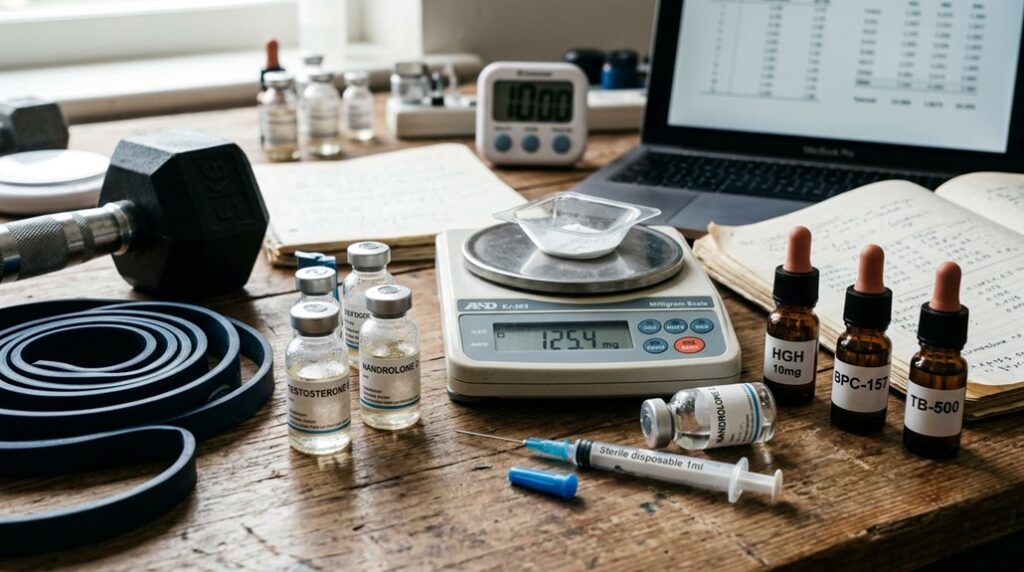
You’ll typically face a choice between injectable methods, which deliver nearly 100% bioavailability and predictable dosing, or noninvasive alternatives that sacrifice reliability for convenience. Injections remain the standard because they bypass harsh gastric acid, enzymatic degradation, and intestinal barriers that destroy most peptides before absorption. Oral options use enteric coatings and permeation enhancers like SNAC to survive digestion, while microneedles, sublingual sprays, and nasal delivery offer middle-ground solutions with modest bioavailability gains. Your decision depends on balancing therapeutic precision against daily practicality, and understanding each method’s trade-offs will help you make an informed selection.
TLDR
- Injections dominate peptide delivery with nearly 80% of approved products due to predictable 100% bioavailability and precise dosing control.
- Oral delivery faces harsh gastric acid and enzymatic degradation, requiring protective coatings and permeation enhancers for limited absorption gains.
- Noninvasive alternatives like microneedles, sublingual, and nasal routes bypass first-pass metabolism but struggle with peptide size and permeation barriers.
- Long-acting depot implants using biodegradable polymers offer months-long release, reducing injection burden while maintaining therapeutic levels.
- Delivery choice depends on peptide size, stability, and target site, with injections favored for reliability and oral options trading efficacy for convenience.
Why Injection Still Dominates Peptide Delivery

Why does injection remain the cornerstone of peptide delivery in modern medicine? You encounter this reality because peptides struggle to survive other routes, with nearly 80% of approved products relying on subcutaneous, intravenous, or intramuscular administration. Injection delivers intact molecules with predictable concentrations, 100% bioavailability, and precise dosing control that alternatives simply can’t match yet. In addition, understanding how peptidines interact with the body, including growth hormone signaling pathways such as those influenced by GHRP-6, helps explain why injectable routes remain preferred for maintaining consistent therapeutic levels and reliable pharmacokinetics. drug delivery
How Oral Peptide Delivery Survives Digestion
You face a gauntlet of biological defenses when you swallow a peptide drug, beginning with harsh gastric acid that can unravel molecular structure and continuing through a cascade of proteolytic enzymes—pepsin in the stomach, then trypsin and chymotrypsin in the intestine—that systematically dismantle unprotected peptides before they ever reach your bloodstream. Scientists have responded to these enzymatic degradation issues with sophisticated countermeasures, including enteric coatings that shield sensitive molecules until they pass the stomach and protease inhibitors that temporarily disarm the very enzymes threatening absorption. Even when peptides survive this chemical onslaught, they must still cross formidable physical barriers—tight epithelial junctions and viscous mucus layers—which is why permeation enhancers have become critical tools, using carefully selected compounds to temporarily loosen cellular barriers and improve uptake without causing lasting damage to intestinal tissue.
Gastric Acid Challenges
How does a delicate peptide drug survive its first encounter with the digestive system? Your stomach presents a harsh challenge: its pH of 1.0–2.0 rapidly denatures peptide structures, while pepsin cleaves bonds through acid-catalyzed hydrolysis.
You’ll find enteric coatings are the primary defense, using pH-responsive polymers that remain intact in acid but dissolve in the small intestine. Alternatively, formulations may incorporate buffering agents like SNAC or organic acids—citric, fumaric, tartaric—to temporarily raise local pH around the drug.
However, surviving gastric transit only clears the first hurdle; intestinal barriers await beyond.
Enzymatic Degradation Issues
Although gastric acid presents a formidable barrier, the enzymatic terrain of your gastrointestinal tract poses an equally serious threat to oral peptide survival. Your stomach, intestinal lumen, and epithelium harbor proteases—enzymes that cleave peptide bonds and rapidly fragment unprotected drugs. This proteolysis, combined with poor permeability, explains why oral biologics often fail. Fortunately, scientists employ enteric coatings, encapsulation, enzyme inhibitors, and circular designs to help peptides survive this digestive gauntlet intact.
Permeation Enhancer Solutions
Even if a peptide survives the proteolytic gauntlet of your gastrointestinal tract, it still faces a formidable physical barrier: the intestinal epithelium itself, a tightly regulated layer of cells designed to keep foreign substances out of your bloodstream.
Permeation enhancers help you overcome this hurdle by temporarily opening tight junctions between cells or altering lipid membranes to increase absorption.
These agents—chelating agents like EDTA, bile salts, and medium-chain fatty acids—raise bioavailability from negligible levels to a few percent, though you’ll find this remains modest compared to injections.
Microneedles: The Reality of Needle-Free Peptide Delivery
When you’re seeking alternatives to conventional peptide injections, microneedles present a compelling middle ground—one that promises to breach the skin’s formidable defenses without the discomfort and apprehension that often accompany traditional needles. These minimally invasive devices, with needles shorter than one millimeter, penetrate the stratum corneum to create reversible microchannels, allowing peptides to reach deeper skin layers virtually pain-free.
You’ll find solid microneedle arrays of 150 micrometers significantly enhance transdermal delivery, with studies showing 134 nanomoles of GHK-Cu permeating human skin in nine hours after pretreatment—compared to almost none through intact skin.
However, you should recognize this isn’t universal; smaller peptides permeate better, while larger ones show limited, variable enhancement depending on molecular weight, application force, and microneedle design.
PLGA-based systems now improve peptide loading, yet safety demands consistent fabrication and controlled penetration to avoid irritation.
Recent research indicates microneedle-assisted delivery can be tuned by adjusting array geometry and coating strategies to optimize peptide stability and release kinetics, aligning with the broader goal of safer transdermal delivery systems.
Sublingual and Nasal Peptide Delivery: Best Use Cases

Where might you turn when injections feel intimidating yet oral pills consistently fall short? Sublingual delivery, placing medication under your tongue, offers a compelling middle path. You absorb small peptides—under 10 kilodaltons with balanced lipophilic properties—directly through mucosal tissue, bypassing destructive stomach acids and liver metabolism. Desmopressin, insulin, and oxytocin demonstrate this route’s viability, reaching your bloodstream within fifteen to thirty minutes with bioavailability exceeding oral alternatives. You must hold the dose sublingually without swallowing saliva immediately, a technique requiring discipline but rewarding you with needle-free, rapid therapeutic effects for conditions demanding swift intervention.
How to Choose Your Peptide Delivery Method
You should begin your selection process by honestly evaluating your peptide’s molecular characteristics—its size, stability against enzymes, and whether it needs to reach the bloodstream or a specific cell interior—since these properties will immediately rule out some routes and highlight others.
Additionally, consider how stability and delivery influence the peptide’s ability to modulate neuroplasticity and maintain cognitive health over time, which can affect long-term outcomes and adherence. Delivery stability
Match Peptide Properties
How do you know which delivery method will actually work for your peptide? You start by examining its fundamental properties, since size, charge, and hydrophobicity directly determine which barriers your peptide can cross.
Smaller, more lipophilic peptides may tolerate oral routes, while larger or more hydrophilic ones typically require injection.
You’ll also assess proteolytic stability, as chemically fragile peptides need protective formulations or modified delivery systems to survive biological environments.
Balance Efficacy Convenience
Once you’ve mapped your peptide’s size, charge, and stability against the barriers it’ll face, you’re positioned to weigh what actually matters for your situation: how much systemic exposure you need versus how much hassle you’re willing to accept.
If reliable, predictable effects are your priority, you’ll likely accept subcutaneous injections and their 65–100% bioavailability.
When convenience drives adherence, oral or sublingual routes trade efficacy for ease, though you’ll sacrifice most of your dose to digestive barriers unless you’re using specialized, enhanced formulations that achieve meaningful absorption.
Implants and Long-Release Peptide Delivery
Where might you turn when frequent injections become burdensome or when a peptide’s therapeutic window demands steadier exposure than conventional dosing can provide? You might consider implants—long-acting depot systems, often made from biodegradable polymers like PLGA, that release peptides over months through controlled diffusion and erosion. Also, these systems can help maintain copper-peptide activity at the target site by preserving the intact complex and minimizing systemic copper fluctuations copper-dependent signaling.
Why Peptide Delivery Choice Affects Real-World Adherence
Implants and long-release systems address one major barrier—frequency—but they don’t eliminate every obstacle that stands between a prescribed peptide therapy and your actual use of it. You still face needle pain, cold-chain storage, and disposal hassles, which erode willingness to start or continue. WADA bans and regulatory status add an additional layer of complexity for athletes and patients seeking legitimate guidance within regulated frameworks regulatory status. When daily routines feel disrupted by complexity, you miss doses, and real-world persistence falls below clinical-trial expectations.
New Peptide Delivery Technologies in Development
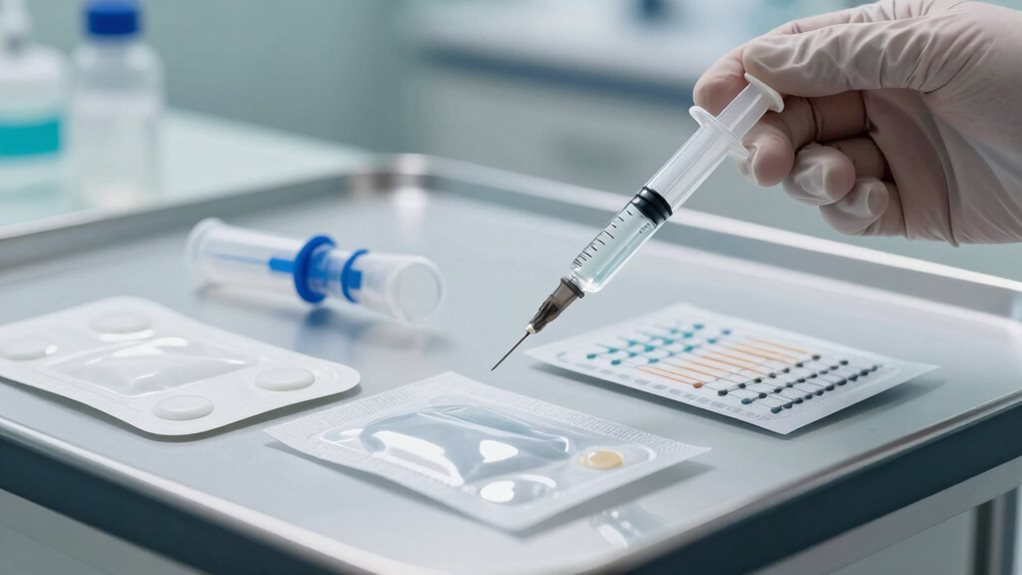
How might the barriers you currently face—needles, cold storage, rigid schedules—eventually disappear? You’ll soon benefit from SNAC-enabled oral tablets, dissolving microneedle patches with over 80% bioavailability, and month-long programmable systems. Researchers are engineering ionic liquids, mucoadhesive microdevices, and PLGA implants that release peptides for weeks. These innovations promise to transform your experience from frequent injections toward convenient, sustained, and needle-free alternatives. Selank’s multi-system mechanisms, including GABA-A modulation and cytokine balance, illustrate how diverse delivery approaches could support anxiolytic and immunomodulatory effects with potential for improved tolerability and adherence multi-system actions.
And Finally
Your peptide delivery choice shapes your treatment experience, balancing efficacy with convenience. You’ll weigh injection reliability against emerging alternatives like microneedles or oral formulations, considering your lifestyle, medical needs, and comfort with each method’s trade-offs. Stay informed as research advances, since tomorrow’s options may resolve today’s limitations. Work closely with your healthcare provider to select the approach that sustains your adherence and delivers optimal results for your specific therapeutic goals.
References
- https://swolverine.com/blogs/blog/peptide-delivery-methods-injections-vs-oral-vs-nanoparticles-explained
- https://www.peptidejournal.org/news/peptide-delivery-innovations-patches-implants-orals
- https://bodysymmetrymd.com/different-forms-of-peptides/
- https://pubmed.ncbi.nlm.nih.gov/3052876/
- https://pmc.ncbi.nlm.nih.gov/articles/PMC10655677/
- https://pmc.ncbi.nlm.nih.gov/articles/PMC8771547/
- https://researchoutreach.org/articles/nanotechnology-provides-new-methods-oral-delivery-peptides/
- https://www.sciencedirect.com/science/article/abs/pii/S177322472031296X
- https://peptidepublicus.com/id/blog/oral-vs-injectable-peptides-bioavailability
- https://rethinkpeptides.com/articles/subcutaneous-peptide-injection-why-most-peptides-are-given-under-the-skin